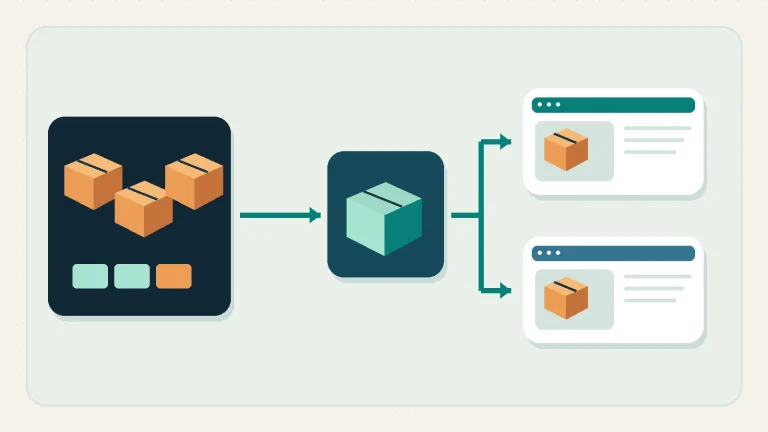

Check seller identity, parcel contents, dispatch evidence and customer returns before letting a China supplier fulfill Amazon US merchant orders.
Approve the parcel process before accepting the order
A supplier in China says they can ship individual orders for your Amazon store. Before you list, ask them to demonstrate the exact parcel a customer will receive, who appears as the seller, how dispatch is evidenced and where a return will go. A product photograph and a promise of “blind shipping” do not answer those questions. Your first decision is whether this particular supplier and packing location can carry out a controlled seller-fulfilled order.
This guide concerns Amazon’s US marketplace and orders fulfilled by the merchant, including a supplier or fulfillment partner acting on the merchant’s instructions. It does not establish eligibility to open an account, approve a product or operate in a particular country. The language you read does not determine your destination market. If your account serves another Amazon marketplace, check its current rules before applying this workflow.
Start with four pieces of evidence: an agreed seller identity sheet, an approved sample parcel, a trial shipment you can trace and a workable customer-return arrangement. The steps below are recommended purchasing controls, not an Amazon certification scheme. Use them to make a documented go, revise or stop decision.
First separate dropshipping, FBM and FBA
Dropshipping describes an arrangement in which another party dispatches goods following your customer orders. FBM, or Fulfilled by Merchant, describes the fulfillment responsibility on Amazon. FBA is a different route in which inventory enters Amazon’s fulfillment network. A supplier’s experience preparing cartons for FBA does not demonstrate that its staff can execute individual FBM parcels. The work instructions, destination and evidence are different.
Write the intended route in one sentence: “For these approved SKUs, this packing site receives our released orders and ships individual parcels to customers in the US marketplace.” Add the actual dispatch country and the party arranging carriage. Goods sourced in China might ship from China or from an overseas warehouse; those situations cannot share a shipping promise merely because the supplier is the same.
Amazon’s official FBM overview separates shipping settings, order fulfillment and customer returns. Treat those as different responsibilities in your plan. If a supplier’s proposal simply says “Amazon service,” ask which responsibility it actually performs. A vague answer is a reason to continue checking, rather than release live orders.
Define who the customer sees as the seller
Amazon’s dropshipping guidance requires the merchant to be the seller of record and responsible for returns. Confirm the current Drop Shipping Policy in Seller Central for your account. Do not build the arrangement around another retailer sending its own customer-facing order documents to your buyer.
Create a seller identity sheet containing the approved seller name as it should appear on relevant customer-facing materials, the approved packing-slip template, permitted customer-service information and the person authorized to approve changes. Compare it with the actual account and business records. Do not invent a company name to make the packet look acceptable, or use Amazon branding to imply Amazon sold or fulfilled the item.
Keep seller identity distinct from product branding, the legal manufacturer and the importer of record. Those roles can involve different parties and obligations. This article does not decide customs responsibility or required product disclosures. Ask the appropriate qualified adviser to resolve a conflict before dispatch. Changing the sender field alone does not settle every identity question in a cross-border sale.
In supplier discussions, replace “no supplier information” with an annotated packet showing precisely which seller-facing documents are approved and which labels must remain. The instruction should make sense to the packer who opens the order, not just the sales representative who accepted your inquiry.

Inspect the complete packet without stripping required labels
Ask to see the outer shipping carton or mailer, retail packaging, packing slip, any customer invoice, care instructions, warranty material and promotional inserts. Include stickers applied by the warehouse after packing. A clean outer box can still contain another seller’s receipt or a card directing the buyer to a different store. Photograph the packet open and closed, and identify which version you reviewed.
Do not interpret neutral packaging as permission to remove country-of-origin markings, safety warnings, traceability information or required manufacturer details. US law addresses imported-goods origin marking, subject to exceptions; see 19 USC 1304. Determine the requirements for the actual product and route separately. If the supplier cannot distinguish promotional material from mandatory information, stop the packing approval until that distinction is resolved.
Use a simple packet register: component, approved file or photograph, permitted variation, reviewer and revision date. For example, a packing slip may use an approved template while a product’s care label remains unchanged. A later switch to a different retail box should trigger review. It should not be silently accepted because the product inside has the same catalog number.
Preserve genuine business-to-business purchase and supply-chain records. The customer-facing packet review is not an instruction to falsify supplier invoices or conceal the source of goods from Amazon, customs or another authorized reviewer.
Test the packing site that will fulfill real orders
A factory can show a compliant demonstration parcel while a separate trading company, warehouse or subcontractor packs the real shipment. Ask who owns each step and where it happens. Record the operating entity and dispatch address, who receives your instructions, who prints documents, who approves exceptions and who physically hands over parcels.
The purpose is to find an actionable control point. If the sales contact cannot change an insert added at a subcontracted warehouse, another meeting with the factory will not fix the packet. The warehouse must receive the approved instruction and demonstrate that it can follow it. A change of packing site, even within the same supplier group, should reopen the relevant part of the review.
For broader company checks, use supplier sourcing services and establish what evidence can be obtained for your case. Keep that inquiry separate from execution acceptance. A verified company registration is useful, but it does not prove correct single-order packing. The China sourcing guides provide the wider purchasing framework around this narrower operational decision.
Give every order an unambiguous product identity
Prepare a mapping between your sellable SKU and the supplier’s item code, variant, unit of sale and pack contents. “Blue organizer” is insufficient if the factory offers two sizes, several zipper colors and both single units and multipacks. Include an approved reference image where it reduces ambiguity, but keep the written characteristics authoritative.
State that substitutions need prior review. A supplier should not replace an unavailable item with a similar model because the price is unchanged. That can alter the customer promise, product documentation and parcel contents at once. Define who can reject a proposed substitute and how the order remains on hold while a decision is made.
Product approval and parcel approval serve different purposes. Use the guide to ordering product samples from China for the product specification and sample acceptance work. Here, verify that an approved item can be picked and packed consistently for one customer. A beautifully packed wrong variant is still a failed trial.
For sets, describe what constitutes one complete saleable unit. Have the packer count the contents in a trial order and retain the record. This prevents a master carton quantity, inner-pack quantity or factory unit from being mistaken for the customer’s purchased quantity.

Write a short execution annex that staff can use
Once the process is clear, put the operational requirements into an agreed annex. The general commercial agreement remains important; our Chinese supplier purchase-contract checklist covers that foundation. The dropshipping annex should explain what happens to an individual order, including the approved packet revision, product mapping, dispatch site, handover evidence and exception contact.
Give each requirement an observable result. “Fast shipping” is not observable until the parties define the event, timing basis and evidence. “No third-party seller insert” can be checked against the packet register. “Correct variant” can be checked against the order mapping and picking record. The annex should tell a reviewer how to decide whether the supplier performed the agreed task.
Specify how changes are communicated. New packaging, a different carrier route, holiday closures, a new subcontractor or an altered return address can affect the arrangement. Require notice early enough for the seller to review affected offers and orders. Avoid an agreement that lets the supplier silently choose an alternative process whenever it considers that process equivalent.
Commercial remedies belong in the agreement too, but a reimbursement promise cannot substitute for execution evidence. Recovering the cost of a packing error later does not erase the customer experience or the seller’s marketplace responsibilities.
Release only the order data needed for the job
Design a small order handoff rather than sending the supplier your entire customer export. Determine which delivery fields the carrier and packer genuinely need, and which information should remain with the seller. Use a controlled transfer method, restrict access and agree how corrections, cancellations and deletion requests are handled under the applicable obligations.
Give every handoff a unique reference and revision. If a customer-address correction is authorized, the supplier must know which version is current and whether a label has already been produced. Sending a second spreadsheet without withdrawing the first can create two parcels for one order. Ask for an acknowledgement that identifies the accepted revision.
Do not share the primary Seller Central password to make an informal fulfillment arrangement work. If an integration or delegated access is proposed, review the supported access method and permissions for the actual account. This guide does not assume a particular connector, API approval or software entitlement.
Include a deliberate release step between receiving an order and starting packing. It gives you a place to resolve incomplete information, unavailable variants and cancellation requests. A supplier should be able to say “received, awaiting release” without the seller or customer being told the parcel has shipped.
Build a shipping promise from real events
Amazon distinguishes handling time from transit time in its seller-fulfilled order-management guidance. In practical terms, preparing an order and carrying a parcel are different stages. Ask the supplier for records showing the sequence from order acceptance to carrier handover, then compare those records with the route you intend to use.
A quote saying “delivery in several days” is incomplete without the starting event, dispatch location, service, destination coverage and exclusions. Do not turn a warehouse’s best-case recollection into a universal promise. Check working days, collection cut-offs and the effect of closures with the parties actually handling the parcel.
For cross-border dispatch, identify who will resolve customs questions and whether the customer could be asked to provide information or pay charges. Obtain a current, route-specific explanation before selling. This guide supplies no tariff rate, low-value exemption assumption or guaranteed delivery duration. Those facts can change and depend on the goods and arrangement.
Keep customer-facing settings within what the actual operation supports. If the supplier cannot demonstrate the chosen service from its real dispatch point, revise the proposal or choose another fulfillment route before accepting orders.

Distinguish a printed label from a dispatched parcel
A tracking number can exist before the carrier has the goods. Ask what evidence confirms physical handover and how the seller receives it. The useful record connects the correct order, parcel, carrier service and tracking identifier. A screenshot of a label file shows that a label was created; it does not by itself demonstrate collection.
During the trial, follow the tracking through the carrier’s actual system. Confirm that the service and origin agree with the proposal, and investigate unexplained gaps. If several parcels travel together before entering another network, understand the handoff rather than accepting an unrelated number that never identifies your customer’s parcel.
Set an exception contact for missing scans, damaged labels, rejected collections and replacement tracking. Agree who investigates and how corrected information reaches the seller. Do not manufacture a dispatch event or reuse another parcel’s tracking to make an order appear complete. Keep the original record when a correction is necessary.
Shipping tools and account settings may automate some confirmations. Verify how the tool behaves in your specific setup before treating an automated status as evidence that the supplier completed its physical task.
Design the customer-return route before launch
A supplier may offer replacement stock after a manufacturing defect while offering no usable route for an Amazon customer return. These are different arrangements. Amazon’s US seller-fulfilled returns guide describes return handling through account settings, with exceptions. Check the rules and available options for your account and product before agreeing a route.
Document the actual receiving address, who monitors incoming returns, how a returned unit is identified and who reports its condition. Do not assume every US buyer can simply be told to send the parcel to China. Verify that the proposed arrangement fits the marketplace requirements rather than relying on the supplier’s ordinary B2B return clause.
Keep customer resolution separate from supplier recovery. The seller needs a process for acting on the customer case without waiting indefinitely for a factory to approve credit. Record any supplier reimbursement or replacement in a separate commercial file, linked to the case where appropriate.
Decide what happens to returned goods after inspection. A used, incomplete or unidentified unit should not quietly re-enter a packing queue as new. Condition photographs, item references and an explicit disposition decision make the handoff clearer, even when a third party receives the return.

Run a trial that can reveal a failure
Choose trial orders that exercise the actual weak points. Send one ordinary approved variant, one set with multiple components and one order that tests a correction before release, using test arrangements permitted by the platform and carrier. Do not create deceptive marketplace activity, reviews or artificial sales to stage the test. A controlled off-market logistics trial may be more appropriate.
For each parcel, retain the released order revision, picked-item record, packet photographs, label information, carrier handover evidence and receiving observations. Record what the receiver actually found, including inserts and documents inside retail packaging. A supplier’s pre-dispatch photograph cannot show damage or additions occurring later in the route.
If a trial fails, identify the responsible step. Was the instruction unclear, was an old template still available, or did a subcontractor add material after the approved check? Repair that step and retest it. Repeating a demonstration with the sales manager watching is weak evidence if ordinary packing staff still use the old process.
A successful trial supports a bounded decision for the tested products, site and route. It is not proof that every future item, warehouse or carrier can be accepted without review.
A fictional three-order example
The following is an educational example, not a China Moshaver customer project. A seller proposes three orders for plain fabric organizers. In order A, the product and outer parcel match the approved packet, but an inner card names a different online store. The correct decision is to hold acceptance, remove the unauthorized promotional insert from the process and inspect a new complete packet. Editing the outside label would miss the failure.
Order B contains the approved blue model, but the zipper belongs to a different variant. The packer used a thumbnail instead of the written mapping. The seller clarifies the picking reference and tests that variant again. This is an identity-control problem at the picking step; a general statement that the factory makes good products does not answer it.
Order C has a label and a tracking number, but collection was missed. The supplier initially calls it shipped. The trial log records “label created, no handover evidence,” and the parties repair the collection escalation. Separately, the seller confirms a workable return receiver. Only the corrected, evidenced process moves forward. No sales result, account approval or delivery guarantee follows from this fictional example.
Make the acceptance decision and keep it current
Use three outcomes. Approve only the tested scope when the packet, picking, dispatch and return arrangements are evidenced. Request revision when a specific repair can be demonstrated without live orders. Stop when seller identity remains unclear, mandatory labels are mishandled, dispatch records cannot be reconciled or the proposed return route is unresolved.
Name the reviewer and record the evidence version behind the decision. Reopen the relevant checks after a packing-site change, new product family, route change or recurring exception. Review actual order exceptions as the operation grows; a trial is a starting point for supervision, not a permanent certificate.
Keep payment decisions connected to documented purchasing milestones. The supplier payment-release guide explains that separate control. If you need an independent check of agreed goods or packing, discuss the scope of quality inspection before ordering. Confirm what can be inspected and where; inspection does not guarantee Amazon approval.
For help planning buying and importing from China, start with the product, marketplace, dispatch location and the supplier’s proposed responsibilities. Ask for a sourcing or inspection scope against those facts. Do not assume China Moshaver operates your Amazon account, provides a US return address or fulfills individual customer orders unless that service is expressly confirmed for your inquiry.
Questions sellers ask before releasing orders
Is an unbranded box enough for Amazon dropshipping?
No. Review the complete customer-facing packet, the seller identity, the execution process and the return arrangement. An unbranded outer carton can still contain another seller’s receipt or advertising. Preserve mandatory product information and genuine supply-chain records.
Does FBA preparation experience qualify a supplier for this work?
It is relevant experience, but it does not prove readiness for individual merchant-fulfilled parcels. Test the actual picking, packing, dispatch evidence and customer-return handoff for the proposed site and route.
Can a supplier change the product when the selected variant is unavailable?
Do not permit silent substitution. Hold the order, review the proposed change and decide through the seller’s authorized process. Similar appearance or price does not establish that the customer ordered the replacement item.
What proves that a trial parcel was dispatched?
Use evidence connecting the order and parcel to actual carrier handover, then check its tracking history. A generated label alone is insufficient to establish that physical collection occurred.
Can all customer returns go back to the supplier in China?
Do not assume that route is acceptable. Check the current US marketplace rules, account settings and product exceptions, then establish a workable customer-return arrangement separately from any supplier reimbursement agreement.
Sources and scope
Official Amazon dropshipping, FBM, order-management and US returns documentation and the US origin-marking statute were reviewed on 14 November 2026, local time. Account-specific Seller Central policies govern the actual sale. The operational checklists and fictional example above are editorial purchasing recommendations, not quoted platform requirements or a promise of approval.