Choose the barcode for a US FBA offer, test it on the finished pack and decide whether packaging already printed in China can be reused.
Approve the code before you approve the carton
Before a factory in China prints packaging for a US Amazon FBA order, ask the seller to approve the barcode for each exact offer and export the corresponding label when Amazon requires one. A scan that returns a number proves that the marks can be read. You still need to show that the number belongs to the right product, the right version of the pack and the offer being sent. If the seller cannot confirm those three things, leave the barcode panel editable or hold that part of the print order. You can often keep the rest of the artwork moving.
Imagine a factory that already produces a plain desk organizer for several buyers. Its packing line has a clean UPC on file. You order two colors for FBA, and the printer offers to use that UPC on both while the Amazon offers are being set up. The offer sounds convenient because it avoids another proof. It also puts the most expensive choice in the wrong hands. Your supplier can prove which color is in the box and how its printing line behaves. The seller needs to prove which label goes on that box for this marketplace.
This guide covers the unit label on products going into Amazon fulfillment in the United States. If a supplier sends individual orders straight to customers, start with the Amazon dropshipping supplier-readiness guide. A customer parcel and a retail unit bound for an FBA fulfillment center have different handoffs. The China purchasing guides put this particular decision into the wider buying process.
Find the offer that will receive the stock
Start with the US offer, even if the factory labels the product for several buyers or you sell that product elsewhere. Capture the marketplace, ASIN, seller SKU, condition and the exact sellable configuration. Include the factory’s item reference and a photograph or drawing that distinguishes any easily confused variation. A photograph of the product page alone may show a parent listing or whichever color happens to be selected. A supplier quote may describe a family of products with one factory code. The approval record must identify the particular unit that goes into the particular offer.
The identifiers answer different questions. A GTIN identifies a trade item. A UPC or EAN barcode is a way to carry that number on packaging. An ASIN points to a product in Amazon’s catalog. The seller SKU is the offer reference you manage. When the offer requires Amazon’s unit label, take the label from that offer in Seller Central and check its FNSKU against the print record. The factory should not type the ASIN into a barcode generator or grab a sticker from a carton that looks similar. GS1 explains the distinction between a GTIN and a barcode. Amazon’s US item-label guide explains how the seller obtains Amazon barcodes.
Write down the selling unit in words that work on the packing bench. “Slate blue organizer, one piece in a closed retail box” is an instruction someone can check. “Organizer, blue” leaves the line to decide whether a two-pack belongs in the same pile. When components arrive with their own retail marks, count the components and check which unit the buyer actually purchases. GS1’s GTIN Management Standard helps decide when a product or pack change needs a new GTIN. Take that decision back to whoever manages product identification and the catalog. A successful first scan cannot settle whether a different product configuration should share the identifier.
One useful question for the person approving the artwork is, “If I saw only the physical unit, the label file and this record, could I prove that all three refer to the same offer?” Have them answer it once for each variation. Mark unconfirmed rows separately so a signed row for one color does not read like blanket approval for the entire order. Keep identifiers as text in the record. A spreadsheet can quietly drop a leading zero or display a number in scientific notation, creating an apparent mismatch or disguising a real one.
Decide which marking the factory can use
Amazon’s US FBA barcode FAQ describes the change effective March 31, 2026. Resellers sending new inventory need Amazon barcode labels even when the product already has a manufacturer barcode. Amazon explicitly includes authorized resellers in that rule. A supply agreement or permission to sell the brand may be important for other reasons. For manufacturer-barcode eligibility, check the selling role Amazon recognizes on the actual account and its relationship to the brand. A private agreement with the factory does not fill that field.
For the manufacturer barcode route, use the current eligibility for the exact item and offer. Amazon’s manufacturer-barcode guidance calls for new condition, a single scannable identifier matching a single ASIN and a product linked to an enrolled brand for which the seller has the Brand Representative role. Brand enrollment by itself leaves a separate product association to verify. The US FAQ also explains that products with a GTIN exemption still need Amazon barcode labels. A listing identifier exemption answers a catalog question. The item still needs the marking the fulfillment workflow requires.
Have the seller record three things: what role was checked, what the current offer or shipment workflow showed, and the date it was checked. Save the evidence at the time of approval. If the supplier claims that the same physical unit went in stickerless for another buyer, ask about the exact offer behind that example. You can use the supplier’s experience to understand its line. Its experience cannot tell you which option your offer currently supports. Recheck the offer if you create a replacement SKU after the file was approved.
Several unresolved cases look alike at the factory. The barcode option may be missing for the current offer. The sample may carry a code that does not match the listed variation. The seller may have downloaded a file but be unable to identify the offer it came from. In the first case, the seller resolves the offer or uses the supported route. In the second, the product and catalog references need to be reconciled. In the third, get a fresh file for the right SKU. Replacing all three with a new sticker just because the printer can make one risks concealing the original problem.
Existing stock can add confusion. The FAQ addresses units already in Amazon fulfillment centers or in transit there before the cutoff. A pallet waiting in your supplier’s building is a different situation. Identify the actual shipment status and the current instructions before assuming a previously printed lot can follow the old route. Keep old and new approvals attached to their own SKUs and dispatches. That way, a valid old approval remains useful evidence without turning into a permission slip for the next run.
Give the printer a release it can execute
The next step is to translate the seller’s decision into a small set of production instructions. Keep three files together: the reference label or confirmed manufacturer code, the package proof that shows its physical location, and the one-page release record that binds the two to the offer. Name the package proof and label file clearly and put their revisions in the release record. A folder named “final” is hard to trust when a salesperson can download the same attachment again after a change and forward it under the old name.
Decide whether to make the barcode part of the permanent print or apply it later. Direct print can save a labeling pass when the selling unit and artwork are settled and the same packaging will reliably go to that one use. A neutral panel and later labeling give you room to make an offer-specific decision after the cartons are available. Ask for quotes for both workflows, including any lost time for waiting or handling. Consider how many cartons become unusable if an offer changes and whether the remaining package protects readable safety, serial or authentication markings. The right choice depends on what would become expensive to undo.
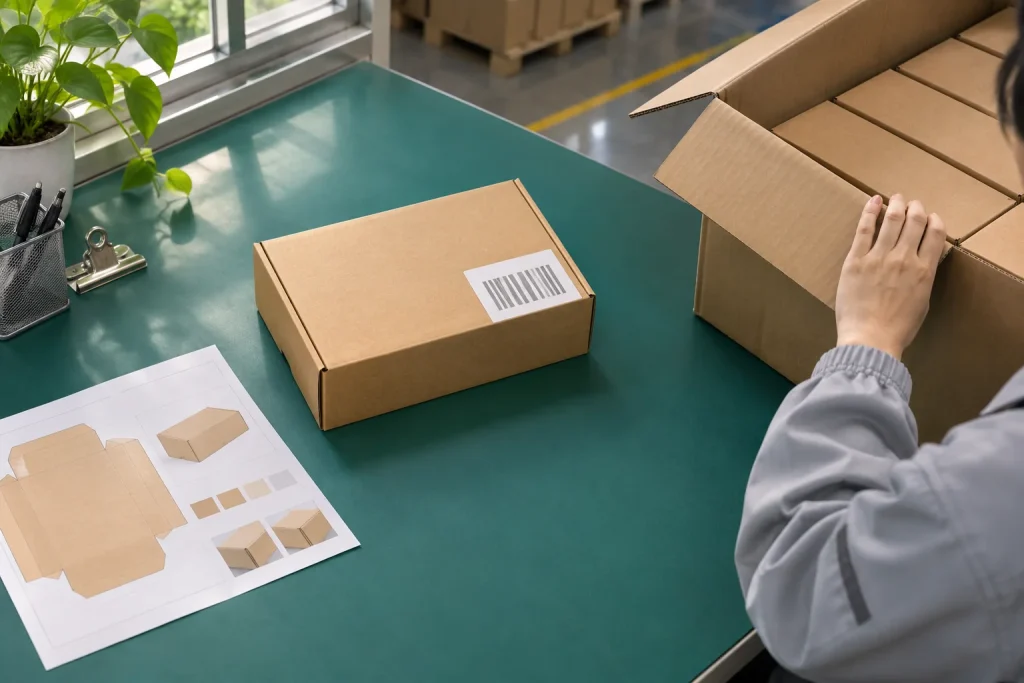
Ask the designer for a marked proof of the fully assembled unit, with the final wrap, bag or sleeve represented. An excellent layout on a flat template may fall across the rounded corner once the box is folded. A sleeve can cover part of an otherwise clear label. If the barcode position has to move, check the surrounding text and markings before anyone applies a sticker over them. Amazon’s item barcode guidance sets formatting and placement rules for Amazon labels and addresses competing visible barcodes and exceptions such as serial and Transparency markings. Use the source for the actual requirements instead of relying on a supplier’s template.
Put a hold instruction in the file handoff. If the factory changes the die line, coating, wrap, label stock, placement or the identifier itself, the line should pause the affected operation and ask which parts of the release need to be proved again. The purchasing team can keep approved work moving while the seller answers an offer question. A print run can finish before an inbox thread clarifies which revision somebody meant to approve. A named release owner prevents a polite “looks OK” on a photograph from becoming authority to print thousands of boxes.
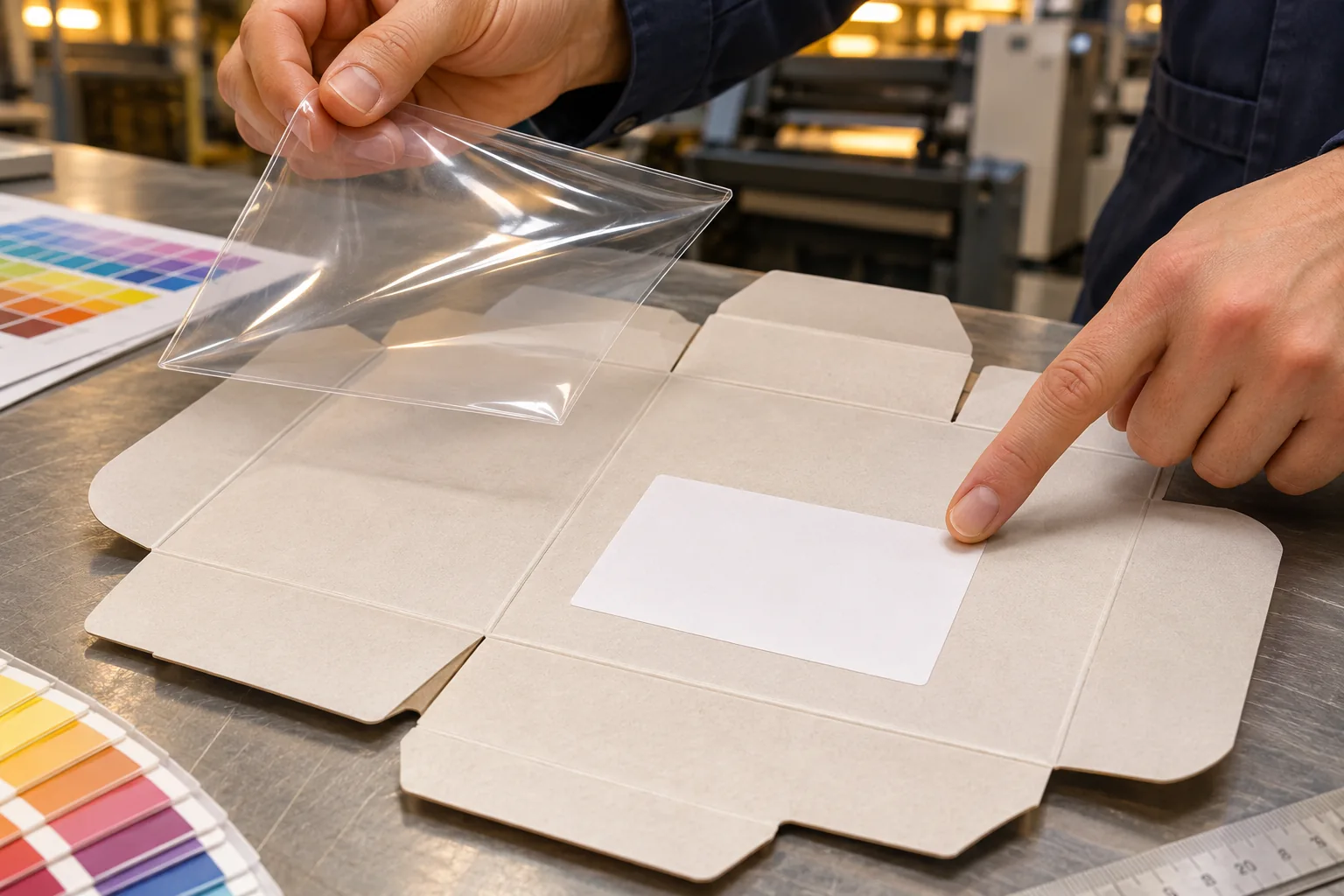
Prove the label against a finished unit
Use a physical proof from the process the factory intends to run. Scan the completed retail unit and compare the decoded value to the approved value for that specific SKU. In the same check, verify the enclosed variation, quantity or pack count. A great picture of the label on its own can leave you with the code for the right item on the wrong carton. Ask for one record that shows the physical variant, printed placement, decoded value, release revision and who checked it. Keep authentic identifiers and screenshots inside the authorized team. Redact them from public examples and vendor conversations that do not require them.
A sensible trial begins with one approved physical example per affected combination of selling unit and packaging version. Where a particular label setup is susceptible to mixing, deliberately test the changeover between variants. Put the example for one color beside the approval record for another. The test should catch the mismatch even if both labels decode. Decide in advance whether a missing scan, wrong value, duplicated variant label or unreadable overwrap starts a hold, a recount or a new proof. This is a way to design the buyer’s verification. It does not set Amazon’s sample size or replace a formal inspection plan.
Watch for a mismatch between readability and identity. The label can look rough and decode correctly once. It might fail when the unit is turned or when the final material goes on. Conversely, excellent printing quality cannot correct a value assigned to a sibling SKU. Preserve separate fields in the resulting record: value expected, value read, variant physically checked and decision. When a problem appears, those fields show whether to talk to the seller, the designer, the printer or the packing lead. The existing guide to approving a China supplier sample can help with the broader product approval. For the label task, provide the exact release and the agreed checks when discussing inspection before shipment.
Decide what happens after a changeover. Old labels can linger by the printer, or a packer can pick them up because their descriptions look nearly identical. Agree on a clean handover: remove the old label stack from the station, verify the first closed unit from the next run, and record which file was loaded. If an old roll still has a legitimate use, put it back with its own reference and keep it out of the working pile. A person who missed the shift briefing should still be able to select the right file.
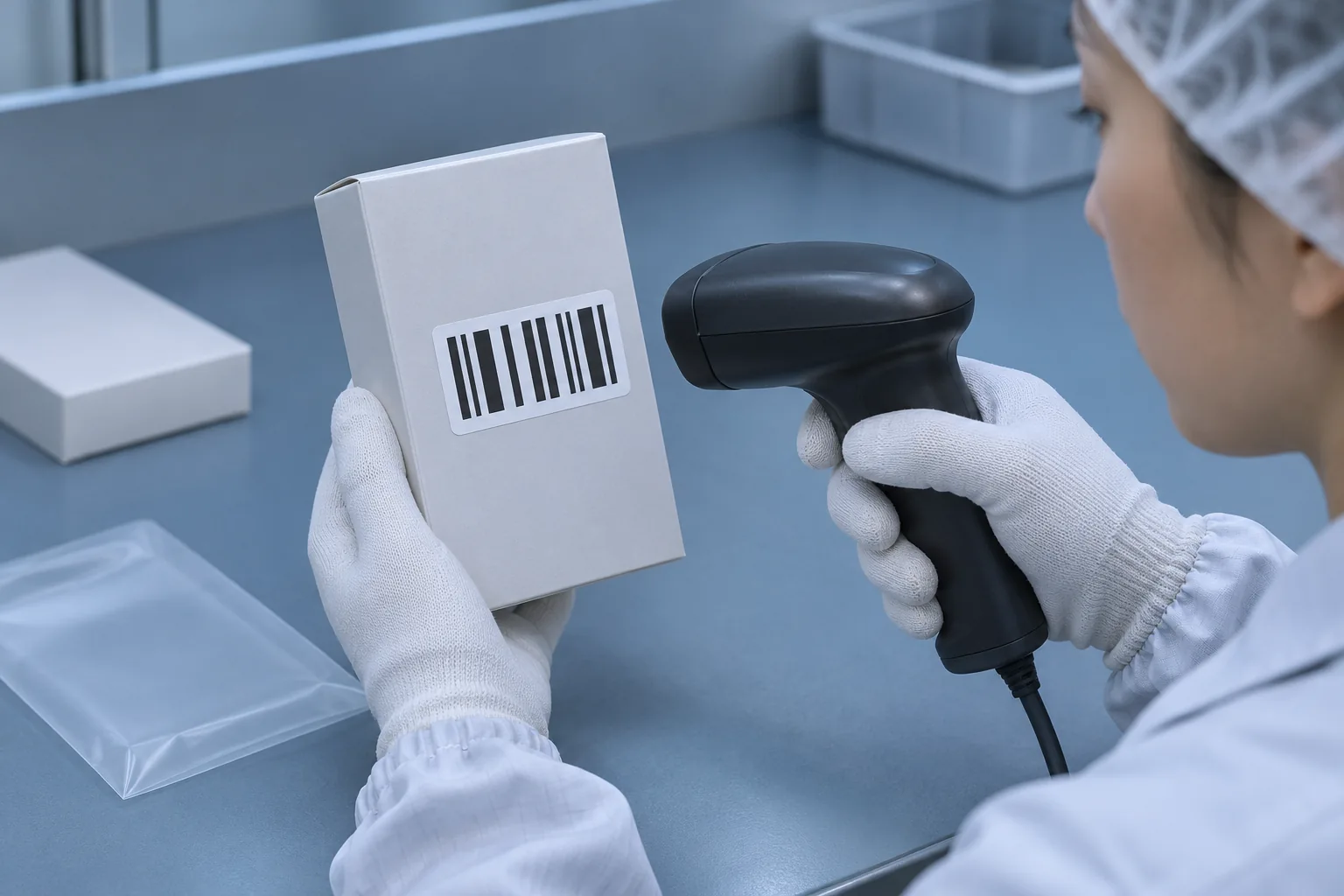
Use a simple worksheet for a two-variant order
Suppose you buy 480 slate-blue and 320 sand-colored organizers, each sold individually in the US. The examples below are fictional. The placeholder codes are deliberately not usable identifiers. In the original purchasing file, both colors were listed on one line. The seller checks the offers and confirms an Amazon item label is needed for both. The factory wants to get a single run of neutral boxes started while the seller sends two separate label PDFs.
| Physical unit | US offer reference | Factory instruction | Evidence before release |
|---|---|---|---|
| 480 slate-blue units | BLUE-SELLER-SKU | Neutral box revision 2, authorized blue label file revision 1 | Closed blue unit matches the PDF and decodes to the value expected for the blue offer |
| 320 sand units | SAND-SELLER-SKU | Same neutral box, separate sand label file revision 1 | Closed sand unit matches the sand file and decodes to its own value after changeover |
| Shipping cartons | Shipment record | Keep the unit-label instruction separate from carton identification | Approved pack contents first, shipment-specific box labels from the shipment workflow |
At the trial, the sand box scans cleanly but returns the value expected for blue. Each individual check looked plausible until the label value was compared to the physical variant. Hold the sand label operation. Check which file was printed, whether any units from the trial entered the blue pile, and where the same file could have been used since the last confirmed changeover. A product without confirmed identity stays out of the FBA lot. Do not clear the whole batch because a replacement first sample looks right. Set the affected quantity and the recheck with the evidence from the actual line.
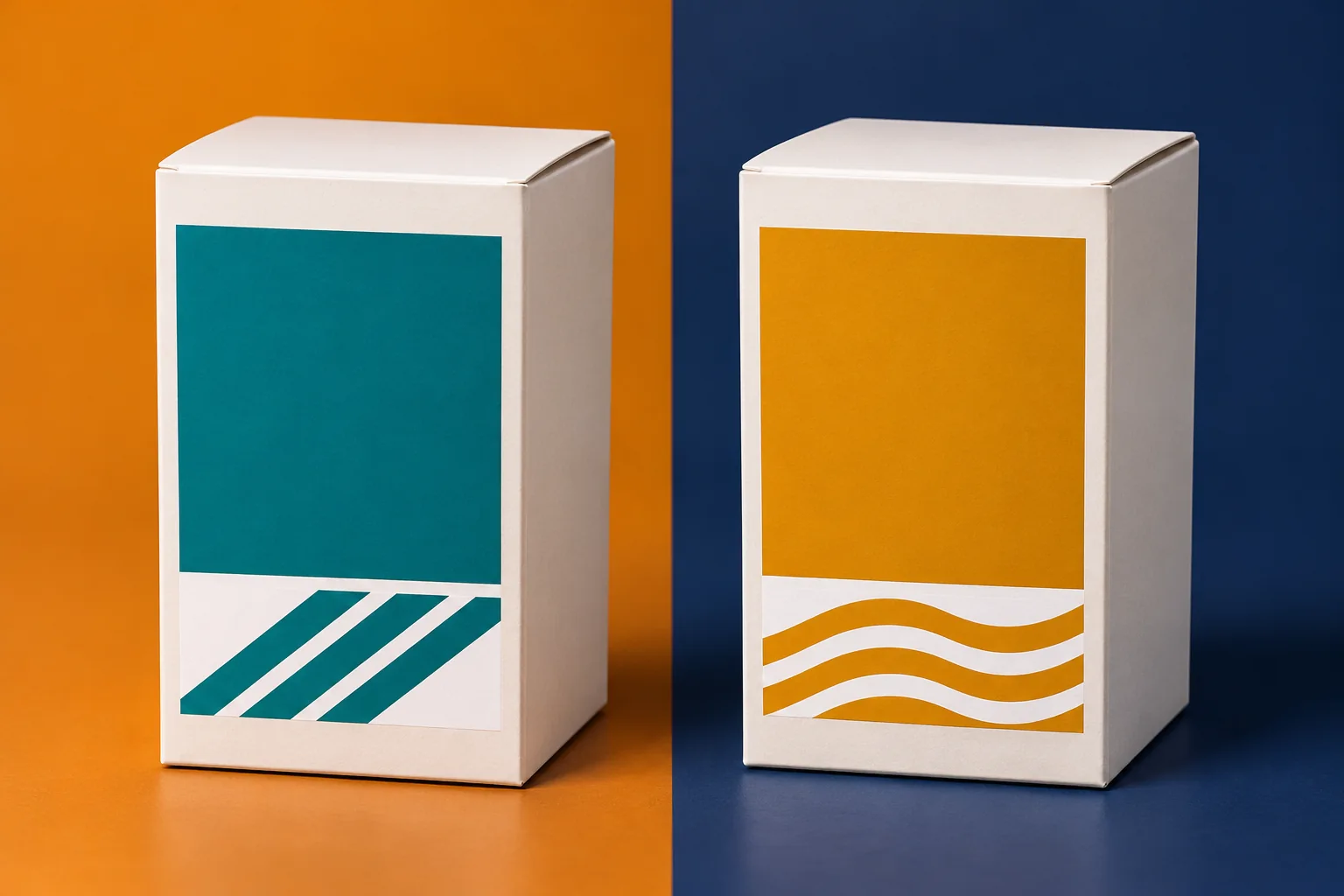
The neutral cartons can be used across the two colors if the approved physical packaging really is the same. The seller’s two label files remain separate, so the corrected sand label can be approved without ordering new cartons. If the two colors instead had incompatible mandatory markings or genuinely different retail packaging, the neutral carton decision would need revisiting. The useful principle is to identify which physical asset the wrong barcode decision has committed, and then correct only that part where possible.
Leave the FBA box ID out of the retail artwork. The unit goes through one check; the box ID is generated for the shipping box in the shipment workflow. For example, several retail units may go into one shipping box, and that box has its own label. A shop that quotes “Amazon labeling included” should say whether its price includes applying the correct label to every affected sellable unit, identifying the inbound boxes, or both. See Amazon’s US instructions for Send to Amazon box labels before signing off on the carton handoff.
Decide what to do with cartons already printed
Keep unused packaging, finished units and goods tied to an existing shipment separate in your decision. Unused cartons may be candidates for an approved overlay if the panel can accommodate it and required markings remain legible. With finished units, the question is whether the intended placement can be corrected and checked in final condition without damaging the pack. With units already included in a shipment that needs a different label, confirm the offer and shipment treatment with the seller first. The factory does not get to close that question by sending a photo of a new sticker.
When the seller’s US offer needs an Amazon barcode in place of the former manufacturer-code setup, Amazon documents a new-SKU route for an affected ASIN. Changing the account default is not a repair for a shipment already created. Before rework, get the seller’s current mapping and label PDF and establish which quantity belongs to which version. Compare the decoded value and the offer reference after rework. If the old label would still be visible or an overlay would hide information that has to stay exposed, get another placement or packaging proposal before authorizing the operation.
Make the decision on the actual batch. A warehouse may be able to relabel a known group of unopened items that all share the same package. Mixed units whose identity cannot be established need a separate review. Record which quantities are released, which remain on hold and why, plus the exact evidence needed to unlock the hold. Do not change an inventory count to absorb an unresolved identity mismatch. If you are splitting or rebuilding shipping cartons as part of the correction, the guide to preserving traceability during repacking in China covers the separate carton history.
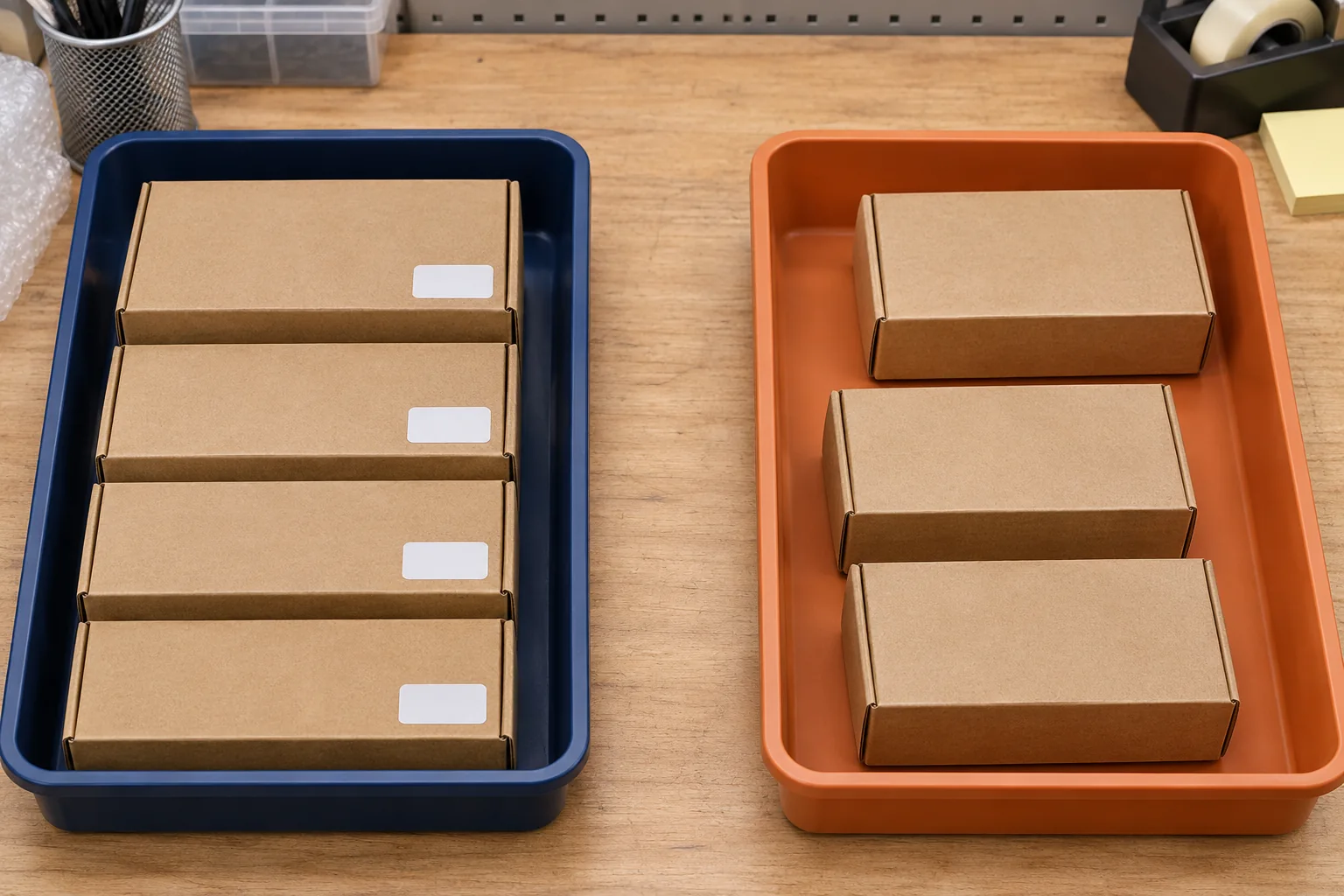
Before restarting, request a full proof from the new file on the actual package rather than a screenshot of the revised PDF alone. Compare it to the previous release record, retire superseded production copies and state when the new approval takes effect on the line. When the status is unclear, prioritize work that can be safely undone. Print plain packaging only if the artwork truly supports a later label and the buyer has approved that approach. Source and packaging decisions are easier to coordinate when the team handling imports from China has the same product, marketplace and approval references as the seller.
Questions before sending the file
Can my factory use the UPC already on its cartons?
Check the current US offer and the actual sellable item. A code may belong to the right product and still be insufficient where Amazon requires an item label. Ask for the seller’s approved barcode route and connect it to a proof of the finished pack before releasing production.
Does an FNSKU replace the GTIN in every system?
Use each identifier for its job. An Amazon label may be the required marking on an FBA retail unit while the GTIN remains part of the product’s identification elsewhere. Record the relationship instead of replacing one column with the other.
Can one print approval cover several variations?
One approval document can contain several rows. Give each affected variation its own mapping, file reference and physical proof. Approve any shared artwork separately so a common box layout does not imply a common code.
What if large quantities are committed before the offer is ready?
Check whether an approved neutral pack and a later labeling step can preserve those quantities. Hold barcode artwork or label application until the relevant seller confirms the offer. Compare the alternative against the cost and lead time of reprinting the package.
Who should sign off on the package before the printer starts?
The seller confirms marketplace and offer evidence. The supplier proves the print and the assembled unit. The buyer or agreed release owner ties those approvals to the exact print run. If you need help with the factory handoff, share the affected variants and package file with the China sourcing team and agree who checks each item before work starts.