
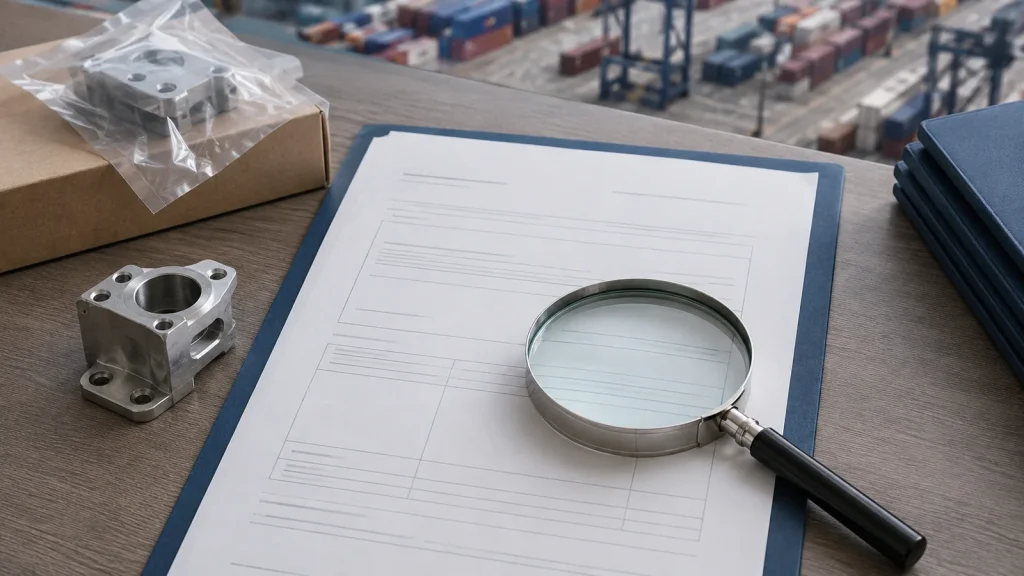
A practical buyer workflow for origin requirements, manufacturing evidence, shipment reconciliation, issuer verification and discrepancy handling.
What should you check before accepting a certificate of origin?
A certificate of origin should connect a specific shipment to a defensible origin claim. Before accepting it, establish why the document is needed, which destination rules apply, whether the goods match the supporting production records, and whether the issuing body can authenticate the issued version. Buying from a Chinese company or shipping from a Chinese port does not, by itself, settle where a product originates.
The practical difficulty is often coordination. Purchasing holds the order, the supplier holds manufacturing information, the forwarder holds shipment details, and the customs representative needs a consistent declaration file. A certificate can look complete while those records describe different versions of the goods. This guide offers a buyer-side review method for finding such gaps early. It does not determine the origin of an actual product or replace destination-specific advice.
Start with the purpose, not the form name
Ask the person requesting the document what decision it supports. Is it evidence for a customs origin declaration, a claim under a particular preferential arrangement, a purchasing requirement, or a document named in a payment arrangement? Record the answer alongside the destination, importer, product description and expected shipment. A request that says only “send COO” leaves too much room for interpretation.
Preferential and non-preferential origin serve different purposes. The WTO Agreement on Rules of Origin describes non-preferential uses including trade remedies, origin marking and trade statistics. A certificate issued for that purpose does not automatically establish entitlement to a tariff preference. The relevant arrangement must support the particular claim and accepted proof.
Write a short requirement note before the supplier applies: who requested the evidence, the legal or contractual basis they identified, the expected document type, the destination reviewer and the unresolved questions. If someone cannot explain the requirement, send that uncertainty back for clarification. Do not select an attractive template from a previous shipment and assume that it applies again.
Destination differences matter. The European Commission explains that EU non-preferential rules may differ from third-country rules and that a third-country certificate is not routinely required for every import. Treat this as an EU example, not a rule for other destinations.
Likewise, the Commission’s proof-of-origin guidance illustrates that accepted proof and validity depend on the arrangement. Establish the actual requirement for your route rather than assuming that every certificate lasts the same period or that a supplier declaration always replaces it.
Separate the seller, the shipping point and the manufacturing history
A useful origin file identifies the legal seller, exporter, producer and relevant production locations as separate facts. They may coincide, but a trading company can buy from another manufacturer, and the commercial invoice can be issued by an entity that never makes the goods. That relationship needs an explanation, not an automatic rejection.
Begin with the product you are actually purchasing: model, material, function, revision and identifiable batch. Then ask where the important inputs came from and what happened to them at each manufacturing location. A factory address without a description of the work performed there is weak evidence. Equally, an impressive manufacturing video may show a different product or an unrelated production line.
China’s 2019 amended origin regulation addresses wholly obtained goods and, where production involves multiple countries, substantial transformation under its applicable criteria. It also distinguishes its non-preferential scope from preferential arrangements. Use the applicable destination rule to assess the goods; do not import a convenient rule from another jurisdiction.
For a practical evidence request, describe the missing fact rather than asking for “all factory documents.” You might need the production flow for the ordered model, an explanation of outsourced machining, or a connection between the final assembly record and the shipment lot. Focused requests are easier for the supplier to answer and easier for the reviewer to assess.
Where confidential input data is needed, agree a controlled route to the authorized reviewer. Keep an index showing what was supplied and to whom. Avoid circulating full bills of materials through a wide email chain simply because several people are copied into the shipment. A buyer can track evidence completeness without making every commercial detail visible to every participant.
Classification is an input to the analysis
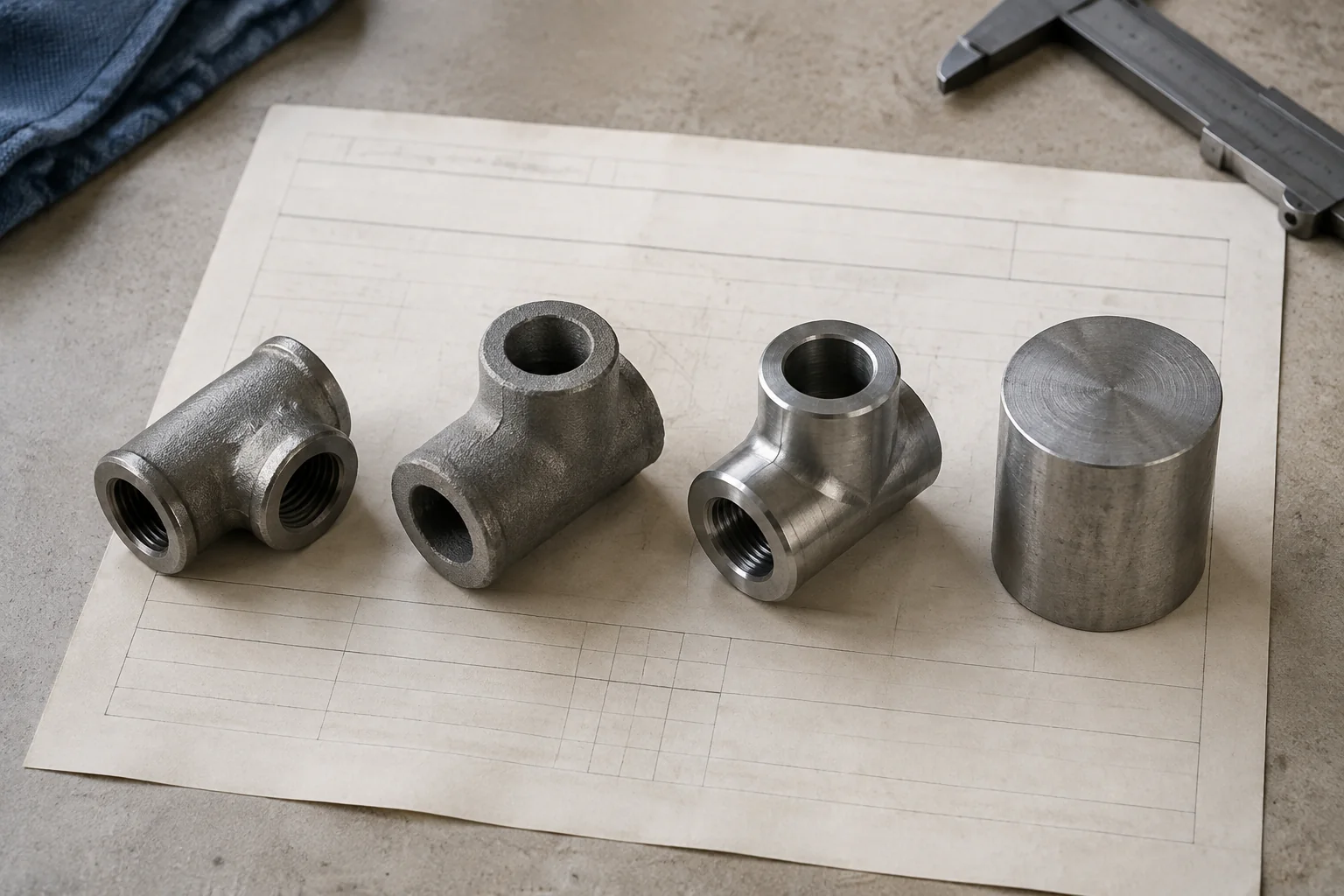
Use the HS-code classification guide to organize the product description and classification questions. If the origin rule refers to a tariff change, an uncertain classification can undermine the origin conclusion. Ask the reviewer to explain which nomenclature and version are relevant before comparing codes from different documents.
A difference in the number of digits is not necessarily a contradiction. An export document and an import declaration may use different national extensions. What matters is whether they describe the same goods and whether the relevant rule has been applied correctly. Escalate a substantive classification difference with the technical file; do not simply copy one number into every document.
Agree the issuer, application responsibility and review sequence
The current Chinese regulation identifies customs and CCPIT, including local CCPIT branches, as issuing bodies within its framework. That does not mean every office issues every proof for every arrangement. Ask the supplier to identify the intended issuer, document type and application route for the specific shipment, then have the destination reviewer confirm that the resulting proof fits the requirement.
The official CCPIT origin service describes product pre-review, certificate application and subsequent issuance or download, with a separate authenticity-checking route. A draft application or a supplier’s screenshot of an application page should therefore be labelled as such until the issued record is available.
Put responsibility in writing. The exporter or its authorized representative may handle the application; the producer may supply the manufacturing evidence; your document coordinator may review shipment details; and the destination specialist may assess acceptance. Assigning one coordinator does not transfer those other responsibilities to that person.
Build a review point into the order plan. The coordinator needs a proposed data set early enough to compare names, product descriptions and invoice references before issuance. Later, they need the actual issued version and its verification evidence. Treat these as two different review events, because accurate application data does not prove that the final certificate reproduces it correctly.
The supplier purchase-contract checklist can help structure document responsibilities and change notices. Specify the evidence and cooperation you need rather than inserting an unsupported promise that a certificate will guarantee clearance or a particular duty outcome.
Reconcile the certificate with the shipment, field by field
Work from the most recent approved invoice and packing list. Create a compact comparison sheet with the proposed certificate data beside the shipment data. This is an internal review tool, not a substitute certificate. Its purpose is to make a difference visible and identify who must explain it.
| Review area | Useful comparison | Question to resolve |
|---|---|---|
| Parties | Legal names, roles and addresses | Can the exporter, seller and producer relationship be explained? |
| Goods | Model, material, function and revision | Does each line identify the shipped product? |
| References | Invoice number, date and shipment reference | Does the certificate belong to this transaction? |
| Quantity | Units, packages and declared measures | Are differences caused by units or by different goods? |
| Origin | Declared country and supporting production file | Is there evidence for each relevant product line? |
| Issuance | Issuer, certificate identifier and issued version | Can the record be checked through the issuer? |
Read descriptions as a reviewer who has never seen the purchase order. “Parts” may be sufficient for a supplier’s internal shorthand but may not identify the product clearly enough for your review. Conversely, an extremely long marketing description can obscure the model and material. Seek a concise, accurate description that can be connected to the technical record.
Check units before calling a quantity difference an error. A carton count, a piece count and a gross weight measure different things. Record the conversion or relationship used in the comparison. If one carton contains mixed products, the packing list should let you trace which items belong to which certificate lines. Never make the numbers agree by discarding a line that is inconvenient.
For mixed-origin goods, avoid a shipment-level assumption. A single container may contain products from several factories or production chains. Ask the competent reviewer how those goods should be represented under the relevant rules and form. The physical container is a logistics unit; your evidence still needs to identify the goods inside it.
Keep origin and value checks connected but distinct. The customs valuation guide addresses price and adjustments. A plausible invoice value does not establish origin, and an authentic origin certificate does not establish the correct customs value. Use the same product identity across both reviews so that separate conclusions concern the same goods.

Authenticate through the issuer’s official route
Start from an official issuer website or a verified authority reference, then follow its certificate-checking instructions. Do not rely only on a clickable link or QR code supplied inside the document. A convincing-looking page reached through an unverified link cannot provide an independent check of the document that supplied the link.
The ICC verification platform currently directs CCPIT certificate checks to CCPIT’s platform because the technical connection is not in place. A missing result in the wrong system is therefore not, by itself, proof that a CCPIT certificate is false.
Once the correct record is available, compare the fields that the system actually exposes. Record the certificate identifier, issuing body, date of your check and the result. If the portal reveals only limited data, say that your check covered only those fields. Do not describe a limited authenticity response as a complete audit of the manufacturing history.
Where a lookup fails, preserve the attempted identifier and the response, check transcription, and confirm that the chosen platform covers that issuer and certificate type. An unavailable service, an incorrect identifier and a record mismatch are different findings. Ask the issuer for clarification through independently verified contact details rather than repeatedly trying unrelated websites.
Keep the issued file in its original form and save the verification note separately. If your team uses screenshots for an internal record, retain enough context to identify the official page and check date, while limiting exposure of confidential commercial information. Do not upload real supplier documents into public forums to ask strangers whether they look genuine.
The WCO’s certification resources provide broader institutional guidance, including work on digital certificates. They are useful background; they do not authenticate your particular shipment. Your file still needs the issuer-specific check and the destination-specific assessment.

Resolve discrepancies without rewriting evidence
Describe the problem precisely: “The certificate refers to invoice revision A, while the shipment file contains revision B with an added product line” gives the supplier something concrete to investigate. “The document is wrong” invites a replacement without explaining what must be reconciled. Include the affected line, expected source record and practical deadline for the review.
Distinguish an explanation from a correction. A trading-company name and a manufacturer name may both be correct if their roles are documented. A wrong invoice reference may require action through the issuing process. A disputed origin conclusion may require more manufacturing evidence or a competent ruling route. The document coordinator should not decide which remedy is legally sufficient on appearance alone.
Never edit a scanned certificate to align it with the invoice. Send the discrepancy to the authorized applicant and issuer, and retain their response. If a corrected, replacement or otherwise revised proof is issued, record its relationship to the earlier version and confirm which document the destination reviewer will use. Avoid leaving two apparently current versions in the shipment folder.
Set a hold on the decision that depends on the missing evidence. Depending on your agreed process, this could be document approval, a preference claim or an internal shipment-release step. Coordinate any operational consequences with the parties responsible for the goods and transport. A document concern does not authorize the coordinator to alter a payment obligation or shipment contract independently.
When the issue remains unresolved near departure, ask the destination representative to state the available lawful options and their consequences. The answer may depend on procedure, product and timing. Do not promise that a missing certificate can always be supplied later, that every discrepancy is minor, or that an additional stamp will cure an unsupported origin claim.

Three examples that test the review method
A Chinese trading company sells goods made elsewhere
In this hypothetical order, the invoice comes from a Chinese trader, but a product label and manufacturer file point to another country. The first question is whether those records refer to the same model and batch. If they do, ask the trader to explain the supply chain and have the destination specialist assess the proper origin evidence. Do not change the country merely to match the seller’s address.
The coordinator’s useful output is a reconciled party-and-product record, not an improvised legal conclusion. Keep the trader’s commercial role, the producer’s identity and the shipment route visible. If the supplier proposes a processing or re-export document, establish exactly what it attests and whether it meets the original requirement before accepting it.
The invoice changes after the certificate is issued
Suppose the buyer adds another model to the final shipment after the certificate data was prepared. Compare the newly shipped line against the earlier approved data and determine whether the existing proof covers it. The fact that both models come from the same supplier does not establish that the same production evidence supports both.
Ask the applicant and issuer about the correct handling of the revised transaction. Meanwhile, mark the internal comparison as unresolved and preserve both invoice revisions. Once the accepted document set is established, update the forwarder and destination representative together. This prevents one participant from declaring against an obsolete version while another works from the correction.
The portal record exists, but the goods do not match
Imagine that an issuer lookup finds the certificate number, yet the displayed description relates to a different product. The existence of the number is only one observation. Record the mismatch, recheck the identifier, and ask the issuer to explain the discrepancy. Do not treat a successful search screen as approval to ignore an incompatible product description.
If the available portal data is abbreviated, a further issuer response may explain the difference. If it does not, keep the file unresolved. Your role is to preserve the evidence trail and obtain the appropriate review, rather than choosing whichever document makes the shipment easiest to process.
Build a buyer file that another person can use
Organize the file around decisions rather than around email senders. A useful structure contains the requirement note, product identity, manufacturing evidence index, approved commercial documents, issued proof, verification note and discrepancy history. Another colleague should be able to understand the current position without reading every message in the order thread.
Use one document register to identify the current invoice, packing list and certificate. Give each entry a source, received date, version and owner. Keep superseded material available for traceability but clearly marked. If the supplier sends a file with the same filename and changed content, record it as a new version instead of silently replacing the earlier evidence.
Choose retention and access rules with the responsible specialist according to applicable law and contractual needs; this guide does not prescribe one universal period. Also decide who will respond if customs later asks for production support. A certificate stored on one employee’s laptop is a fragile record even when its original review was sound.
For a repeat order, reuse the questions and comparison structure, then recheck the facts. Changes in factory, component sourcing, product revision, destination, arrangement or issuer can affect the earlier assessment. Ask the supplier to report relevant changes, and connect that notification to the purchase-order process. Repetition reduces the effort of organizing evidence; it does not make yesterday’s evidence automatically current.
The import-documents overview places this file alongside the wider purchasing and transport record. If your route involves Iran, the customs-clearance and delivery service page explains the service scope. Prepare the product file and actual documents before requesting a review; keep the final origin and acceptance decisions with the competent parties.
Common buyer questions
Does a Chinese invoice prove Chinese origin?
No. It identifies a commercial transaction and seller, but origin requires an assessment of the goods and applicable rules. Establish the producer, production locations and relevant manufacturing evidence, then connect those facts to the specific shipment. Do not substitute the seller’s address for that analysis.
Does an authentic certificate guarantee a tariff reduction?
No. Authenticity, correct origin determination and eligibility for a particular preferential treatment are separate questions. Confirm the arrangement, product rule, accepted proof and applicable procedure with the destination reviewer. A non-preferential certificate does not automatically support a preferential claim.
What should I do when an online certificate search finds nothing?
Check the identifier and the correct issuer-specific platform, preserve the response and contact the issuer through official details. A service outage or unsupported certificate type may explain a missing result. Keep the outcome unverified until the cause is resolved instead of immediately declaring the document genuine or forged.
Can the buyer correct an invoice number on a scanned certificate?
No. Preserve the issued evidence and request the appropriate correction through the authorized applicant and issuer. Record which revised document replaces or relates to the original and obtain destination acceptance where required. Editing the scan destroys the distinction between issued evidence and a buyer’s proposed correction.
Can one certificate cover goods from several manufacturers?
The answer depends on the applicable form, rules and actual goods. Prepare a line-level map of product, manufacturer, origin evidence and shipment references, then ask the issuer and destination reviewer how the proof must represent them. Sharing one container or invoice does not settle the question.
What should be ready before asking for professional help?
Provide the destination, product specifications, parties and roles, current invoice and packing list, proposed or issued certificate, available production evidence and a clear description of the uncertainty. State whether departure or another contractual event is imminent. This lets the reviewer address the actual gap rather than guess what the shipment contains.
A practical next step
Choose one upcoming order and write its requirement note. Then test whether the product identity, manufacturing support and commercial documents tell a consistent story. Resolve the missing connections before treating the certificate as an approved part of the shipment file. The aim is a record that can be explained, checked and revisited when circumstances change.
For adjacent purchasing decisions, use the China purchasing and import guides. The examples above are teaching scenarios, not client cases or customs rulings. Official source pages were reviewed on 6 September 2026; check the applicable current rules again when preparing a real declaration.



[…] Related guide: checking certificates of origin for China imports […]