
Verify a Chinese supplier’s code, apply the HS legal sequence, and document the complete destination-country tariff classification before shipment.
Direct answer: To determine an HS code for goods imported from China, classify the product as it will arrive at the destination border, not by its marketing name and not by copying the supplier’s export code. Build a technical dossier, read the legal wording of the relevant headings and notes, apply the General Rules for the Interpretation of the Harmonized System in order, then continue from the international six-digit subheading into the current national tariff schedule of the importing country. Check official decisions and, when the commercial exposure is material or the result remains uncertain, obtain a binding ruling before shipment.
An HS code is a legal classification conclusion supported by facts. It affects the duty calculation, but it can also determine licensing, anti-dumping measures, quotas, origin rules, statistical reporting, taxes and product controls. A convincing answer therefore includes the product description, evidence used, alternatives rejected, rule applied, national extension, version date and reviewer. A number sent in a chat message is not a classification record.
This guide is for importers, purchasing teams and product managers who source from China and must give a customs broker a defensible file. It explains a repeatable workflow rather than assigning a code to a named product. Begin with the broader China purchasing and import guides if supplier selection, payment, freight and clearance responsibilities have not yet been designed.
What the HS is—and what an HS code is not
The Harmonized Commodity Description and Coding System is the international product nomenclature maintained by the World Customs Organization. The WCO’s official HS overview describes a structured system used by more than 200 countries and economies. At international level, goods are organized through sections and chapters, four-digit headings and six-digit subheadings. That common core gives customs administrations and traders a shared vocabulary, but it does not make every complete import code identical worldwide.
The first six digits normally express the harmonized subheading. Importing jurisdictions may add digits for national tariff lines, statistical subdivisions or control measures. The European Union, for example, builds its eight-digit Combined Nomenclature on the HS and integrates further measures through TARIC, as the European Commission’s tariff-classification guidance explains. Other destinations have their own code lengths, databases and legal effects. “The HS code” is therefore incomplete unless you state the destination, schedule edition and required digit level.
An HS code is not a universal product identifier like a model number, SKU or barcode. It is not permanently attached to a Chinese supplier’s listing, and it is not selected by choosing whichever description sounds commercially convenient. The decisive text is the applicable legal tariff schedule, including section notes, chapter notes, headings, subheadings and relevant national provisions. Search tools are useful for finding candidates; they do not replace legal analysis.
Why the supplier’s Chinese export code is only evidence
A Chinese factory or trading company may provide a code used on earlier export declarations. Request it, along with the Chinese product description and prior declaration context, because it can reveal how the supplier understands the goods. But do not accept it automatically. The earlier shipment may have gone to another destination, used an older schedule, described a different model or included different accessories. The supplier may also have copied a code from a marketplace page or freight forwarder without retaining the reasoning.
The Chinese export declaration and the destination import declaration serve different national systems beyond the harmonized level. Even when the first six digits agree, the destination extension can change the applicable duty, tax, licence or trade-remedy treatment. A discrepancy is not necessarily proof of misconduct; it is a signal to compare the facts and legal texts. Ask which product revision, destination and date supported the supplier’s number.
Put code verification inside the procurement process described in our guide on how to start importing from China. Do it before final costing, labelling and shipment booking. If classification begins only after arrival, the importer has little time to obtain missing composition data, correct documents or challenge an assumption without storage and delay costs.
Start with the product as presented at the border
Classification follows the goods in the condition in which they are imported. Freeze the exact commercial configuration: complete, unfinished or unassembled; a single item, assortment or retail set; with or without an adapter, battery, case, spare part or consumable; bulk packed or ready for retail. A supplier’s product family may contain versions that fall under different provisions because their materials, functions or shipment state differ.
Write a neutral description that answers what the item is, what it does, how it works, what it is made from and how it is presented. Avoid brand language such as “smart,” “premium,” “eco” or “professional” unless a legally relevant characteristic sits behind it. “Rechargeable device for monitoring temperature, consisting of…” is more useful than a catalogue slogan. Identify the principal function without erasing secondary functions that may affect competing headings.
Record the destination country, importer of record, intended import date and applicable tariff edition. The WCO confirms on its HS 2022 nomenclature page that the seventh edition entered into force on 1 January 2022. In 2026, HS 2022 remains the international base in current trade transactions, but national schedules and complementary amendments must still be checked at the intended declaration date. Never rely on an undated code table downloaded from an unknown site.

Build a classification evidence pack
A useful dossier begins with the controlled specification and revision number. Include technical drawings, clear photos, user instructions, bill of materials, material grades and percentages, dimensions, weight, power source, voltage, capacity, operating principle, manufacturing process and intended use. For chemicals, include composition and safety data. For textiles, capture fibre composition, construction, coating, dimensions and whether the article is finished. For machinery and electronics, identify components, functions, interfaces and what is shipped together.
Ask the supplier targeted questions rather than “What is the HS code?” Useful questions include: Which component performs the main operation? Are materials percentages by weight, value or surface area? Is the article shipped assembled? Can it operate without the accessory? Is a battery included? Is the product designed solely or principally for another machine? Does the package contain items that are independently usable? Which production process gives the item its character? Attach the answers to the specification, not only to a messaging thread.
Use supplier verification to confirm that the respondent understands the actual product. A salesperson may answer from a catalogue while an engineer knows that material or circuit revisions changed. Our workflow to verify a Chinese supplier separates legal identity from technical capability. For higher exposure, a scoped supplier and factory verification can confirm manufacturing location, product scope and the people responsible for technical declarations.
Include physical or retained samples when practical. Photographs should show ports, labels, layers, internal components and packaging, with scale. A customs authority or adviser cannot classify what the file does not reveal. Missing evidence often produces a broad conservative answer, a request for information or an incorrect assumption.
Understand the hierarchy before searching a database
The HS is not a flat keyword list. Sections group broad areas of goods; chapters are represented by the first two digits; headings add two more digits; and subheadings reach the common six-digit level. Section and chapter notes can include, exclude or define goods and therefore may control the result before a familiar word in a heading is considered. Punctuation, indentation and the relationship between one-dash and two-dash subheadings matter.
Search from several factual angles: common name, technical name, function, material and industry synonym. Treat the results as a candidate set. Open the complete heading context and read all relevant legal notes. A keyword result containing the product name can still be wrong if a note sends the product elsewhere or if the item is more specifically described by function, material, use or relationship to another article.
The WCO’s official classification-tools page explains the role of the Explanatory Notes, Classification Opinions and other instruments. The Explanatory Notes are the WCO’s official international interpretation and are an essential aid, even though national legal status and access arrangements must be considered. Use current official tools or an authorized tariff service, not copied excerpts with unknown edition dates.
Apply General Interpretative Rule 1 first
The WCO General Rules for Interpretation establish the legal sequence. Rule 1 makes classification depend on the wording of headings and relevant section or chapter notes. Section and chapter titles are guidance only. This means a classifier must begin with the product facts and legal text, not jump directly to “essential character” or a database precedent.
Prepare a candidate table. For each possible heading, copy only the necessary legal reference into the work file, record the notes reviewed and write why the goods are included or excluded. Mark unresolved facts. If Rule 1 and the applicable notes classify the complete goods, stop at the heading level and proceed to the subheading analysis under Rule 6. Do not invoke later rules merely to support a preferred commercial outcome.
A disciplined record can be short: “Candidate A rejected because chapter note excludes articles of material X; Candidate B accepted because the complete imported article answers the heading description and no exclusion applies.” The point is not elaborate legal prose. It is a traceable connection between evidence and text.
Use Rule 2 for incomplete goods, unassembled goods and mixtures
Rule 2(a) can extend a heading for a complete article to an incomplete or unfinished article that already has the essential character of the finished article. It also addresses complete or finished articles presented unassembled or disassembled. This is highly relevant to China sourcing, where machinery, furniture, kits or large products may be split for packing and transport. The shipping configuration, degree of completion and components imported together must be documented.
Do not assume every collection of parts becomes the finished machine. Ask what is missing, whether the imported components establish the identity of the complete article and whether separate consignments are being combined under a lawful national provision. Timing, importer identity and declaration practice can matter at national level. A bill of materials, assembly drawing and packing list are central evidence.
Rule 2(b) deals with references to materials or substances and mixtures or combinations. Its effect can create a need to compare headings under Rule 3. Record every material that matters and its contribution to function, structure, value and consumer perception. A superficial outer layer should not automatically define a complex article, while a small component can sometimes perform the core operation.

Resolve competing headings under Rule 3
Rule 3 applies when goods appear classifiable under two or more headings after Rule 2 or for another reason. Under Rule 3(a), the more specific description is generally preferred, but headings that each refer to only part of the materials in a mixture or only part of the items in a retail set may be treated as equally specific. “Specific” is a legal comparison, not simply the heading with more words.
If 3(a) does not settle the issue, Rule 3(b) looks to the material or component giving a mixture, composite article or qualifying retail set its essential character, insofar as the test applies. Essential character is fact-sensitive. Consider the nature of each component, role in use, bulk, quantity, weight, value and the importance of the component to the goods. Do not reduce it to “most expensive part” without examining function and presentation.
If neither 3(a) nor 3(b) resolves classification, Rule 3(c) selects the heading occurring last in numerical order among those that equally merit consideration. Document why earlier tests failed before using this tie-breaker. A spreadsheet that lists candidates, notes, evidence, specific-description analysis and essential-character factors makes review much stronger than a conclusion alone.
Know when Rules 4 and 5 matter
Rule 4 covers goods that cannot be classified under the preceding rules and directs classification with the goods to which they are most akin. This is not permission to choose a vaguely similar market product. Compare material, function, operating principle and commercial role, and show why the earlier rules failed. Novel products may still be covered by existing heading language even if their marketing category did not exist when a popular guide was written.
Rule 5(a) addresses certain durable containers specially shaped or fitted for a specific article and normally sold with it, subject to conditions and an exception where the container gives the whole its essential character. Rule 5(b) generally treats normal packing materials and containers with the goods, while preserving an exception for packing clearly suitable for repetitive use. Distinguish a fitted instrument case from ordinary transport packaging and from an independently useful article.
Packaging decisions should therefore reach the classifier before shipment. A promotional kit, reusable metal case or bundle of accessories can change the analysis. Product photographs and the commercial invoice must describe the same configuration the warehouse actually packs.
Use Rule 6 to reach the six-digit subheading
Once the correct heading is established, Rule 6 governs classification among subheadings. Compare only subheadings at the same level, apply the wording and related subheading notes, and use the preceding rules with necessary changes. Do not compare a broad one-dash category directly with a nested two-dash option detached from its parent.
Preserve the hierarchy in the work record: section, chapter, heading, one-dash subheading and two-dash subheading. Confirm that the chosen six-digit code belongs to the same HS edition used by the destination schedule. If a product was classified under an older edition, consult official correlation tables and then reclassify against the new text; a correlation is a navigation aid, not automatic legal continuity.
At this point you have an international HS conclusion, not necessarily the complete declaration code. The next step is destination-country verification.
Extend the result into the destination tariff schedule
Open the official tariff database for the country of import and select the current declaration date. Follow the accepted six-digit subheading into every national subdivision. Read national notes, units, duty columns, preferential rates, taxes, licences, quotas, prohibitions, trade remedies and additional codes. Verify whether the rate depends on origin, end use, importer authorization or documentary proof.
The origin of goods and their tariff classification are separate questions. “Made in China” does not choose the HS heading, although Chinese origin may affect a duty rate, anti-dumping measure or preference analysis after classification. Likewise, Incoterms and freight mode do not determine the code. Our comparison of air and sea freight from China helps plan logistics, but the same goods should not receive a different legal classification merely because the transport mode changed.
Record the full national code, exact official description, measure results, database URL and access date. Take an internal evidence capture where permitted, because live tariff databases change. Do not publish a static duty rate in a purchasing sheet without the jurisdiction, origin, valuation basis and effective date.

Search official precedents without copying them blindly
Classification decisions can show how authorities analyzed similar goods. Search by technical characteristics, components and competing headings, not only the product name. Read the complete decision, including the goods description, exhibits, date, legal reasoning and disposition. A precedent for a visually similar item may not apply if its composition, power, function, packaging or jurisdiction differs.
In the United States, Customs and Border Protection explains its binding-ruling process in the official CBP ruling guidance. Published decisions can be searched through the official CROSS database help and search system. CBP notes an important distinction: a classification ruling can be binding, while duty rates themselves can change. Other jurisdictions have their own ruling programs, validity periods and disclosure rules.
In the European Union, Binding Tariff Information is a legal classification decision generally valid for three years across EU customs administrations, subject to the applicable conditions. The Commission’s official BTI guidance requires a detailed, accurate description and may require images or samples. A BTI protects certainty for the specified goods; it is not a shortcut for withholding inconvenient facts.
Decide when to request a binding ruling
Escalate when plausible headings produce materially different duty or regulatory outcomes; when the product is novel or multi-function; when composition or shipment state creates uncertainty; when an anti-dumping, quota, licence or safety measure may apply; when shipment value or recurrence makes a dispute expensive; or when brokers and suppliers disagree without a documented basis.
Apply early. A good request includes the exact goods, confidential treatment request where available, samples or images, technical literature, material breakdown, manufacturing process, intended use, shipment configuration, suggested classification, alternatives considered and supporting legal analysis. Processing times and eligibility differ by administration. Do not ship on the assumption that a requested ruling will arrive or apply retroactively.
Keep the ruling with the product master and declaration instructions. Check whether it binds the holder, goods and administration; its validity period; obligations to reference it on declarations; and events that can revoke or invalidate it. Product changes, new law and new HS editions require review.
Work effectively with a customs broker
A broker needs facts, not just a spreadsheet column. Send the evidence pack and ask for the legal basis, alternatives considered, missing data and national measures found. Confirm who makes the final declaration and who bears legal responsibility in the destination. Outsourcing filing does not necessarily transfer the importer’s classification liability.
Ask the broker to distinguish “common practice” from an authority ruling. Request an escalation path for uncertain products and a written response when a code changes. If two brokers disagree, compare their product assumptions, tariff editions and legal notes before choosing the cheaper rate. A reasoned higher-duty answer can be safer than an unsupported lower-duty answer.
When you need an integrated file from sourcing through arrival, China Moshaver’s product sourcing support can structure supplier evidence, and inspection and quality-control services can verify whether production matches the specification used for classification. Customs classification remains destination-specific and should be confirmed with the competent authority or qualified adviser.
Align the code across commercial and shipping documents
After approval, update the product master, purchase order instructions, commercial invoice template, packing list rules, shipping instruction and broker database. The description must remain specific and consistent without becoming a copy of the tariff wording that conceals the real goods. Include model, material, function and relevant configuration. Keep the supplier’s Chinese export code in a separate field from the destination import code when both are needed.
Set document controls. Only authorized staff should change a code. Require the reason, evidence, approver, effective date and affected SKUs. Flag invoices where description, model, unit, quantity or code conflicts with the approved master. A good import-document workflow catches inconsistencies before the declaration rather than asking the broker to guess under deadline pressure.
Marketplace purchases need the same discipline. The operational guides for buying from Alibaba and buying from 1688 explain different supplier and transaction contexts, but a listing’s code or title is not proof for customs. Obtain a technical declaration from the actual seller and reconcile it with the shipped product.
Avoid the most expensive classification mistakes
Choosing by duty rate. Starting with the lowest rate reverses the legal analysis. Establish classification first, then calculate measures. Using only a product name. Names such as “holder,” “module,” “kit” or “accessory” may hide function and material. Ignoring notes. A heading keyword cannot override an exclusion. Stopping at six digits. National subdivisions can control the actual declaration and measures.
Copying a competitor. You rarely know the competitor’s model, evidence, jurisdiction or ruling. Treating every accessory as a set. Retail-set conditions and essential character require analysis. Splitting an unassembled article without review. Rule 2(a) may still point to the complete good. Using an old schedule. HS editions and national tariffs change.
Letting descriptions drift. If engineering changes material, capacity, function, accessories or packaging, the approved classification may no longer fit. Confusing classification and origin. They interact in calculating measures but follow different rules. Keeping no reasoning. A correct number with no evidence is difficult to defend, repeat or update.
Test the conclusion with three neutral examples
Consider an insulated drinking vessel sourced in several versions. The classifier should not guess a code from “bottle.” Capture body materials and layers, vacuum construction, capacity, closure, whether electrical heating exists and whether it ships with an independently usable infuser or case. Search material and function candidates, read exclusions, resolve any composite character, then select the national line. The example teaches evidence; it does not supply a universal bottle code.
For an unassembled desk light shipped with adapter, USB cable and retail box, document the lighting function, light source, power arrangement, structure, shipment completeness and whether accessories are ordinary components or separate goods. Rule 2(a) may be relevant to an unassembled complete article, while the notes and heading wording remain the starting point. A rechargeable version and a purely mechanical stand may require different facts and analysis.
For a retail repair kit containing tools, fasteners, adhesive and a case, list each item, independent use, packaging for direct retail sale, function of the combined activity, value and role. Test whether the collection qualifies as a set for Rule 3(b), what gives essential character, or whether items require separate classification. Never declare “kit” as the reasoning.
Create a classification decision record
The record should identify product and revision; destination and import date; factual description; images and documents; HS and national schedule editions; candidate headings; notes reviewed; General Rules applied; precedents; selected six-digit and full national codes; measures checked; reviewer; approval date; and review triggers. Store the supplier declaration and broker analysis as evidence, not as substitutes for the conclusion.
Add confidence and materiality. A low-confidence answer with a large duty difference or licensing consequence must escalate. A high-confidence standard item can follow ordinary approval. Define review triggers such as material substitution, new function, different shipment set, packaging change, manufacturing revision, new destination, tariff update, ruling expiry or authority challenge.
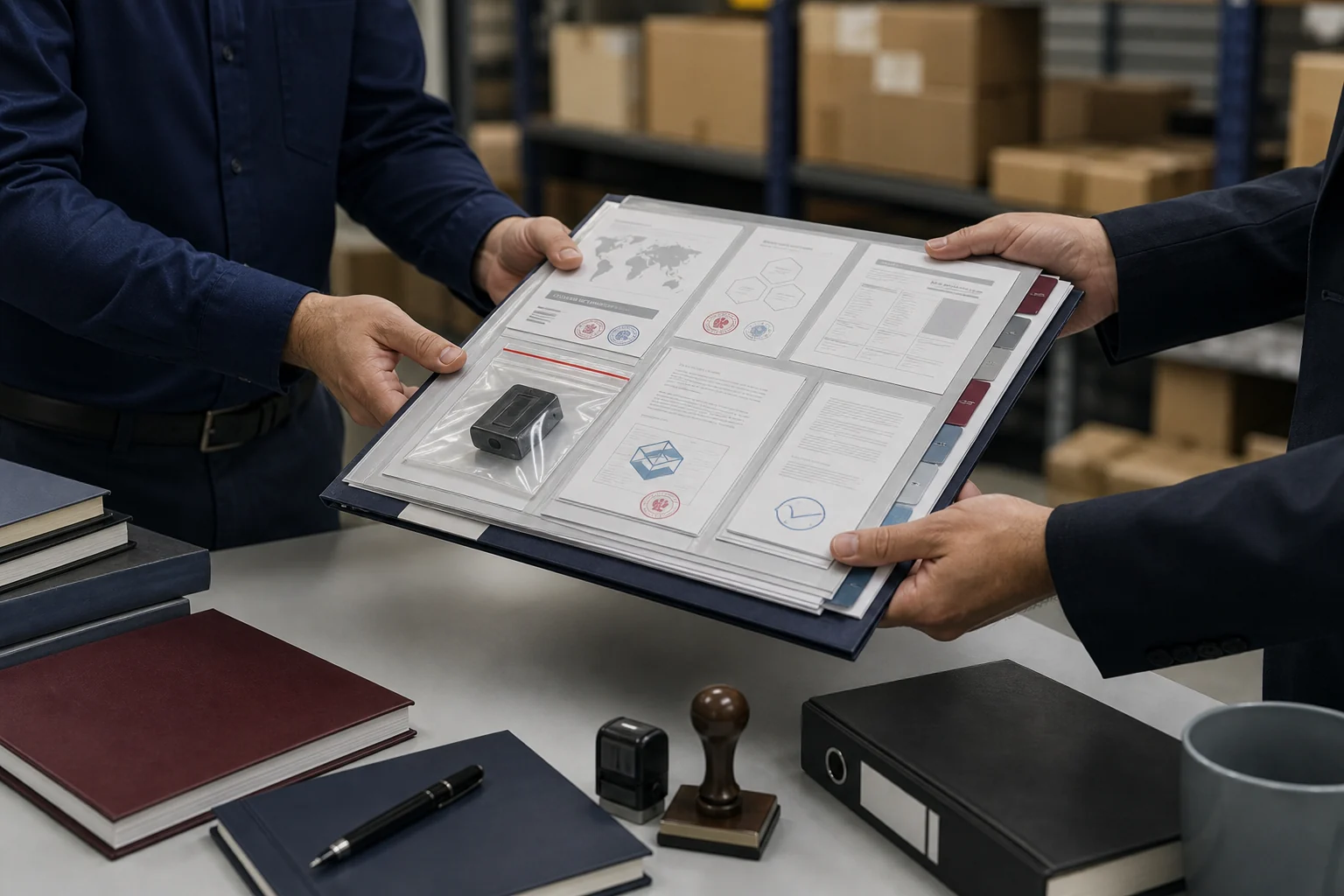
Version the record and link it to the SKU master. Preserve the superseded decision and effective dates so past declarations can be reconstructed. During an audit, the team should be able to show what was known, which legal texts were current and why the code was chosen. That is more defensible than recreating the rationale years later.
Pre-shipment HS code checklist
- Confirm the destination, importer of record, declaration date and current national tariff edition.
- Freeze the exact model, revision, materials, function, accessories, packaging and shipment state.
- Collect drawings, photos, manuals, bill of materials, composition data and supplier answers.
- Identify candidate headings from several factual search terms.
- Read section notes, chapter notes and complete heading wording.
- Apply Rules 1 through 5 only as required and document rejected alternatives.
- Use Rule 6 to select the correct six-digit subheading at the same hierarchical level.
- Extend the result through the destination’s national tariff lines and check every measure.
- Review current official decisions and request a binding ruling when exposure or uncertainty warrants it.
- Align the approved result across invoice, packing list, shipping instruction and broker master.
- Set ownership, version control and triggers for reclassification.
- Verify that the shipped goods still match the classification dossier before release.
Frequently asked questions
Is the HS code supplied by a Chinese factory valid for my import?
It is useful evidence but not automatic authority. Confirm the product revision, six-digit international classification, destination-country extension, schedule date and national measures. The importer or declarant should retain a reasoned decision.
Are the first six digits identical in every country?
The HS creates an international six-digit structure for contracting parties, but implementation dates and legal practice must be checked. Countries add national digits and measures, so the full declaration code is not globally uniform.
Can a customs broker choose the code for me?
A competent broker can analyze and file, but the importer should provide complete facts, understand responsibility in the destination and keep the reasoning. Ask for legal basis and escalation where uncertainty is material.
Does one product always keep the same HS code?
No. A change in materials, function, accessories, packaging, shipment condition, destination or tariff edition may change the result. Review controlled change notices before the revised product ships.
When is a binding ruling worth the effort?
Use it when competing headings change duty or controls materially, the product is novel or recurring, or a dispute would be costly. Apply before shipment and disclose the goods completely.
Does the HS code prove product compliance?
No. Classification can reveal applicable controls, but it does not prove conformity, safety, origin, valuation or admissibility. Those workstreams require their own evidence.
Official sources used in this guide
This article relies on the WCO’s HS overview, HS 2022 nomenclature, General Interpretative Rules and classification tools; the European Commission’s tariff-classification and BTI guidance; and CBP’s binding-ruling guidance and CROSS help. Accessed 20 August 2026. Always check the competent destination authority for the current legal position.
Next step: Send China Moshaver the destination country, product specification, materials, photos, supplier code and shipment configuration. We can organize the evidence and classification questions for review with the appropriate customs professional; no code or duty rate should be promised until the destination schedule and exact goods are verified.



[…] Related guide: determining the HS code for imports from China […]