

Normalize every quotation against identical cargo data, service boundaries, chargeable weight or measure, origin, carriage, destination and exceptions.
Short answer: how should you compare freight quotes from China?
Do not compare quotations by the headline total or a per-kilogram rate alone. Send every forwarder the same version-controlled shipment brief: precise commodity, final package count and type, outer dimensions, gross weight, pickup address in China, exact destination, transport mode, cargo-ready date, purchase Incoterm, regulated or battery status, and required services. Break each response into origin charges, main carriage and destination charges. Record what is included, excluded, estimated or conditional, together with the charging unit, currency, validity and adjustment terms.
A low quote may cover airport-to-airport or port-to-port carriage while another includes collection, export handling, documents, destination release or delivery. For air cargo, compare actual, volumetric and stated chargeable weight. For ocean LCL, verify CBM or weight/measure rules, minimums, CFS charges and destination agency costs. For FCL, verify equipment, depot, terminal scope, free time and possible container-use charges. A defensible decision requires all bidders to price the same cargo facts, route, service boundary and time window.
A freight quotation is not automatically a logistics total or landed cost
“Shipping cost from China” can describe very different boundaries. One company may quote only the airline movement between airports, another may add factory collection and export terminal handling, and a third may continue to a destination warehouse. Ocean “freight” may mean the base sea leg while local origin handling, terminal charges, documentation, destination agent fees, customs work and final delivery remain separate. The first comparison field must therefore state the service from an exact point to an exact point, not merely the amount.
A logistics budget may include pickup, receiving, consolidation, packing, origin transport, export procedures, terminal acceptance, main carriage, transshipment, insurance, destination handling, storage, clearance and inland delivery. Landed cost is broader again: product value, customs duties and taxes, payment costs, inspection, permits and working-capital effects may sit outside the forwarding contract. Use the China freight cost calculator for early estimation, but do not treat an estimate as a bookable quote or as proof of the services in scope.
Customs value is another separate question. The World Customs Organization explains that whether transport to the port or place of importation is included in customs value depends on the importing country’s national law. A freight line on a quotation therefore does not determine the customs value, duty or tax treatment. Confirm the destination rules, transaction facts and acceptable evidence with qualified advisers; do not infer duty from a forwarder’s total or invent a universal landed-cost formula.
Issue one version-controlled shipment brief to every forwarder
Quotations built from different inputs are not alternatives; they are different scenarios. Create a request-for-quotation sheet with a date and revision number. Identify the goods beyond a marketing name: material, purpose, model, declared value, possible HS classification and any characteristics such as liquid, powder, magnet, motor, battery, chemical, brand, untreated wood, temperature sensitivity or controlled use. If dangerous-goods classification is unresolved, say so and ask what documents and acceptance review are required before a firm rate can be offered.
Provide the final number of cartons, crates or pallets; outer dimensions for each package type; quantity of each type; gross weight per package and total; stacking restrictions; orientation; pallet material; final pallet height; and cargo-ready date. Product dimensions or an empty-carton drawing do not consume the carrier’s space—the packed shipment does. When production is incomplete, label the data as estimated and request a quotation subject to final remeasurement, with the adjustment rule stated in advance.
Define the geography precisely. Give the full factory or consolidation-warehouse address, postal code, vehicle-access constraints, preferred airport or port where relevant, import terminal, clearance point and final delivery address. Add the collection window, factory closure dates, operational cut-offs, real urgency and latest acceptable delivery date. A city or country name is too broad for execution because terminals, airports, bonded zones, inland depots and delivery restrictions can change the scope and rate.
Select the required services explicitly: pickup, loading, consolidation, storage, repacking, export declaration, booking, cargo insurance, destination clearance, duty/tax handling and inland delivery. Quote the purchase Incoterm exactly, including the named place and version, when the supplier controls part of the route. Freeze the brief for each bidding round. If weight, packing, ready date or destination changes, issue a new revision to all bidders instead of mixing an old rate with new shipment facts.

Align the service boundary with the Incoterm and named place
Incoterms organize selected delivery tasks, costs and risk between seller and buyer. The freight quotation is a separate contract or offer between the service customer and a forwarder or carrier. The two documents must meet without a gap or overlap. Under an FCA purchase at the factory address, the buyer’s forwarder normally needs to price collection from that exact handoff. Under a CFR or CIF purchase, the buyer must determine the named port, the seller-controlled transport scope and the destination services that remain to be arranged.
Write four points on every quote: where the goods are physically received, where the provider’s contracted responsibility starts, where the quoted price ends, and where final delivery occurs. They are not always identical. Airport-to-airport omits pickup and delivery unless stated. Port-to-port may still require origin and destination terminal services. Even “door to door” needs a boundary: are customs entry, duties, tax, unloading, appointments, stairs, waiting time or out-of-hours attendance included?
Keep the Incoterms guide for China imports beside the quotation. ICC advises parties to identify the point within the named place as precisely as possible because delivery and risk can turn there. A freight proposal cannot repair an ambiguous sales term. It should price the operational segment created by the agreed handoff and clearly state any service that is assumed but not included.
Separate origin charges, main carriage and destination charges
The origin bucket covers activities from the supplier or consolidation point to departure on the main transport. Possible rows include pickup, trucking, loading, waiting, warehouse receiving, consolidation, palletizing, repacking, weighing, measuring, export declaration, security screening, terminal acceptance, handling and documentation. Not every row applies to every shipment. Ask bidders to mark each row “included,” “excluded” or “not applicable”; an empty cell must never be interpreted as free.
The main-carriage bucket defines the mode, charging basis and route: carrier or service level, origin and destination terminals, direct or transshipment routing, container type or LCL basis, base rate, minimum charge, chargeable weight or measure, fuel/security additions, peak-season conditions and booking fee. Multimodal offers should identify each leg and handoff. “To destination” without a named terminal and service level is not a comparable transport scope.
The destination bucket captures charges arising at the arrival airport, port, container freight station or terminal: handling, documentation, release, storage, demurrage, detention, inspection, bonded transfer, customs brokerage, inland delivery, vehicle waiting and unloading equipment. Some are event-based contingencies rather than certain charges. Obtain the formula, tariff reference, payer, currency and party issuing the invoice. If a third party bills the consignee, name that party before booking.
Maersk’s official rate-search guidance is a useful carrier-specific example: it displays freight, origin and destination components and describes uncontracted prices as indicative on the search date. That is not a universal rule for every forwarder, but the separation is valuable. The carrier’s published rate-request terms also show how charges, surcharges, exchange rates and a price-calculation date may affect billing. Save the quote PDF together with every referenced term or tariff, not as an isolated screenshot.

For air freight, a rate per kilogram is meaningless without chargeable weight
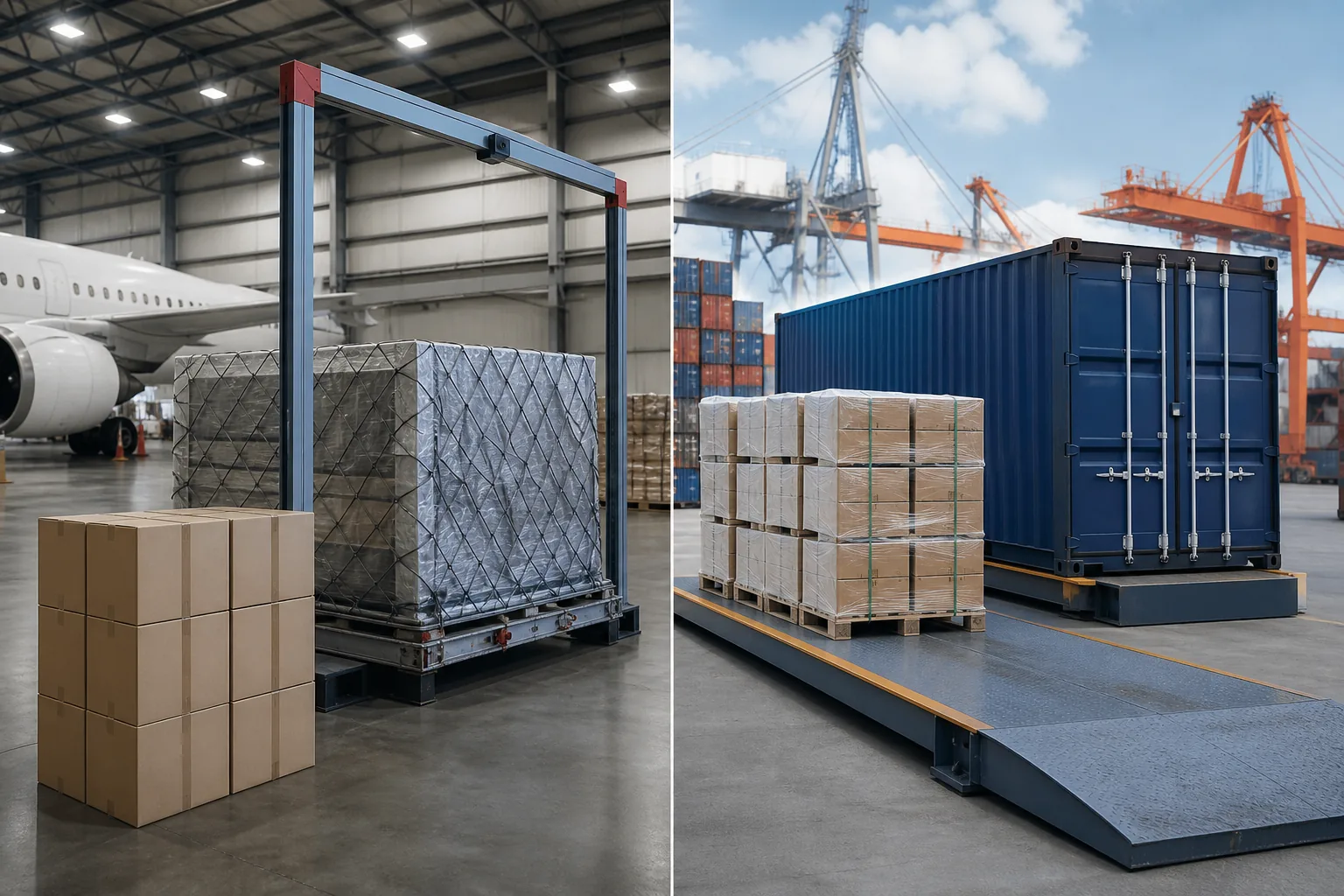
Air transport consumes both payload and space. IATA explains that weight and volume affect pricing and that carriers may use actual or volumetric weight. Its general volumetric rule divides cubic centimeters by 6,000 and prices the higher result. Treat 6,000 as a general rule, not an unconditional promise for every product: confirm the divisor, units, rounding, minimum, oversized-package rules and carrier conditions in the actual quotation.
Require the calculation, not only the answer. The forwarder should show package count, rounded outer dimensions, total volume, divisor, volumetric weight, actual gross weight and final chargeable weight. Ask how warehouse reweighing or remeasurement will be evidenced, who approves a change and how a dispute is handled. For high-volume shipments, dimension sheets, scale receipts and photographs create a reliable audit trail between the supplier’s packing list and the carrier’s charge.
Split airport-to-airport carriage from accessorial and local services. IATA lists examples such as airport handling, screening, transfer, dangerous-goods, fuel, security and terminal handling fees. It also notes that pickup, delivery, storage, insurance, customs charges, duties and taxes may sit outside airport carriage. Two equal rates per kilogram can therefore create different totals when one includes screening and handling while the other adds them later.
Compare the operating promise: direct or connecting service, airline or capacity source, passenger belly or freighter where relevant, cut-off, flight frequency, expected handover time, confirmed booking versus a spot indication, maximum dimensions and commodity acceptance. Batteries, liquids, powders, magnets, high-value goods and temperature-controlled cargo require acceptance evidence before the price is dependable. For execution options, review air freight from China; this guide remains focused on quote comparison.
For ocean LCL, CBM is only the starting point
Less-than-container-load cargo moves through container freight stations and is consolidated with other consignments. Ask for the billed volume, gross weight, weight/measure rule, minimum charge and rounding method. Final palletization may increase volume, and non-stackable cargo can consume space beyond the geometric cube. A quote based on factory carton dimensions is not directly comparable with one based on final pallet dimensions.
Origin rows may include pickup, warehouse receiving, unloading, measurement, CFS handling, export declaration, consolidation and documentation. Destination rows may include deconsolidation, CFS, handling, release, documentation, storage and delivery order fees. Identify the destination agent and request its local tariff or a written estimate before booking. A low ocean line with unknown destination charges leaves the buyer exposed after the cargo has arrived and switching providers is difficult.
Compare the end-to-end timeline, not sailing days alone. Cargo must reach the warehouse, pass acceptance, wait for consolidation, be stuffed and gated in, sail, possibly transship, be discharged, deconsolidated and released. Ask about CFS cut-off, frequency, expected consolidation/deconsolidation windows and treatment of a rolled shipment. For time-sensitive inventory, record the business consequence of uncertainty instead of awarding the quote solely on base freight.
LCL cargo is handled repeatedly, so packing and marking affect both risk and measured volume. Define stacking ability, compression strength, moisture protection, destination pallet requirements, marks and pre-handover photographs. The consolidation, packaging and warehousing service can create one final data set for several suppliers, but receiving counts, storage time, discrepancies, repacking and release authorization still need their own scope.
For FCL, equipment and the container cycle belong in the comparison
Specify equipment size and type, dry or reefer, standard or high-cube, payload constraints, commodity, empty-container pickup depot, stuffing location, port of loading, port of discharge and empty-return point. A port-pair rate may cease to apply if the depot, inland leg, commodity or equipment changes. Equipment and vessel space must also be confirmed at booking; the existence of a quote does not guarantee either.
Review origin trucking, empty positioning, gate activity, terminal handling, documentation, seal, verified gross mass, export formalities and waiting. The International Maritime Organization states that verified gross mass is a condition for loading a packed container and that the shipper is responsible for providing it in the shipping document in time for stow planning. Ask who obtains VGM, under which permitted method, before which cut-off and at whose cost. Estimated cargo weight is not a substitute for the required packed-container result.
At destination, distinguish terminal free time from equipment-use time, regardless of the labels a carrier uses. Obtain the allowed days, calendar basis, start event, tiered daily rates and return location from the applicable terms or tariff. Customs closure, inspection, document delay or unavailable trucking can create exposure. A good quote cannot make every event free, but it can disclose the calculation and assign action owners.
Record documentation cut-off, VGM cut-off, terminal cut-off, estimated departure, route, transshipment, estimated arrival and rollover treatment. Do not use an estimated sailing date as a guaranteed inventory-arrival date. Match the booking to real production readiness. For the operational scope and equipment options, see sea freight from China and then attach the selected quote to the actual forwarder or carrier terms.
Read validity, price-calculation date, currency and surcharges line by line
A usable quote identifies its issue date, validity start and end, booking or sailing constraint, and the event used to determine the price. “Valid this week” is unclear without time zone, cut-off and confirmation method. If the shipment will not be ready inside the window, the number is a budget indication rather than a commitment. Ask whether the rate locks at booking, cargo receipt, air-waybill issuance, vessel departure or another defined event.
Record the currency of every line. Main freight may be in US dollars, origin charges in Chinese yuan and destination charges in local currency. Converting all rows to one management currency helps comparison, but retain the payable currency and exchange risk. Identify the conversion source, date, spread, transfer fee and service taxes where applicable. A converted total today is not a guaranteed invoice total unless the conditions fix the conversion.
Create three surcharge states: included and fixed; included but adjustable; or excluded. Fuel, security, peak-season, congestion, war-risk, equipment, overweight, dangerous-goods and local charges can vary by lane and service—there is no universal list that applies to every shipment. When a quote incorporates a public tariff, save its version and effective date and identify applicable codes. “All in” is only meaningful when its service boundary, assumptions and exclusions are written.
Maersk’s published Rate Request terms provide a concrete example of an estimate subject to charges, surcharges, fees, exchange rates and a defined price-calculation date. Those rules apply to that carrier’s offer, not automatically to another provider. The transferable lesson is to read price and terms as one document chain: request, quotation, tariff, booking confirmation and invoice. Reconcile each new stage with the version approved before it.
Score time, routing and execution quality alongside price
Break transit into collection, origin warehouse time, export handling, wait for departure, main carriage, transshipment, destination terminal, customs clearance and final delivery. Two offers stating “ten days” may begin and end at different events. Confirm calendar versus working days, whether counting starts at pickup or departure, and which holds or inspections are excluded. A credible proposal gives a range and assumptions instead of a single optimistic date.
A direct route normally has fewer handoffs, but it is not always available or economical. For transshipment, identify the intermediate hub, connection expectation, frequency, transfer owner and response to a missed connection. Carrier and route on the booking confirmation should match the selected offer. If routing may change, define acceptable limits and protect any cargo or insurance requirements that depend on the route.
Assess the provider with evidence: contractual identity and licenses where relevant, destination office or agent, communication response, clear sample documentation, commodity-acceptance capability, tracking, claims process, reconcilable invoicing and an exception contact. A low quote from a provider that withholds the destination agent or avoids written change control may increase operational cost. Use the separate air-versus-sea freight guide to choose a mode; use this workflow to compare offers within the chosen mode and scope.
Build a normalization worksheet before calculating a winner
Give each provider a column and each decision a row. Lock the RFQ revision, final packing basis, route, mode and cargo-ready date at the top. For every row enter a value, “included,” “excluded,” “estimated” or “not applicable.” No blank cells are permitted. For variable items, record the unit, formula and governing reference. Calculate totals only after the service matrix is complete.
| Area | Comparison question | Evidence |
|---|---|---|
| Cargo | Are packages, dimensions, weight and packing basis identical? | Versioned RFQ and packing list |
| Boundary | Where does each quote begin and end? | Named addresses or terminals |
| Origin | Are pickup, export, terminal and documents included? | Origin-charge breakdown |
| Carriage | What are the mode, route, basis, minimum and surcharges? | Rate breakdown and service level |
| Destination | Who pays handling, release, storage and delivery? | Destination tariff or estimate |
| Time | Do transit start, end and assumptions match? | Schedule and cut-offs |
| Validity | When and by what event does the rate lock? | Validity and booking terms |
| Exceptions | Which events create extra charges? | Exclusions and formulas |
Maintain three totals: the confirmed total, an expected total including supported estimates, and an unresolved exposure list. Do not enter zero for an unknown destination tariff or event cost. Resolve it, obtain a cap or approval, or keep the option marked “not decision-ready.” An incomplete quote cannot win against a complete quote solely through its visible total.
Score non-price factors too: routing fit, transit uncertainty, acceptance confidence, transparency, document control, destination representation, change flexibility, response quality and exception plan. Set the weights before seeing the lowest price so the method is not retrofitted to a preferred supplier. A robust, low-sensitivity shipment may justify a stronger price weight; production-critical or seasonal cargo may give execution and timing more weight.
Warning signs in a China freight quotation
- A total without route, mode, unit, billed weight/volume or named endpoints.
- Product dimensions instead of final pack dimensions and no remeasurement rule.
- An air rate per kilogram without chargeable weight, divisor and minimum.
- An LCL rate without origin/destination CFS or destination agent details.
- An FCL rate without equipment, depot, free time and empty-return terms.
- “All in” without inclusions, exclusions and adjustable surcharges.
- Validity that ends before the realistic cargo-ready date.
- Clearance or DDP language without importer identity and lawful tax evidence.
- A guaranteed delivery promise without capacity, route, cut-offs and exceptions.
- Payment instructions inconsistent with the contractual provider or invoice.
- No quote number, legal entity, version, terms or accountable contact.
- Refusal to disclose destination costs until after arrival.
A warning does not automatically prove misconduct; the document may simply be an early budget indication. Name its level correctly. An indication, estimate, formal quotation, booking confirmation and carriage contract are not interchangeable. Before moving cargo or paying, convert material gaps into written answers, revised documents and internal approval.
A practical workflow from RFQ to booking and invoice reconciliation
- Prepare the shipment data: identify final or estimated packing, commodity, route, date and required services.
- Send one RFQ revision: use identical fields and response deadline for every provider.
- Resolve assumptions: collect questions and obtain written corrections for every material point.
- Normalize the offers: map origin, carriage, destination, exclusions, validity and transit.
- Confirm acceptance: validate commodity, batteries or dangerous goods, dimensions, weight and documents.
- Approve an option: score price, time, transparency and unresolved exposure using preset weights.
- Obtain booking confirmation: match carrier, route, charges, cut-offs, equipment and terms.
- Record final measurement: approve any financial effect before departure.
- Review transport drafts: reconcile AWB/BL, packing list, invoice, seal/VGM and party data.
- Reconcile the invoice: connect every new line to the quote, tariff or a documented event.
Comparison continues after booking. Add actual weight, dimensions, routing, schedule and newly triggered charges to the same worksheet. Record who approved each change and when. At invoice stage, place the original quote, approved variation and operational evidence together. The result becomes useful procurement data for the next shipment and prevents an exception cost from being mislabeled as a normal market rate.

Four practical comparisons without invented market prices
Light, bulky cartons moving by air
Forwarder A shows a lower rate per kilogram but only repeats the supplier’s actual weight. Forwarder B shows a higher rate with volumetric calculation, pickup and handling. There is no winner until A states the divisor, dimensions, chargeable weight and accessorial fees. Apply the same final pack data and formula to both and compare remeasurement rules.
LCL cargo from several suppliers
One offer collects separately from each factory; another receives all goods at a consolidation warehouse. The second visibly charges receiving and storage but may reduce shipments and improve packing control. Compare inbound count, free storage, discrepancy handling, final pallets, post-consolidation CBM, origin/destination CFS and delivery. Only final packing creates a common cost basis.
FCL with tight equipment free time
Two base rates are close, but one carrier offers a more workable depot and time allowance. Do not predict delay as a certainty. Build documented scenarios for on-plan return, a limited delay and an inspection or closure, using only the actual tariffs in each offer. Include trucking availability and empty return in the operational decision.
Door-to-door including destination clearance
Identify the importer of record, customs broker, duties/taxes, permits, delivery point, unloading and exclusions. “Door to door” does not create a fixed landed cost when duty or tax is excluded. If included, verify declaration basis and payment evidence. Because freight treatment in customs value depends on destination law, never derive duties from the forwarding quote alone.
Final freight-quote comparison checklist
- All providers answered the same versioned RFQ.
- Final pack dimensions and weight, or their estimated status, are clear.
- Origin, destination, mode, route and service level are precise.
- The quote boundary aligns with the purchase Incoterm.
- Origin, freight and destination components are separated.
- Chargeable basis, minimum and rounding are documented.
- Validity and the rate-lock event are explicit.
- Currency, conversion and fixed or floating surcharges are visible.
- Destination agent, free time, storage and exceptions can be checked.
- Commodity acceptance and required documents are confirmed.
- Transit starts and ends at comparable events.
- The booking confirmation will be matched to the selected quote.
If you cannot state who charges a row, where, in what unit and under which document, comparison is not complete. The goal is not to eliminate every uncertainty; it is to expose, price or manage uncertainty before cargo becomes locked in transit. For the wider import workflow, continue through the China purchasing and import guides.
Frequently asked questions
Is the lowest air-freight rate per kilogram the best quote?
No. Multiply by the verified chargeable weight and add applicable pickup, screening, handling, fuel/security, terminal, destination and minimum charges. Routing, acceptance, transit and validity must also be comparable.
Does air volumetric weight always use a 6,000 divisor?
IATA presents 6,000 as a general rule, but carrier, service, units, rounding and contract details may differ. Confirm the divisor and worked calculation in the specific quote.
Does “all in” guarantee no further cost?
Not by itself. Request written inclusions, exclusions, assumptions, adjustable surcharges, customs scope, duty/tax treatment, storage and event-based charges. The phrase has meaning only inside a defined boundary and terms.
Why request destination charges before booking?
After arrival, the ability to change the destination agent or negotiate can be limited. Obtain the agent identity and a tariff or estimate for CFS, handling, release, documentation, storage and delivery.
Are demurrage and detention included in ocean freight?
They are generally event- and time-dependent rather than a certain base-freight line. Confirm free time, start events, daily tariff, equipment-return point and action owner.
When is a quotation actually bookable?
When cargo and route are accepted, the rate is still valid, space or equipment is confirmed, and a booking confirmation matches the approved service, charges and terms. A budget indication is not capacity confirmation.
Official and operational sources reviewed
- IATA: air-cargo tariffs, volumetric weight and accessorial charges
- ICC: Incoterms rules and named delivery points
- IMO: verified gross mass of a packed container
- WCO: customs valuation FAQ and transport costs
- Maersk: freight, origin and destination rate breakdown
- Maersk Terms: rate validity, charges, surcharges and calculation date
Sources were reviewed on 2 September 2026. Maersk is used as a named carrier example, not as a universal market rule. This guide supplies no live rate, price guarantee, legal advice or customs valuation. Recheck the actual shipment, provider terms and destination law before booking.
Compare the complete quotes against the same shipment record
For an operational review, send China Moshaver the commodity details, packing list, dimensions and weight, pickup address, destination, ready date, purchase Incoterm and complete quotation files. The comparison should identify the service, unit, currency and assumption behind every amount and keep unresolved exposure visible. Confirm final customs, tax, insurance and contractual decisions with qualified advisers in the destination jurisdiction.



[…] Related guide: how to compare freight quotes from China […]
[…] record it without charging the buyer twice. Conversely, an omitted cost is unknown, not zero. Our guide to comparing freight quotations explains how to obtain offers on a common […]
[…] operational execution. This checklist makes no price, capacity or transit promise. Before booking, compare freight quotations on the same scope, checking whether loading, weighing, securing, seal, waiting and exception services are included or […]
[…] you are still selecting a carrier or service, use the freight quotation comparison guide first. The task here begins after booking: turning agreed conditions into a workable collection and […]