
Turn a Chinese factory's MOQ into cost and risk components, identify negotiable levers, and structure a controlled pilot order without weakening quality.
Direct answer: A Chinese factory’s MOQ is not merely a number to bargain down. It is the smallest order configuration that the supplier believes will cover material batches, line setup, labour, packaging, administration and commercial risk. A useful negotiation starts by defining the product and destination market, asking which cost or operational constraint creates each minimum, and then trading among unit price, variants, packaging, lead time and a paid pilot order. The goal is not the lowest possible quantity. It is the smallest repeatable order that can still meet the specification, compliance duties, delivery plan and quality controls.
This guide is written for importers who have already moved beyond a vague product idea and need to compare real factory offers. If you are still designing the broader route, begin with the China purchasing and import guides and the practical sequence for how to start importing from China. MOQ should be decided inside that commercial process, not before product, market and cash constraints are known.
What MOQ actually means in a factory quotation
MOQ means minimum order quantity, but a quotation may contain several different minimums. The factory may require a minimum for the total purchase order, each model, each colour, each material, each logo treatment, each retail package, or each shipping carton. A supplier saying “MOQ 1,000” has not yet given a complete commercial answer. You need to know whether that means 1,000 total pieces, 1,000 per stock keeping unit, 1,000 per colour, or a minimum purchase value that can be divided among variants.
The unit of measure matters too. A textile mill may quote metres or kilograms; a packaging printer may work by sheets or print runs; a chemical producer may work by drum or formulation batch; an electronics assembler may have a board-panel or component-reel minimum. A trading company can sometimes offer a smaller quantity because it combines inventory or several buyers, while a factory making a custom product may require a larger batch. Neither structure is automatically better. The correct question is whether the company, process and quotation match your product and risk.
MOQ is also conditional. A number offered for an existing product in a stock colour and neutral carton may not apply to a custom mould, Pantone-matched material, printed manual and destination-specific label. The buyer should therefore record the MOQ next to the exact revision, incoterm, price tier, lead time, package, payment condition and offer-validity date. A naked number copied into a spreadsheet quickly becomes misleading.
Why Chinese factories set minimum order quantities
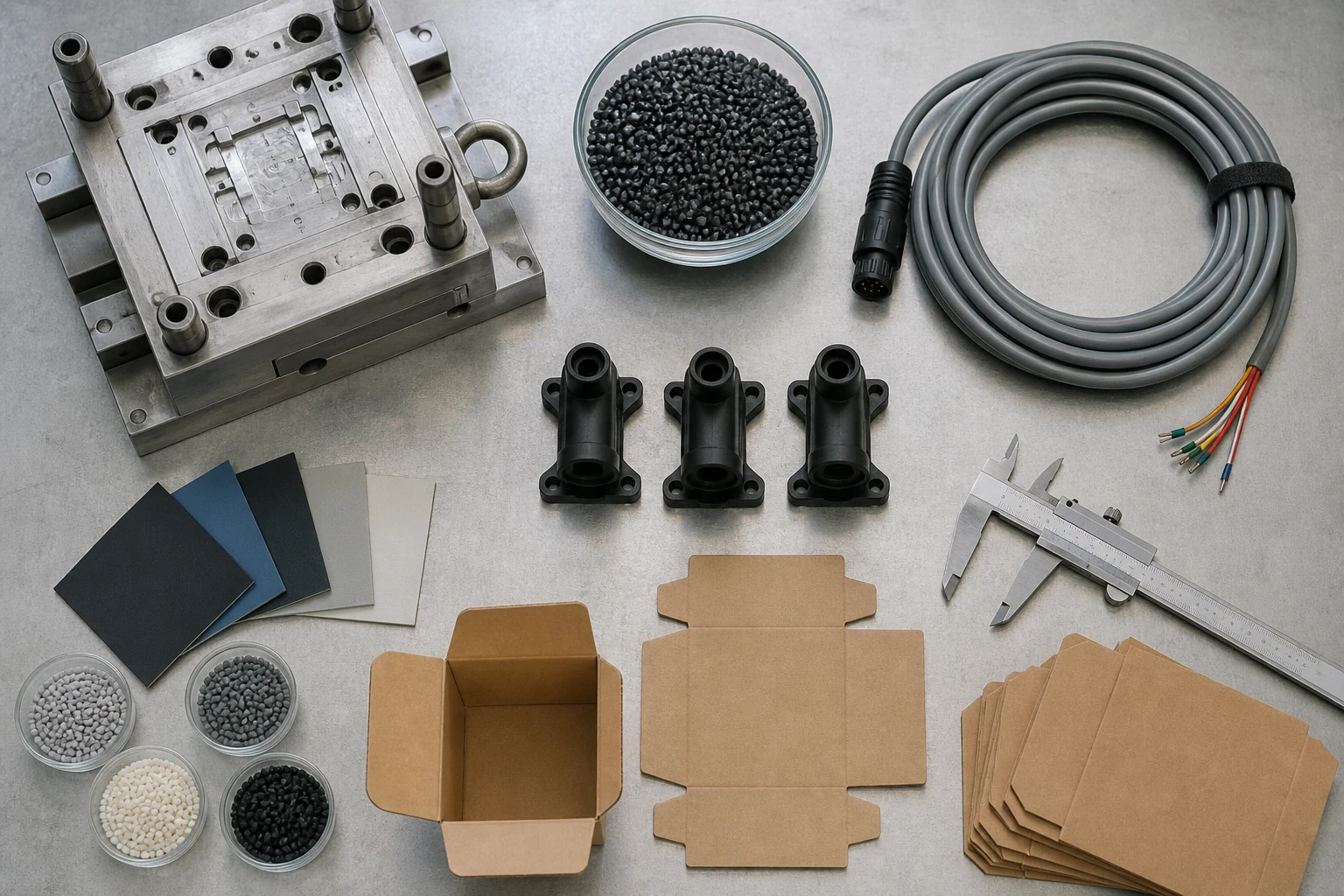
Most credible MOQ explanations fall into a small number of cost and process categories. First are fixed setup costs: preparing a line, cleaning equipment, changing a die, programming a machine, creating screens, calibrating tools, producing a colour standard or training operators. Whether the line makes two hundred or two thousand units, part of this preparation is similar. A smaller order therefore carries more setup cost per unit.
Second are upstream supplier constraints. Your factory may buy resin, fabric, metal, electronic components, printed film, labels or cartons from other vendors. Those vendors have their own batch sizes and price breaks. The factory’s proposed MOQ can be a pass-through from the least flexible component rather than the factory’s assembly capacity. Ask which material or purchased part drives the number and whether a standard alternative is already in stock.
Third are yield and quality stability. Processes such as colour mixing, coating, casting, printing and injection moulding generate startup scrap before output stabilizes. A very small run may contain a disproportionate amount of adjustment material or may end before the process reaches a stable state. This does not justify every high minimum, but it is a real reason to investigate process data instead of treating all resistance as a sales tactic.
Fourth are packaging and documentation runs. Retail boxes, inserts, barcodes, manuals and destination labels can each have a separate economical print quantity. Fifth are administrative and capacity costs: engineering review, purchasing, production planning, export documents, account management and the opportunity cost of placing a small job on a line that could serve a larger customer. Finally, the supplier may use MOQ to filter customers or protect a desired margin. Your task is to distinguish an operational constraint from a commercial preference, because the remedies differ.
Verify the counterparty before negotiating the number
A flexible quotation is not valuable if the counterparty cannot deliver it. Confirm the legal Chinese entity, its Unified Social Credit Code, registered status and consistency among the business licence, bank beneficiary, invoice entity and contract party. China’s National Enterprise Credit Information Publicity System supports searches by enterprise name or Unified Social Credit Code. The record is a starting point, not proof of manufacturing capacity, ownership of a factory or suitability for your order.
Continue with scope-specific due diligence. Ask who owns the production line and tooling, where the goods will be made, which steps are subcontracted, which certifications cover the actual product scope, and whether the quoted company is a manufacturer, a trading company or a combined operation. Compare documents with a video or on-site review, production evidence and verifiable references. Our detailed workflow to verify a Chinese supplier explains how to separate registry evidence from capability evidence. For higher exposure, use a scoped supplier and factory verification rather than relying on badges or a polished profile.
Counterparty identity also controls payment risk. A request to pay an unrelated individual, a recently changed overseas account or a beneficiary whose name does not match the agreement deserves an independent confirmation through a known channel. Do not let an attractive low MOQ override a mismatch in identity, bank details or contract authority.
Build an RFQ that produces comparable MOQ answers
Factories cannot quote a meaningful minimum against an ambiguous product. Issue a request for quotation with a controlled specification: drawings and tolerances; bill of materials; material grade; colour reference; performance and safety requirements; approved sample status; labelling and packaging; destination market; expected annual volume; launch quantity; test method; inspection level; delivery point; and required documents. Mark the revision and prohibit unapproved substitutions.
Ask every candidate to answer the same structure. Request MOQ by model, colour, material and package; price at several quantity tiers; tooling and one-time charges separated from unit price; sample and pilot cost; production and material lead times; package minimums; carton dimensions and weights; payment terms; offer validity; production location; and the identity of critical sub-suppliers. Request both the stated constraint and the alternative that would reduce it. A useful response might say that custom colour requires a full resin batch, but stock black can run at a lower quantity. A weak response gives only a price and demands an immediate deposit.
Include a target quantity, but do not hide expected scale or invent a huge annual forecast. A factory needs reasonable information to reserve capacity and price future tiers. Describe the initial order as a controlled launch and state what evidence could trigger the next tier. Honest volume ranges create better long-term negotiation than an unsupported promise of containers every month.
Decompose the MOQ into hard and soft constraints
Classify every minimum before offering a concession. A hard constraint is tied to a physical or third-party batch: a mould cavity, standard coil, fabric dye lot, resin mix, component reel, glass sheet, printed film or laboratory process. It may still have alternatives, but the salesperson cannot remove it by goodwill. A soft constraint reflects factory preference: account size, margin, scheduling, sales commission or an internal default. It may move when the buyer pays setup, accepts a longer lead time or offers a credible repeat-order plan.
Then separate four layers. The product MOQ covers the manufactured unit. The variant MOQ covers colour, size, model or formulation. The customization MOQ covers logo, finish, accessory or software. The packaging MOQ covers printed retail materials and master cartons. Many buyers negotiate the product quantity while accidentally accepting a high minimum on each colour or box design. A mixed order can solve one layer while leaving another unchanged.
Ask for evidence proportionate to the claim. You do not need the supplier’s confidential cost ledger, but you can request the upstream minimum, standard material options, setup charge, packaging print quantity and price difference. If the reason changes each time you ask, note it as a consistency risk. If the explanation is stable and operationally plausible, design the order around it.
Calculate the smallest economic order, not merely the smallest factory order
Your economic minimum and the factory MOQ are different. Build a landed-cost model for each tier. Include unit price, tooling, setup, samples, inspection, laboratory testing, packaging, inland China transport, export handling, freight, insurance, duties, taxes, destination fees, banking, fulfilment, expected defect loss and working-capital cost. Add the cost of obsolete or slow-moving inventory under conservative sales scenarios.
A higher unit price at a lower MOQ can be the better decision when it reduces unsold inventory, exposes less cash, shortens the learning cycle and avoids an incorrect package or feature. Conversely, an extremely small order can become uneconomic because fixed inspection, testing and freight costs are divided among too few pieces. Use contribution margin and cash conversion, not headline purchase price, to find the useful range.
Run at least three demand cases: downside, base and upside. For each, estimate sell-through time, reorder point, stockout consequence and remaining inventory if the product underperforms. Add time risk: a low quantity with a long replenishment lead time may cause an expensive stockout. The correct launch batch balances inventory exposure with the ability to replenish after evidence arrives.

Freight mode can change this answer. A small heavy batch may carry a high per-unit transport cost, while a large order can push the shipment into a different consolidation or container strategy. Compare realistic options using the guide to choose air or sea freight, but do not increase quantity solely to fill space. Freight savings rarely rescue unwanted inventory.
Prepare a negotiation range and walk-away conditions
Before speaking with the supplier, define three figures. Your target is the quantity that fits the launch and cash plan. Your acceptable ceiling is the highest quantity that remains viable under the downside case. Your walk-away point is the configuration that creates excessive inventory, compliance, quality or payment risk. Define the maximum setup contribution, target lead time and required evidence as well.
Prepare a concession table. Each concession you offer must buy a specific result. Accepting a stock colour might reduce the material minimum. Paying a disclosed setup charge might reduce the production batch. Using a plain carton might remove a printing minimum. Allowing a flexible production window might let the factory combine a material purchase or schedule. Consolidating variants might reduce changeovers. A higher unit price might fund the same quality controls over fewer units.
Do not concede on destination compliance, safety-critical materials, traceability, the controlled specification, approved substitutions, inspection access or the identity of the contracting party. Those are not bargaining chips. An order that meets the quantity target but removes the evidence required to sell the product is not a successful negotiation.
Practical levers for lowering MOQ
Use standard inputs. Ask for stocked colours, standard material grades, common dimensions, existing components and the factory’s current package format. Verify that the alternative is suitable for your market and performance requirements. Standardization reduces upstream batches without asking the factory to absorb a hidden loss.
Delay customization. Manufacture a neutral product and add a label, sleeve, insert or localized packaging later, where legally and technically acceptable. This can separate the product MOQ from a printer’s minimum. Keep traceability and mandatory markings correct; late customization must not create misleading origin, safety or conformity information.
Combine variants intelligently. A mixed order can work when variants share material, process and packaging. Ask which changes require line cleaning, new tooling or separate material. Ten colours may look like one order to the buyer but ten setups to the factory. Fewer launch variants often produce better data and more stable quality.
Pay transparent fixed costs. If the obstacle is a real setup expense, compare paying it separately with accepting more inventory. State that the charge must be identified and not silently repeated on later runs unless setup recurs. Do not confuse tooling ownership with a setup fee; ownership, storage, maintenance, access and transfer of tooling require separate written terms.
Accept a longer or flexible window. The supplier may combine material purchasing or place a pilot between larger runs. Confirm that the flexibility does not permit indefinite delay, unapproved subcontracting or mixed materials. Set a latest completion date and notice requirements.
Use a paid pilot. A proper pilot is not a hand-built showroom sample. It should use intended materials, tooling, line, operators, work instructions and quality checks as far as practical. The factory can charge a higher unit price because the buyer is purchasing evidence. Define what result unlocks the next batch.
Compare channels without confusing them. Existing stock from a marketplace or trader can offer a lower minimum than custom production. The guides to buying from Alibaba and buying from 1688 explain different platform contexts. Confirm counterparty, product revision, rights, invoices, export route and quality controls; a low platform minimum is not proof that the listing and delivered goods are equivalent.
Design a pilot order that creates reliable evidence
The pilot should answer pre-written questions. Can the factory reproduce the approved sample? Does cycle time support the promised capacity? Are critical dimensions stable? Does packaging protect the goods? Do labels, manuals and traceability match the destination? Can the supplier close nonconformities? A pilot without acceptance criteria becomes another sample purchase and may not predict mass production.
Freeze a Golden Sample or controlled reference, the specification revision, defect classifications and test methods before the run. Record which changes require written approval. Use first-article inspection at line start, in-process checks where failure would multiply, and a final inspection on the completed lot. If a test is destructive, order enough units to test without erasing the saleable pilot.
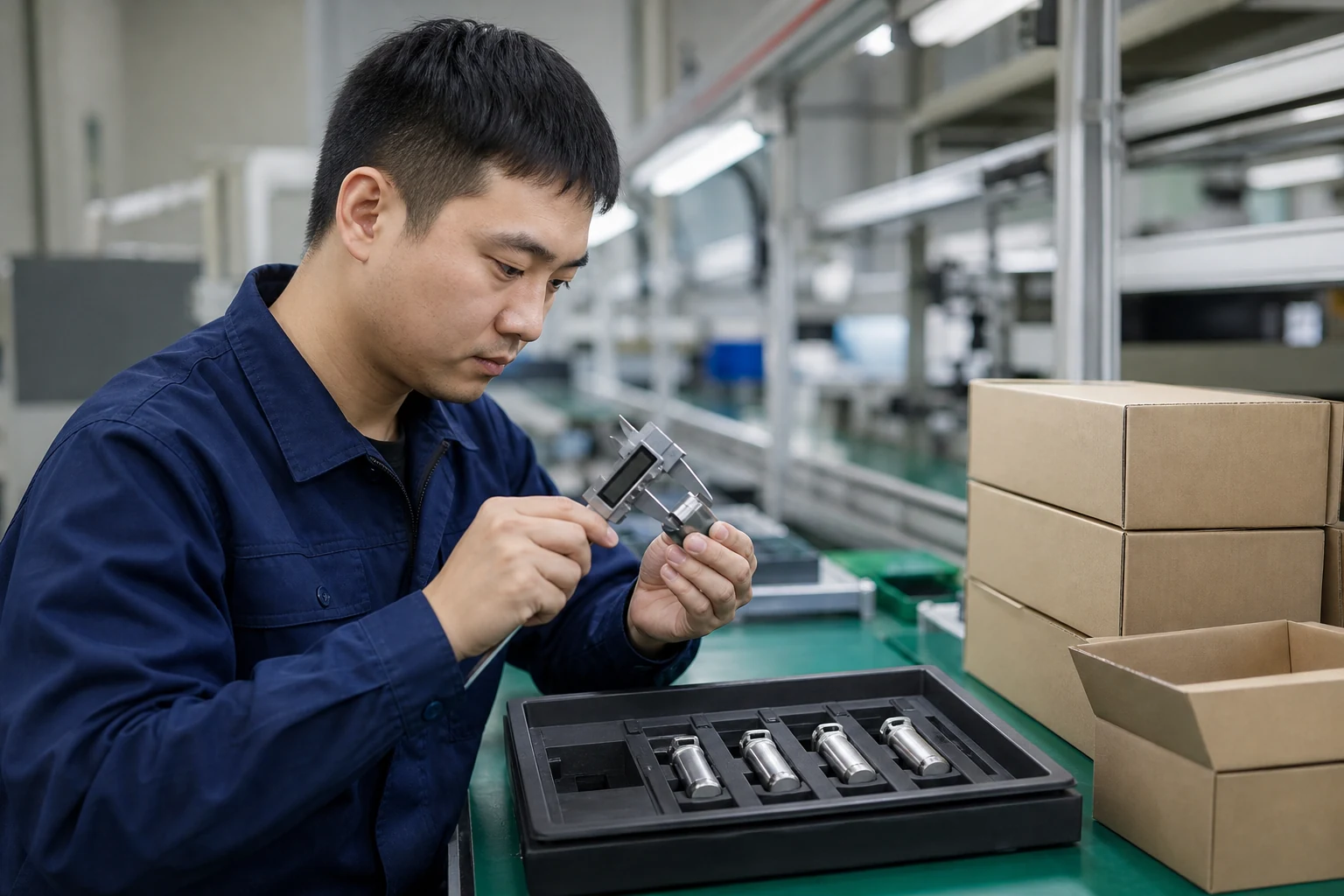
Define the scale-up rule. For example, the next tier may require on-time pilot completion, zero critical defects, acceptance under the agreed sampling plan, stable key measurements, complete documents and closure of corrective actions. Do not promise a large follow-on order merely because the first units look good. Review actual sales, returns, customer feedback, freight performance and factory response.
If you need operational help obtaining candidate quotes and organizing samples, use a scoped product sourcing support process. The buyer should still own the commercial decision, specification and evidence threshold.
Negotiate price tiers, payment and lead time together
Request a price curve, not one quote: pilot quantity, target launch, likely reorder and mature volume. Ask what changes at each tier. A lower price may result from material purchasing, less setup allocation, faster line operation, different packaging, reduced margin or a changed specification. Only the first four may be acceptable without a technical revision; never assume identical quality because the product name is unchanged.
Separate one-time charges and refundable or creditable amounts. State whether sample, engineering, setup or tooling charges are credited against a later order and under which deadline. Ask who owns designs and physical tools after payment. For a new relationship, avoid placing all commercial leverage in an unconditional early payment. Tie payments to observable milestones, permitted inspection and documentary requirements while recognizing that structure varies with product, platform and bargaining power.
When using Alibaba, read the current Trade Assurance guide and put measurable quality and shipping terms inside the protected online order. Platform protection depends on the actual order and payment path; chat messages, a vague description or off-platform transfer can undermine the evidence you expected to rely on. Protection is an additional layer, not a replacement for due diligence, specifications and inspection.
Write the negotiated result into the purchase contract
A successful call has no operational value until it becomes a controlled document. The purchase order and contract should identify the legal parties, product and revision, quantity by variant, unit price and currency, one-time charges, incoterm and named place, delivery dates, payment milestones, approved sample, quality standard, inspection rights, required documents, packaging, labelling, substitution control, tooling, intellectual property, confidentiality, change control, warranty, corrective action, remedies, dispute route and governing law where appropriate.
The ICC explanation of Incoterms 2020 is important because Incoterms allocate delivery obligations, risk and costs, but do not replace the sale contract, define product specifications, set payment remedies or transfer ownership. Write the rule with a precise named place and version, then separately state the commercial and quality obligations.
For international sales where the CISG applies or is considered, Article 35 addresses conformity in quantity, quality, description, sample or model and packaging. The UNCITRAL CISG Article 35 digest is a useful official reference, but it is not transaction-specific legal advice. A buyer should obtain qualified advice for enforceability, remedies and dispute design in the relevant jurisdictions.
Create a signed change process. Salespeople and engineers will discover constraints after deposit. Require a written change request that states reason, affected specification, quantity, price, lead time, testing and inventory impact. Silence, a new chat attachment or an unlabeled replacement sample must not automatically revise the order.
Keep quality and compliance independent of quantity
Lower quantity does not justify weaker product requirements. ISO’s guidance on ISO 9001 in the supply chain emphasizes that buyers define purchasing information, approvals, monitoring and inspections according to their needs and risk. A supplier’s management-system certificate does not define your product, and a low-risk accessory should not receive the same control plan as a safety-critical electrical item.
Design acceptance around product risk and lot reality. ISO 2859-1:2026 defines AQL-indexed acceptance-sampling schemes for lot-by-lot inspection by attributes. Select a legitimate plan with competent quality input; do not type an AQL number into a purchase order without defining lot, inspection level, defect classes, sampling and acceptance rules. Acceptance sampling does not prove that every unit conforms and does not replace process control or required laboratory testing.
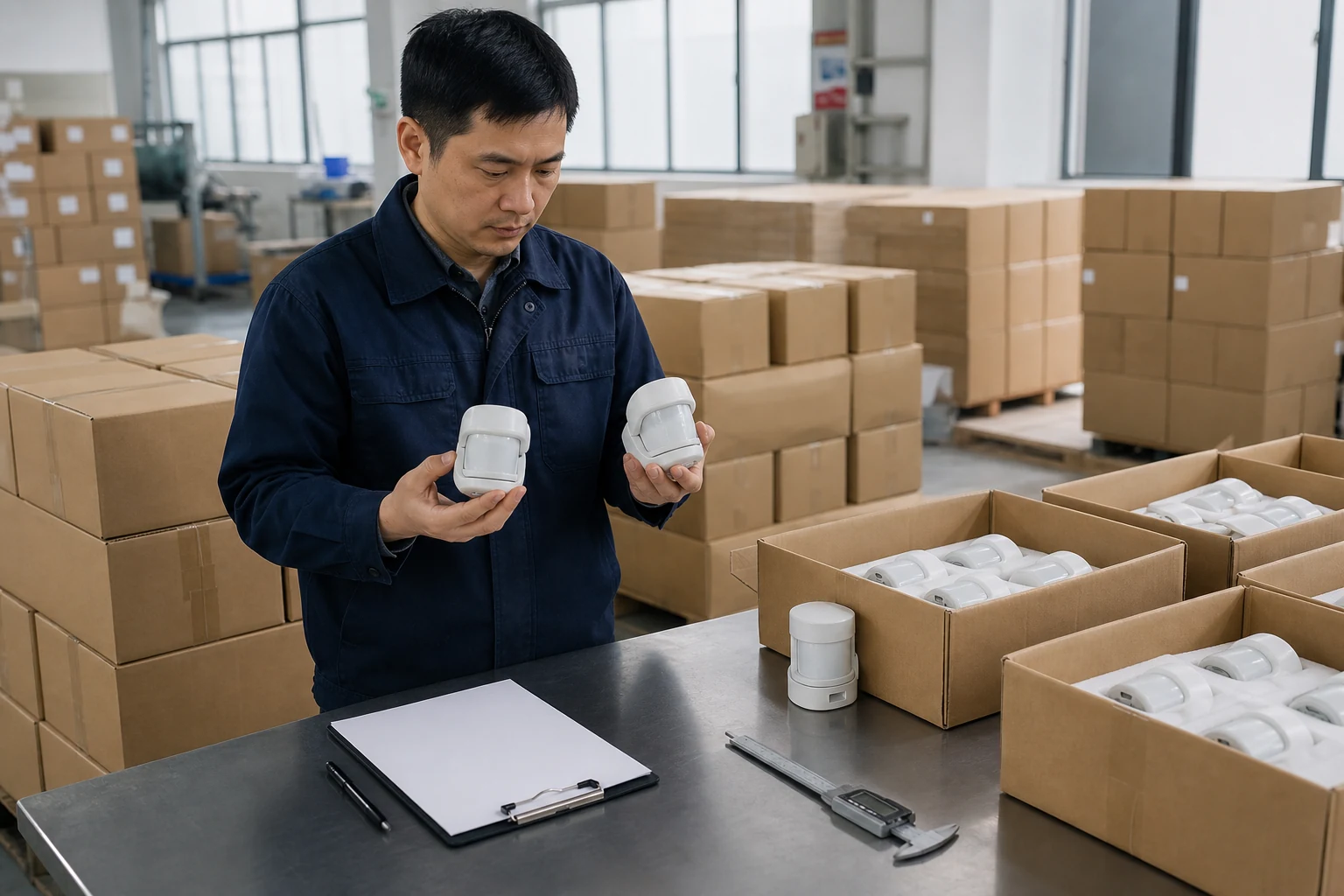
Destination-market obligations can change whether a low MOQ is economical. For the EU, the European Commission’s importer and distributor guidance states that importers must check applicable safety, health and environmental requirements, documentation and contact with the manufacturer before placing products on the market. Other countries and regulated product classes have different rules. Determine requirements before quotation, because testing, technical files, labels and traceability cannot always be repaired cheaply after production.
Use independent inspection and quality control when the exposure justifies it. Inspection scope should follow the controlled specification and order, not the supplier’s generic checklist. Preserve reports, photos, test records, approval decisions and corrective actions with revision history.
Red flags during MOQ negotiation
- The salesperson refuses to define whether the minimum applies per model, colour, material or total order.
- The explanation changes from material batch to management policy to a temporary promotion without evidence.
- The supplier offers an extremely low MOQ only if specifications, inspection or protected payment are removed.
- The price tier changes material, thickness, component brand, package or subcontractor without a revised specification.
- A deposit is demanded before legal entity, production location, sample revision and quotation are consistent.
- The factory promises any quantity and any lead time while refusing capacity or sub-supplier questions.
- The bank beneficiary, invoice issuer and contracting entity do not match.
- “Free mould” or “free design” is offered without ownership, access, maintenance and transfer terms.
- The pilot will be handmade in a sample room with no plan to reproduce it on the intended line.
- Mandatory certification or destination labelling is described as optional because the order is small.
One red flag does not automatically prove fraud, but unresolved inconsistencies raise the evidence required before payment. A professional supplier can usually explain constraints, document changes and state what it cannot do.
A repeatable MOQ decision framework
- Define: freeze the intended use, market, revision, variants and compliance requirements.
- Verify: confirm legal identity, production role, bank beneficiary, capability and critical sub-suppliers.
- Compare: issue the same RFQ and landed-cost assumptions to several qualified candidates.
- Decompose: map product, variant, customization and packaging minimums to their drivers.
- Model: calculate downside, base and upside economics including inventory and replenishment risk.
- Trade: exchange explicit concessions; never sacrifice compliance, specification or evidence.
- Pilot: run the intended process with controlled acceptance criteria and inspection access.
- Contract: record every negotiated quantity, price, milestone and change rule.
- Inspect: verify first articles, process and completed lot according to product risk.
- Scale: release the next tier only after production, market and supplier evidence meet the rule.
Score each candidate on total economics, capability evidence, product conformity, communication discipline, cash exposure, lead-time resilience and corrective-action behaviour. Do not give the lowest MOQ the highest score automatically. The winning offer is the one that supports a reliable launch and repeatable reorder.
Frequently asked questions
What is a normal MOQ in China?
There is no meaningful universal number. A stock item from a distributor may be sold by the piece, while a custom moulding, dyed fabric, formulation or printed package may require a much larger batch. Ask for the driver and the minimum at every product layer.
Should I tell the supplier my target price?
You can provide a justified target range when the specification is stable, but also request a costed alternative. A target without requirements encourages silent material or process changes. A target linked to quantity, performance and packaging can speed comparison.
Can several colours share one MOQ?
Sometimes. It depends on whether they share base material and whether colour requires separate mixing, cleaning, printing or packaging. Ask for the total minimum and the minimum per colour, then simplify launch variants where the changeover cost is real.
Is a trading company useful for a low MOQ?
It can aggregate inventory, find stocked goods and manage small orders, but may add margin and reduce visibility. Verify its legal role, source, product revision, quality responsibility, invoice and export arrangements. The right structure depends on the transaction.
When should I walk away?
Walk away when the minimum breaches the downside cash and inventory limit, when identity or capability remains unresolved, when compliance evidence is unavailable, or when the supplier will reduce quantity only by weakening controlled requirements or payment safety.
Does a small pilot guarantee a large production run?
No. A pilot reduces uncertainty only if it uses the intended process and the buyer measures the right outputs. Revalidate capacity, materials, line controls and lot inspection at scale, because conditions can change.
Source ledger and scope
This operational guide uses current primary references: China’s official enterprise search; ISO material on purchasing controls and acceptance sampling; UNCITRAL’s CISG digest; ICC’s Incoterms explanation; Alibaba’s platform protection guide; and European Commission importer guidance. They support specific statements above, but no source establishes a universal MOQ, safe deposit percentage or guaranteed supplier outcome. Product, contract and regulatory decisions must be adapted to the destination and risk.



[…] Related guide: negotiating minimum order quantity with a Chinese factory […]
[…] who holds it and how a repeat order would use it. For the negotiation itself, use the separate guide to discussing MOQ with Chinese factories. Here, the objective is to understand how the chosen manufacturing route creates the […]