Compare OEM, ODM and private label in China by design work, costs, samples and rights. Use practical examples and a decision worksheet before choosing a supplier.
Choose the work you need, then name the model
Choose a private-label route when an existing product can meet your brief with agreed branding changes; consider ODM when a supplier’s design needs adaptation; investigate an OEM arrangement when you bring a defined design or specification for manufacture. Those labels are only a starting point. The useful decision is who designs, approves, pays for and can later use each part of the product.
A factory’s offer can look reassuringly simple: choose a model, add your logo and place an order. The questions arrive when you want a different material, need the editable drawing, or discover that another buyer sells the same shape. A successful first order therefore starts before the price negotiation. You need to know which decisions are already settled, which development tasks remain open and what the quotation actually buys. This guide helps you compare those choices without assuming that the most customized product is automatically the best business decision.
What OEM, ODM and private label mean in this guide
The European Commission IP Helpdesk’s OEM guide describes commissioned manufacture to specifications, including products carrying the commissioning company’s trademark. It does not make the letters OEM a complete statement of ownership. In a buying discussion, ask the supplier to explain the work covered by its terminology in plain language. Two proposals using the same label may allocate very different design tasks.
Here, ODM means a supplier-led starting design that you select or adapt. Private label describes goods sold under your brand, often using an existing product platform. These are practical working descriptions, not mutually exclusive legal categories: an ODM product can be sold under a private label, while an OEM project can include components designed by somebody else. A supplier might also call a simple packaging change OEM. Resolving that vocabulary early saves you from comparing three names as though they were three standardized packages.
| Starting point | What to establish | A question worth asking |
|---|---|---|
| Existing product with your brand | Exact model, permitted changes and branding scope | What stays identical to the catalogue version? |
| Supplier design with adaptations | Design baseline, development work and access to results | Which parts can we change or take elsewhere? |
| Your design commissioned for manufacture | Production-ready inputs, engineering responsibility and acceptance | Who resolves any gap between our drawing and a manufacturable part? |
The table is a conversation starter. None of its rows promises a fixed minimum order, lower cost, exclusive design or faster delivery. Those outcomes depend on the product and the written proposal. Keep the supplier’s chosen label in the file, but make your decision using the agreed scope.
Write a product brief before choosing a factory route
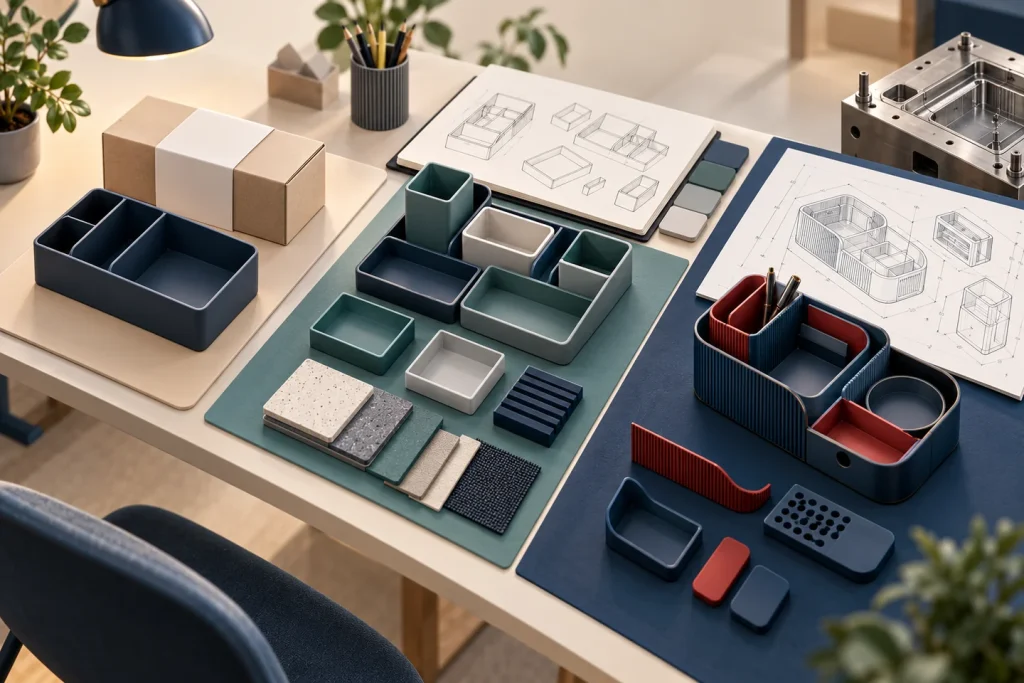
Start with the customer problem and the characteristics that solve it. For a desk organizer, that might be the space it fits, the items it holds, stability on the desk and how the surface can be cleaned. A photograph communicates appearance, but it does not establish dimensions, material, strength or the acceptable finish. Separate features that are essential from preferences that you could change without undermining the product. That distinction helps a factory propose an existing platform without quietly dropping the reason you wanted a custom product.
Add the destination market, intended user, sales channel and packaging needs. Avoid assuming that the language of your correspondence tells the supplier where the goods will be sold. A product used by adults in an office presents a different brief from a product marketed for children. Identify who will confirm the applicable product requirements and what information that person needs. A design choice should not move forward merely because the supplier has a report for a visually similar item.
Finish the brief with what you already possess: a sketch, editable drawing, tested prototype, sample or only an idea. Mark missing inputs honestly. If you have a concept image and no engineering specification, calling the project OEM does not make the design complete. You may need a separate development stage before obtaining a meaningful production quotation. The China buying and import guides can help you connect this decision to the wider purchase process.
Separate changes into layers
Ask for a change list with one item per line. Packaging artwork, a printed logo and a new instruction leaflet belong in one conversation. A different resin, wall thickness, joint or internal component belongs in another. A change that looks small in a rendering can affect assembly, tooling, performance or the evidence used to support the product. Treat the supplier’s response as a proposal to examine, not as proof that every requested change is routine.
For each line, record the current version, the proposed version and the reason for changing it. Request the effect on samples, tooling, purchased materials, testing and the production schedule. You are not asking for a confident guess. A useful answer can say that the impact is unknown until a drawing review or trial. What matters is that the open question has an owner and a decision point before you commit to the next stage.
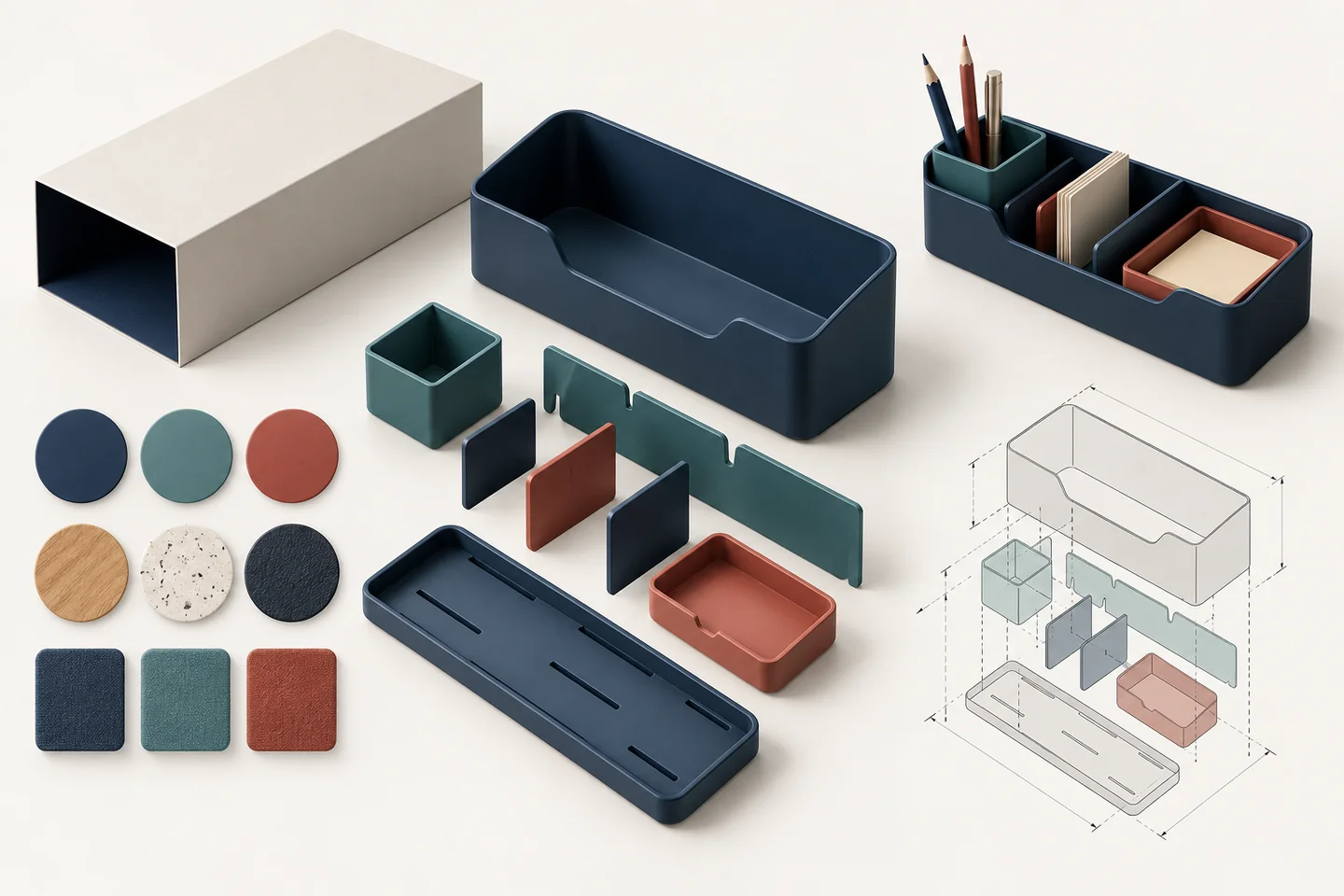
Consider a catalogue organizer that is nearly suitable except for a removable divider. One route might add a separate insert while retaining the original shell. Another might redesign the shell itself. Both could achieve the desired compartment size, but they create different files, tools and replacement-part needs. Compare those actual options. A broad request for a fully custom product can hide a simpler solution; a broad request for private label can hide a change that requires real engineering.
Agree who produces and approves each deliverable
A practical responsibility sheet has four columns: the deliverable, its author, its approver and the evidence of acceptance. Include the specification, drawing, material list, artwork, prototype, production sample and packing instructions where relevant. The person who draws a part is not necessarily the person who approves the customer’s intended use. Equally, approval of a sample’s color should not be recorded as approval of every dimension or performance claim.
Ask how the factory handles manufacturability feedback. If it proposes changing a radius, material or assembly method, request an identified revision with the reason and the effect on the brief. Keep the original request and the accepted revision together. Otherwise, the sales conversation, drawing and sample can each describe a different product while everyone believes they are discussing the same order.
Assign a contact on your side who can consolidate decisions. Multiple employees sending independent preferences can create avoidable rework and an unclear approval trail. When a specialist must review a safety, technical or market requirement, identify that review separately. Purchasing staff can coordinate the file without pretending to provide expertise they do not have.
Distinguish the brand, the design and access to files
A logo on the product does not answer who may use its underlying design. WIPO’s trademark guidance explains the distinguishing role of a mark; its industrial-design guidance concerns product appearance. A patent is a different right and is territorial. Keep these categories separate when seeking advice for the relevant markets. This guide cannot establish the rights in a particular product.
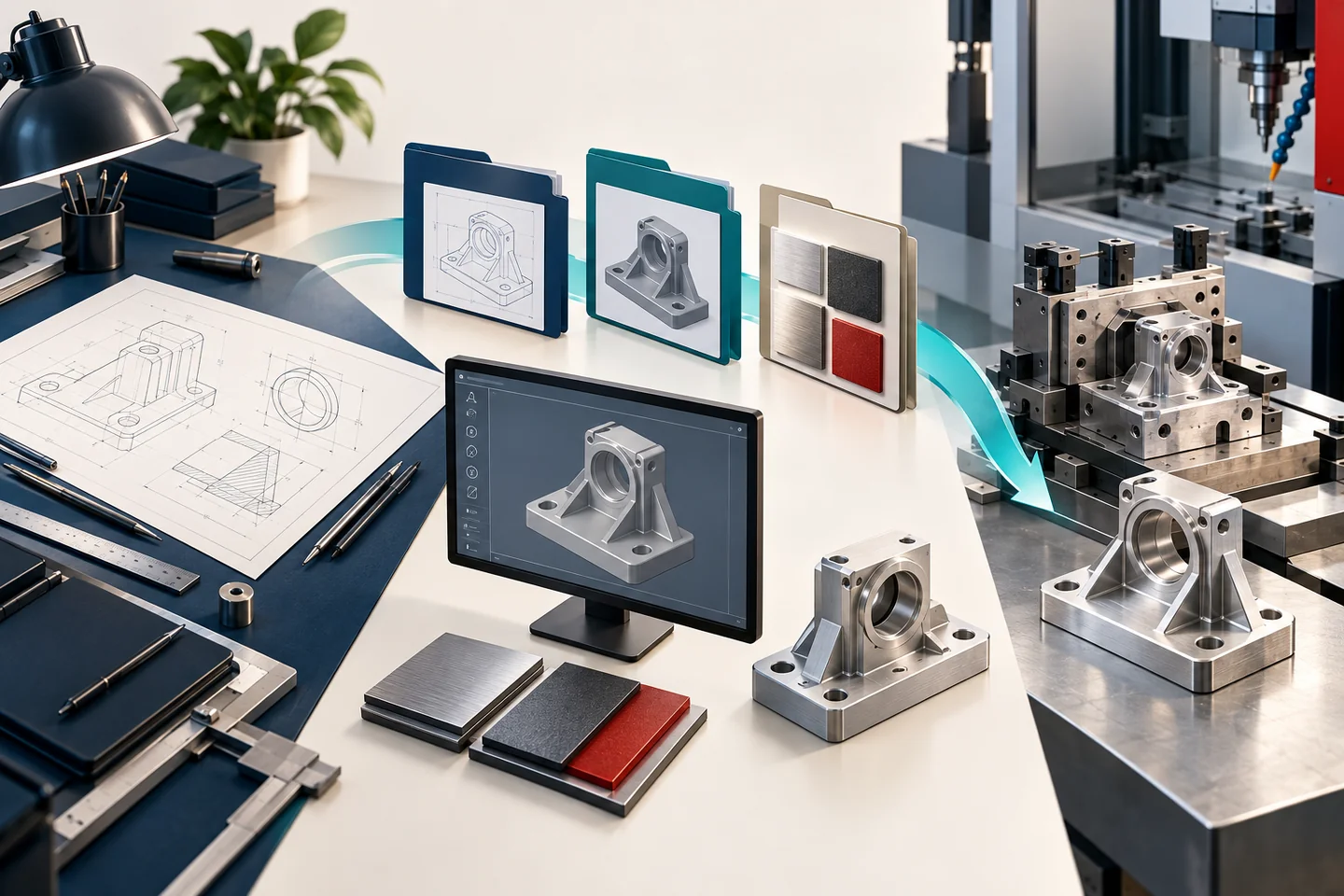
For the commercial discussion, make an asset list: your existing artwork, the supplier’s existing platform, newly commissioned drawings, software where applicable, physical tooling and production records. Ask what you will receive and in which usable format. Paying for development, receiving a PDF and being entitled to use an editable design are distinct questions. WIPO’s guidance on supplier relationships recommends written clarity about ownership, future use and copies of deliverables.
Access also has a practical side. A file that opens only in an unavailable system, a drawing without a revision, or a mould with no agreed transfer arrangement may not support a later move. Have the relevant professional review the proposed terms; then test the operational handover you expect. If information is confidential, control its distribution as well as the agreement. WIPO identifies reasonable protective steps as part of trade-secret protection.
Compare costs on the same product and stage
Do not compare an existing-product unit price with a custom-project quote that includes unresolved development. First fix a common comparison basis: specification revision, quantity, packaging, included work and delivery terms. Then separate one-time work from recurring supply. Potential line items include design review, prototypes, tooling, artwork preparation, production units, inspection and document preparation. Include only items that actually apply, and mark unknown items as unknown rather than entering zero.
A useful worksheet shows the amount, currency, basis, payment trigger and deliverable for each line. If the supplier charges for a sample, ask what that sample represents and whether any later production credit has conditions. If a development payment buys several iterations, define which iterations are included. An apparently lower setup fee may cover less work; a higher one may still omit the files you need. Neither conclusion can be drawn from the total alone.
For an internal planning comparison, you can divide an agreed one-time cost by a chosen quantity of acceptable units and add it to the recurring unit cost. Clearly label that quantity as your planning assumption. Do not amortize the cost over an optimistic future order as though those sales had already occurred. Repeat the comparison with a smaller volume and with no repeat order. The result may change which route you can afford to test.
Minimum orders also need a breakdown. The finished product, custom material, printing and cartons may each have a different purchasing constraint. Ask whether unused material remains, who holds it and how a repeat order would use it. For the negotiation itself, use the separate guide to discussing MOQ with Chinese factories. Here, the objective is to understand how the chosen manufacturing route creates the constraint.
Build the schedule around decisions, not a headline lead time
Ask when each stage starts and what must be available first. Design review may wait for a complete drawing; sampling may wait for a material decision; production may wait for an approved sample and packaging file. A single statement about production days is difficult to use if it excludes all the work that comes before production. Request a sequence of dependencies with the decision required from each party.
Include time for your own review and for changes that you have not yet resolved. A supplier cannot give a reliable completion date for an open design solely because you have selected an OEM label. Conversely, an existing design may still need a new material supply or market-specific documentation. Keep the target launch date separate from a supplier’s confirmed commitment, and update the plan when the scope changes.
Before paying to accelerate a stage, identify the actual constraint. Faster courier delivery of a sample will not solve an unanswered drawing question. Moving several decisions into a single rushed approval can also make it harder to determine what was accepted. Use a short decision log to keep the schedule and the product revision aligned.
Use samples to answer specific questions
A sample request should say what you intend to learn. A stock sample might show the baseline platform. A prototype might explore a shape without representing the final material. A production-intent sample should be linked to the agreed specification and manufacturing route. Record any substitutions and limitations so that an attractive prototype does not silently become evidence for a different production process.
Keep the detailed sampling plan with the guide to ordering and approving product samples. For the model-selection decision, ask whether the available sample resolves the reason you chose a particular route. If your competitive advantage depends on a divider fitting a specific object, approving only the carton graphics leaves the important question unanswered. Write the acceptance question before the sample arrives.
Retain an identified reference and the corresponding documents once approval is complete. When a later revision changes the product, state whether the old reference is superseded. Photos are useful context, but they should not be the only record of a dimension, material or other characteristic that requires a defined method of assessment.
Three hypothetical decisions
A retailer testing a new category
Imagine a retailer that wants to test demand for an adult desk organizer. An existing model meets its functional brief; the requested differences are a brand sleeve and an instruction card. There is no demonstrated customer need for a new shell. A private-label proposal is worth evaluating first, provided the exact model, permitted branding and relevant product evidence are clear. The sensible comparison includes packaging work and the first acceptable batch, not just a catalogue price.
The decision can change if the existing model fails an essential requirement. The retailer should not accept instability or an unsuitable material merely to preserve the simpler route. It can reject that baseline and assess another product before opening a development project. The example illustrates a decision process, not a claim that private label always carries the smallest order or the shortest delivery time.
A supplier platform with a meaningful adaptation
A second buyer likes a supplier’s organizer system but needs a different removable tray and surface finish. The supplier proposes adapting its platform. Before comparing the proposal with a fresh design, the buyer asks which parts remain supplier-controlled, what new tooling is required and which deliverables the development payment includes. The sample plan concentrates on the altered tray and its interface with the unchanged shell.
An ODM route may be suitable if the adaptation meets the brief and the agreed access is sufficient for the business. If the buyer needs to move the entire platform to another manufacturer later, a proposal limited to purchasing finished goods may not meet that requirement. This mismatch should be resolved before development starts, rather than discovered after the product succeeds.
A buyer with a developed design
A third business has an engineered design, a defined material specification and a prototype. It seeks a manufacturing partner rather than a catalogue model. The factory reviews the drawings and identifies an assembly issue. The buyer records the proposed change, obtains the appropriate technical review and approves a new revision before the production sample. An OEM arrangement can fit this starting point, but the drawing package still needs a clear acceptance process.
The buyer also separates the tool, its maintenance records and the design files in the handover discussion. Merely owning a physical object would not settle every right or dependency needed for a second factory. That practical distinction is why a manufacturing agreement should describe deliverables instead of relying on a sentence saying that the product is custom.
Make the decision in a short, reviewable worksheet
Write one page for each viable route. Record the baseline product, essential changes, missing evidence, one-time work, recurring supply basis, sample gates and operational dependencies. Beside each open item, name the person responsible for resolving it. A route that appears inexpensive but leaves the central design question unanswered should not win simply because its blank cells make the total look attractive.
Evaluate non-negotiable conditions before assigning preferences. An unsuitable product, unclear permission to use an essential design or a missing requirement for the destination cannot be cured by a strong score for appearance. Once the essentials are met, compare the remaining tradeoffs: differentiation, manageable development effort, repeat-order consistency and the access you need. The weighting belongs to your business, not to a universal OEM-versus-ODM ranking.
End the worksheet with a conditional decision: proceed to a defined sample or development stage when the listed evidence is received. State the reason for rejecting other routes, including what new information would make you reconsider. This makes the decision useful to a colleague who was not present in the supplier call and reduces the temptation to treat an early preference as an irreversible commitment.

Turn the chosen route into a clear supplier request
Send a concise brief with the baseline, changes and intended destination. Ask the supplier to identify its model and revision, explain the design work included, separate one-time charges from production charges and list assumptions. Request the sequence of samples and approvals, the deliverables after each stage and any dependencies on outside toolmakers or component suppliers. A supplier should be able to state an uncertainty without hiding it in a broad promise.
Then reconcile the answers with the purchase documentation. The Chinese supplier purchase-contract checklist covers the wider agreement; use it to carry the selected scope into an executable order. Avoid copying isolated clauses without understanding the actual entities and jurisdiction involved. Your approved commercial decision and the final order should describe the same product, work and evidence gates.
Before a repeat order, confirm that the reference, specification, material and packaging revisions are still the ones you approved. Ask how changes will be proposed and authorized. A well-run first order is useful evidence, but it does not automatically approve future substitutions or a different production location. Keeping a compact version register makes the next order easier to review.
Questions buyers commonly ask
Is OEM always better quality than ODM?
No. The label does not establish material quality, manufacturing control or conformity to your requirements. Compare the actual specification, samples, process evidence and acceptance arrangements. An existing design can be suitable, while a custom design can still be incomplete. Choose the route that supports the product you can define and verify.
Can an ODM product carry my private label?
It can if the supplier offers that arrangement and the relevant permissions and product requirements are addressed. ODM describes the starting design relationship here; private label describes the branding. Confirm the exact product, permitted changes and scope of use in the actual proposal rather than assuming that either term settles the other.
Does paying for a mould make the design mine?
That payment alone is not enough information to determine the rights. Separate the physical tool, design files, existing supplier technology and newly developed work. Obtain clear written terms and appropriate professional review. Also establish practical access, identification, maintenance and any agreed transfer process for the tool you expect to use.
Which route has the lowest minimum order?
There is no reliable universal minimum attached to these labels. Ask about the actual model and each custom element, including materials, printing and packaging. Compare the same specification and quantity basis. A lower finished-product minimum can still leave a separate commitment for custom packaging or unused material.
Can I start with private label and customize later?
That can be a useful staged plan, but the later stage needs its own review. Record what the first order is intended to test and what a future redesign would require. Do not assume that a current supply relationship includes the files, permissions, tooling or development capacity needed for that next step.
What if I only have a product photo?
Use it as a reference for a discussion, with care about other parties’ rights. Explain the intended function and required differences, then identify the missing specifications. Ask whether the supplier proposes an existing product or a development service. A photo alone cannot stand in for an approved production drawing or a complete product brief.
When should I bring in sourcing support?
When you need to turn an incomplete brief into comparable supplier discussions, identify suitable capabilities or organize unanswered questions. Keep technical and legal reviews with the appropriate specialists. Sourcing support helps structure the process; it cannot make an undefined design, unverified right or missing market requirement disappear.
Start with a brief the supplier can answer
The most useful next step is a clear description of your product and the decisions still open. Gather the baseline sample or drawing, intended changes, destination, quantity assumptions and expected deliverables. You can discuss those inputs through China Moshaver’s product sourcing service. The aim is to compare workable arrangements before committing to development, so that the eventual OEM, ODM or private-label label accurately describes the work you agreed.



[…] Related guide: choosing OEM, ODM or private label manufacturing in China […]