

Match the rule to the transport mode, precise handoff point, buyer capability and the real allocation of cost, risk, customs work and documents.
Incoterms for imports from China: the short answer
An Incoterms rule is a delivery framework, not a complete purchase contract. For a China order, choose it only after mapping the real movement from the supplier’s loading area to the carrier, export terminal, international leg, import terminal and final address. Decide who can control each handoff, who can obtain the required evidence, and where risk should pass. Then write the three-letter rule with a precise named place, port or point and the words “Incoterms 2020.” A quotation that says only “EXW China,” “FOB China” or “CIF destination” is not precise enough for an operational decision.
The practical choice is rarely “which acronym sounds cheapest?” It is “which allocation can both parties actually perform and prove?” Compare supplier quotations on one common cost boundary, separate delivery from destination, and add contract terms for matters Incoterms do not decide: product conformity, title, payment, delay, inspection, governing law and disputes. If the cargo is containerized, examine FCA before accepting FOB by habit. If a C rule is offered, remember that the seller may pay carriage to destination while risk transfers near origin.
What Incoterms 2020 covers—and what it leaves to your contract
Incoterms rules organize defined obligations between seller and buyer for delivery of goods. They help allocate transport-related tasks, specified costs, risk of loss or damage, export and import formalities, and the documents or notices tied to those tasks. The rules create a shared vocabulary for a physical transaction. That vocabulary is valuable when the factory, forwarder, carrier, customs agents, insurer and buyer operate across different legal systems, but it remains only one layer of the transaction.
The rules do not, by themselves, determine the product price or payment schedule, when ownership passes, whether the goods conform to drawings or samples, remedies for late production, sanctions or licensing compliance, intellectual-property protections, governing law or the forum for a dispute. They also do not replace the carriage contract or insurance policy. The official U.S. trade guide makes these exclusions explicit. Put the missing commercial and legal protections in a coherent purchase contract with a Chinese supplier instead of trying to make an acronym carry the whole deal.
Think of the selected rule as an interface between the sales contract and the logistics plan. The sales contract identifies the goods and commercial bargain. The rule identifies a delivery point and divides certain operational duties. The forwarding instruction converts that allocation into bookings and handoffs. Customs declarations and transport records then provide evidence. A mismatch between those layers causes more trouble than choosing an unfashionable rule. One exact FCA term consistently used is usually safer than four documents alternately calling the same shipment EXW, FOB and “door to door.”
Map the actual route from the Chinese factory to the final destination
Start with a route map, not an acronym list. Record the factory or consolidation address, the place where loading occurs, the first carrier handoff, export customs location, terminal or port, main carriage, transshipment points, import terminal, import-clearance location and final unloading point. For each step, ask who selects the provider, who pays, who bears risk at that moment, who has access to the goods, and which record proves completion. This reveals whether a promised term matches the physical operation.
A Shenzhen factory order collected by a buyer-appointed forwarder differs from a consolidated shipment in Yiwu, a full container gated into Ningbo, an air shipment tendered at Guangzhou airport and a courier parcel delivered to an overseas address. “The supplier arranges shipping” is not a sufficient description. Identify whether the supplier only books a domestic truck, contracts the main carrier, performs export declaration, pays terminal charges, arranges destination clearance or unloads at the buyer’s site. The answer may point to different rules even when the product and supplier are the same.

Capability is as important as preference. A small buyer without a Chinese forwarding arrangement may struggle with an EXW collection. A supplier that cannot legally or practically act as importer of record at destination should not casually promise DDP. A buyer with negotiated carrier rates may want control from an FCA point. Document constraints also matter: letters of credit, bank requirements, an on-board bill of lading, export tax processes and insurance evidence can affect the workable structure. The rule should reflect what the parties can execute, not a theoretical allocation copied from another shipment.
The eleven rules: a decision-oriented overview
Incoterms 2020 contains eleven rules. Seven can be used for any mode or combination of modes: EXW, FCA, CPT, CIP, DAP, DPU and DDP. Four are intended for sea or inland-waterway transport: FAS, FOB, CFR and CIF. “Any mode” does not mean every rule is equally suitable for every shipment. It means the rule can frame a multimodal or non-sea handoff if its named place and operational conditions fit.
At a high level, EXW places a minimal delivery obligation at the seller’s premises or another named place. FCA moves delivery to the carrier or another person nominated by the buyer at the named place, with the exact loading allocation depending on where delivery occurs. FAS places goods alongside a nominated vessel; FOB places them on board. CPT and CIP have the seller contract carriage to a named destination while delivery and risk transfer earlier. CFR and CIF use a similar split for sea transport. DAP, DPU and DDP move delivery toward destination, with DPU distinguished by seller unloading and DDP by the seller’s import-clearance obligation.
This overview is for selection, not a substitute for the official rule text. Each rule contains detailed seller and buyer articles dealing with delivery, transfer of risk, carriage, insurance where applicable, documents, export or import clearance, checking, packaging, marking, costs and notices. Before contracting, consult the licensed ICC text and adapt the operational plan to the actual jurisdictions. Do not paste a summary from a quotation into a contract and assume every charge or document is settled.
Separate the delivery point, risk transfer and cost destination
Three questions must be answered independently. First, where is delivery completed under the selected rule? Second, where does risk of loss or damage transfer from seller to buyer? Third, how far does each party pay particular transport costs? In several rules these points sit close together, which makes the term easier to understand. In the C rules they deliberately split: the seller contracts and pays specified carriage toward destination, but risk transfers at the earlier delivery point.
This split creates the classic CIF or CPT misunderstanding. A buyer sees freight prepaid to its country and assumes the seller bears transit risk until arrival. That conclusion is unsafe. If damage occurs after the delivery point, the buyer may bear the sales-contract risk even though the seller purchased the transport. Insurance may respond under CIF or CIP, but coverage, insured party, documentation and claim rights remain separate questions. Review the actual policy and the detailed cargo insurance for imports from China process rather than treating a freight quotation as proof of protection.

Create a cost sheet with rows for origin pickup, loading, export declaration, origin handling, documentation, security fees, main carriage, transshipment, insurance, destination handling, storage, demurrage or detention, import declaration, duty, tax, inland delivery and unloading. Mark each amount seller, buyer, carrier-collect, estimated or excluded. Incoterms allocates many categories at rule level, but local tariffs, carriage contracts and ambiguous quotation wording can still create contested charges. ICC’s checklist recommends clarifying troublesome handling, terminal, rental and customs charges in the sales contract.
EXW and FCA: choosing an origin handoff you can control
EXW can look attractive because the supplier quotes a low price and makes goods available at a named place. Operationally, however, the buyer takes responsibility very early. Loading and export-clearance issues require special attention, particularly where the buyer cannot readily perform local formalities. The official ICC explanatory material warns buyers to consider those practical limitations. An EXW quotation is not a complete landed-cost quotation; it may omit collection, loading, origin documentation and export-interface costs that another term includes.
FCA often creates a clearer handoff when the supplier can load the buyer’s collecting vehicle at its premises or deliver the goods to a nominated carrier or terminal. The precise named point determines the physical action, so “FCA Shenzhen” remains incomplete if Shenzhen could mean the factory, forwarder’s warehouse, airport facility or container terminal. State the address or terminal and clarify the carrier nomination, booking reference, handover record, cut-off time, export declaration, security filing and charges incurred before or after handoff.
For a factory collection, compare EXW with FCA at the factory address. Ask who loads, who prepares export documents, whose Chinese entity appears in the export process, and what evidence the carrier will issue. If the supplier already handles export formalities and loads the collecting vehicle, FCA may describe reality more accurately. If a trading company, factory and exporter are different entities, resolve their roles before using any term. The acronym cannot repair an exporter mismatch discovered after cargo reaches the terminal.
FOB, CFR and CIF: use the sea rules only for the right handoff
FOB, CFR and CIF are sea or inland-waterway rules built around on-board delivery. FAS uses delivery alongside the vessel. They should not be selected merely because some part of the route crosses an ocean. In modern container logistics, the seller may hand the sealed container to a carrier or terminal before the container is loaded on the nominated vessel. That earlier custody change can make an FCA analysis more aligned with the physical handoff than a habitual FOB label.
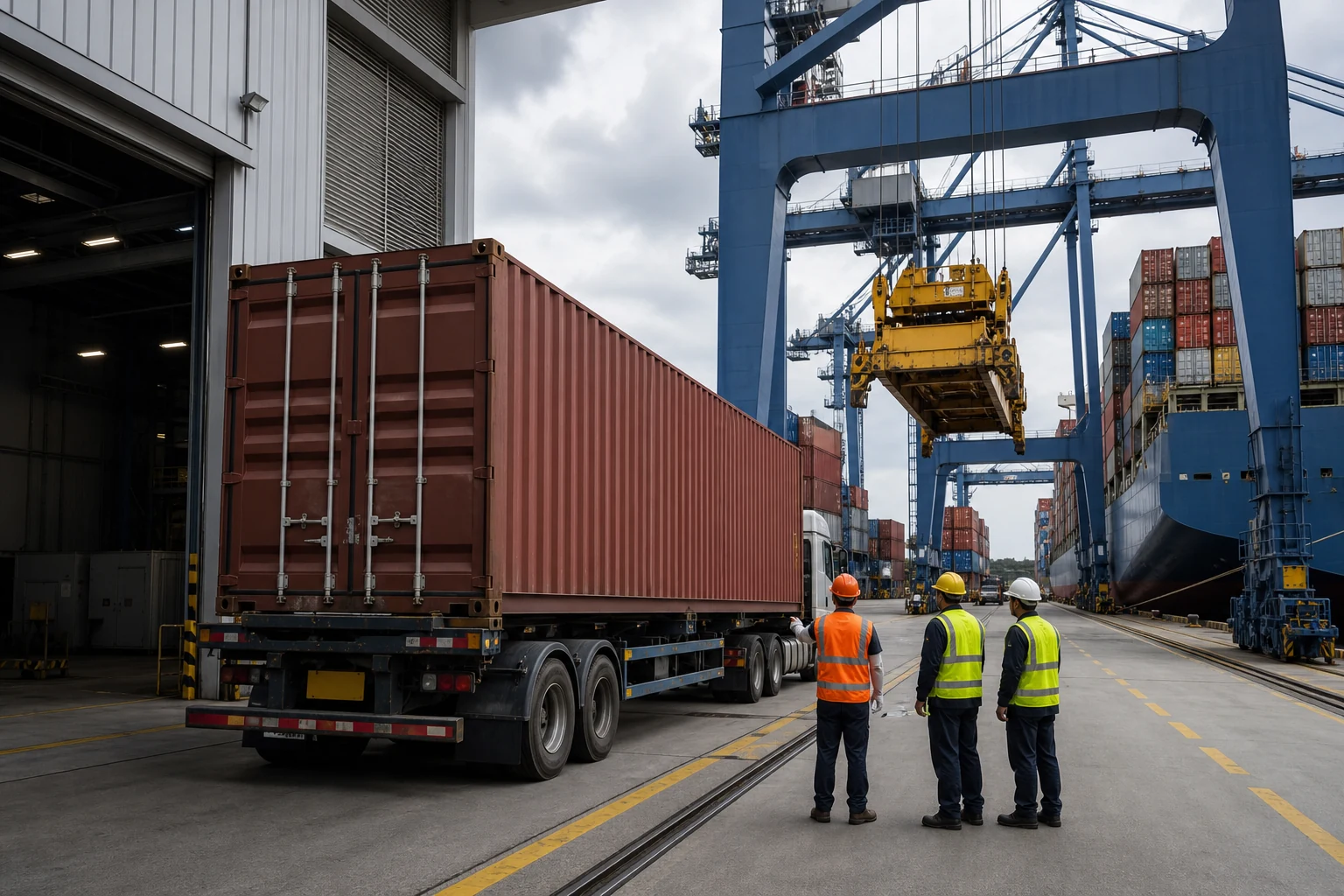
When FOB is operationally appropriate, name the shipment port precisely and coordinate the vessel nomination, booking, terminal cut-off and evidence of on-board delivery. The buyer contracts the main sea carriage while the seller performs the agreed origin delivery and export tasks. A vague “FOB China” quote does not identify the port, terminal or shipment. Compare whether the price includes inland transport from the factory, origin terminal charges, export customs work, documentation and any special equipment or inspection fees.
CFR adds seller-arranged sea freight to the named destination port, but risk still follows the delivery structure at origin. CIF adds a seller insurance obligation at the rule’s specified baseline. Neither label means every destination charge is included, the goods are guaranteed to arrive undamaged, or risk waits until discharge. Request the freight basis, route, carrier, transshipment, free-time assumptions, destination tariff, insurance certificate and claim instructions. A low CIF price can be offset by high destination handling charged under the carrier’s local arrangement.
Container type and shipment method matter. A full container delivered to a terminal, less-than-container cargo delivered to a consolidator, bulk material loaded directly, and oversized machinery lifted onto a vessel involve different custody and evidence. Map the actual path before deciding. For a broader comparison of speed, consolidation, cost drivers and shipment suitability, use the guide to choose air or sea freight and the operational details of sea freight from China.
CPT and CIP: seller-arranged carriage without destination risk
CPT and CIP work across transport modes. The seller contracts carriage to the named destination, yet delivery and risk transfer when the goods are handed to the relevant carrier at the rule’s delivery point. Because the named place printed after the acronym commonly describes the cost destination, users can mistake it for the risk-transfer point. Record both points in the transaction file: the contractual named destination and the actual carrier handoff that establishes delivery.
CIP includes a seller insurance obligation, while CPT does not. Incoterms 2020 sets different default insurance levels for CIP and CIF, one of the changes highlighted by ICC, but a buyer still needs the actual policy evidence. Confirm the insured value and currency, transit limits, cargo description, deductible, exclusions, storage, transshipment, war or strikes position, named insured, loss-payee arrangement, claims jurisdiction and ability to claim. If the default is not right for the product, agree a different coverage requirement expressly.
These rules can suit air freight, road, rail and multimodal container movements when the seller has a sensible carriage contract and the buyer understands the early risk transfer. Ask who chooses the forwarder, whether the rate is fixed or adjustable, what destination charges are prepaid, how delays and storage are treated, and when transport documents are released. For time-sensitive goods, examine routing, capacity and cut-offs through the air freight from China service process before accepting a term.
DAP, DPU and DDP: destination delivery with different obligations
DAP places delivery at the named destination ready for unloading. DPU is the destination rule in which the seller delivers after unloading at the named place. That distinction matters for machinery, fragile cargo, crane work and sites with restricted unloading capability. Name the exact gate, warehouse bay, terminal or project location; identify appointment, waiting, safety and equipment requirements; and state who pays failed-delivery, storage or redelivery charges caused by the receiving side.
DDP goes further by assigning the seller the import-clearance obligation under the rule. It can look like a simple all-inclusive purchase, but legality and practical capability must be tested in the destination country. Can the seller or its lawful arrangement act in the required customs and tax roles? Who owns the import declaration, duty and tax evidence? Are product registrations, permits or regulated-goods approvals available? Will the buyer obtain records needed for accounting, warranty, resale or regulatory audits? If answers are vague, the apparent convenience may conceal structural risk.
Do not use DDP to bypass legitimate importer obligations or accept an unidentified “tax included” channel. Request a transparent route and responsible entities. A compliant DAP structure with buyer-controlled import may be safer than a nominal DDP promise no party can document. Conversely, a properly structured destination solution can reduce operational burden when responsibilities, representation, taxes and records are lawful and explicit. The correct decision depends on the destination, goods and parties—not the number of letters the supplier includes in a chat message.
Write the rule, exact point and version as one contractual expression
The ICC recommends combining the chosen rule with the named port, place or point and the version. Use an expression such as “FCA [full factory or terminal address], Incoterms 2020” or “CIP [precise destination terminal], Incoterms 2020,” then have counsel confirm the full contract. If a large port or city has several terminals, the address, terminal name or point may determine material costs and risk. Avoid country-only expressions and internal abbreviations that an outside carrier or court cannot interpret.
Add shipment-specific detail around the expression rather than modifying the acronym itself. State pickup window, loading capacity, booking party, nominated carrier process, export document deadline, security filings, required transport record, insurance evidence, destination appointment, unloading equipment and notice contacts. If the parties agree a departure from the rule, describe it clearly and assess how it affects related risk and cost provisions. A casual phrase such as “FOB but supplier pays delivery” creates uncertainty because it mixes different structures without identifying delivery or risk.
Keep the wording consistent across the signed contract, purchase order, commercial or pro forma invoice, supplier confirmation, forwarding instruction, letter of credit if used, insurance declaration and customs data. A document-control owner should reject mismatches before shipment. The rule version matters because contracts and software may retain older templates. Use “Incoterms” correctly as an ICC rules reference; do not invent variants or assume a carrier’s “door” service has the same legal meaning.
Normalize quotations from Chinese suppliers before comparing prices
Two quotations with different Incoterms bases are not directly comparable. Convert them to a common checkpoint: for example, total expected cost to an FCA handoff, destination port, import-cleared warehouse or final delivered address. Obtain line items instead of subtracting one headline price from another. Record product value, packing, inland origin transport, export handling, main freight, insurance, destination charges, clearance fees, duty, tax, inland delivery and unloading. Separate confirmed charges from estimates and contingency.
Ask the supplier to identify the named point, freight provider, validity period, equipment assumption, chargeable weight or volume, route, transit expectation, free time, included documents and exclusions. Ask the forwarder for the corresponding origin and destination schedule. If the quote is based on a subsidized, promotional or changeable freight rate, make the adjustment mechanism explicit. For consolidation, confirm warehouse receiving fees and measurement rules. For full containers, review detention, demurrage, chassis, port and appointment exposure.
A quotation can be commercially attractive and still assign the wrong operational party. The supplier may obtain a lower freight rate but choose a route with poor visibility or costly destination handling. The buyer may control freight but lack origin export support. Use total expected cost, risk exposure, cash timing, control, evidence and failure recovery as comparison columns. If this is a first transaction, follow the broader sequence in start importing from China rather than treating the shipping term as the first or only decision.
Make every handoff provable with documents and data
A workable term has an evidence plan. Before production completion, list the commercial invoice, packing list, origin or preference records where applicable, export declaration evidence, inspection or test records, carrier receipt, bill of lading or air waybill, insurance certificate if required, dangerous-goods records, certificates, permits and delivery receipt. Identify issuer, required data, format, deadline and reviewer. The document list must match the goods, destination and payment method; Incoterms does not create every document your transaction needs.

At the origin handoff, capture date, time, place, quantity, package condition, seal number, vehicle or container identity, weight where relevant, carrier reference and the person accepting custody. For an on-board event, identify the vessel and shipment record. At destination, control arrival notice, terminal records, customs entry, duty and tax receipts, release, delivery appointment, seal condition, unloading observations and exceptions. Promptly preserve evidence if loss or damage is suspected instead of signing a clean receipt without qualification.
Data consistency is a quality control. Product description, quantity, weights, package count, consignee, notify party, Incoterms wording, named point, currency and references should reconcile across records. Differences can delay customs, payment, cargo release or insurance claims. A pre-shipment document review is cheaper than correcting a bill of lading after departure. Assign one transaction owner to compare the supplier pack, forwarder draft and contract requirements before final documents are issued.
Worked scenarios for common China purchasing patterns
Scenario 1: containerized goods from a factory to a buyer-appointed forwarder
The buyer has a forwarder in China and wants control of the main carriage. The factory can load the collecting vehicle and complete the expected export-side process. FCA at the full factory or nominated terminal address may align delivery with the first carrier handoff more clearly than EXW or a habitual FOB term. The file should define carrier nomination, booking reference, loading, export evidence, handover receipt, cut-off and any cost between factory and terminal.
Scenario 2: supplier quotes CIF to the destination port
The headline includes sea freight and rule-based insurance, but the buyer must not assume risk stays with the supplier until arrival. Compare the CIF offer with an FCA or FOB-compatible cost model, verify that the sea-rule handoff fits the cargo, obtain the freight route and destination tariff, inspect the insurance certificate and identify import, terminal and inland-delivery costs. Confirm who can claim if damage occurs and how original or electronic transport documents will be released.
Scenario 3: urgent electronics sent by air
FOB is not the appropriate family merely because suppliers use the word casually. Consider an any-mode rule. If the seller arranges air carriage to a named destination, CPT or CIP may fit the cost structure, but record the earlier carrier handoff and risk transfer. If the buyer controls the air booking, FCA at the factory or cargo terminal may be clearer. Add packaging, battery or dangerous-goods compliance, chargeable-weight basis, security screening, cut-off and insurance requirements.
Scenario 4: machinery delivered to the buyer’s facility
DAP and DPU differ at unloading. Determine whether the seller can arrange destination transport, permits and site access and whether unloading requires a crane, rigging crew or foundation preparation. If the seller is to unload, the named point and safety method must be exact. If the buyer unloads, establish readiness, appointment and waiting rules. Import clearance remains a separate allocation from unloading, and a DDP proposal must be validated against importer, tax and regulatory requirements.
Connect Incoterms to payment, inspection, insurance and remedies
The delivery event can trigger payment or documentary obligations, but only if the contract says so. Avoid paying a large balance merely because a supplier produces an unverified photo or internal warehouse note. Define objective milestones: approved inspection, carrier receipt, compliant transport document or other evidence appropriate to the term. Align document-release timing with payment security and cargo control. If a bank instrument is used, ensure its documentary language can be performed under the selected rule.
Product risk and transit risk are different. A rule can transfer risk of accidental loss without accepting non-conforming goods. Preserve specifications, approved samples, inspection rights, rejection rules, warranty, corrective action and supplier responsibility for defective packing. Similarly, shipping insurance does not replace supplier liability for poor manufacture or deliberate misdescription. State how damage causation will be investigated when a defect, weak packing and carrier handling could overlap.
Build exception procedures. What happens if the nominated vessel changes, the buyer’s carrier misses pickup, export clearance is delayed, a terminal refuses cargo, destination charges increase, documents are wrong or import permission is unavailable? Define notices, mitigation duties, cost records, approval thresholds and escalation. Incoterms supplies a disciplined baseline, but a resilient contract anticipates the transaction’s actual failure modes and identifies evidence for resolving them.
Final decision checklist before accepting a rule
- Identify the real transport mode and every custody handoff.
- Name the exact factory, warehouse, terminal, port, airport or destination point.
- Confirm which party can lawfully perform export and import formalities.
- Separate delivery, risk transfer and the destination to which carriage is paid.
- Compare quotations at one common cost boundary with exclusions visible.
- Validate container, consolidation, air, rail, road or project-cargo operations.
- Define loading and unloading responsibility, equipment and site readiness.
- Verify the carriage provider, route, tariff, free time and document release.
- Review insurance separately, including evidence, exclusions and claim rights.
- Specify handoff records, notices, cut-offs, seals and exception evidence.
- Use identical rule, named point and version wording in all documents.
- Contract separately for title, payment, conformity, delay and disputes.
Do not choose by acronym popularity. Choose the allocation that matches the physical shipment, legal capability, evidence chain and commercial control. If one assumption changes—such as containerization, exporter identity, destination importer role or forwarding control—re-run the decision. More China purchasing resources are organized in the China purchasing and import guides.
Verified primary and official sources
- International Chamber of Commerce: Incoterms 2020 overview
- ICC: Incoterms 2020 questions and answers
- ICC: Incoterms 2020 checklist and flowcharts
- U.S. International Trade Administration: Know Your Incoterms
- UNECE Recommendation No. 5 on Incoterms abbreviations
- ICC explanatory material for rules usable with any mode
These links were reviewed on 31 August 2026. The article explains selection and operational controls; it does not reproduce the copyrighted rule text and is not legal, customs, tax or insurance advice.



[…] the Incoterms guide for China imports beside the quotation. ICC advises parties to identify the point within the named place as precisely […]
[…] China freight and import guide hub↗Incoterms for imports from China↗ […]
[…] Incoterms for China imports explains delivery points and the allocation of selected costs and risks. The rule alone does not appoint the photographer, packer or VGM data-entry owner. Put those operational obligations in the purchase, warehouse and carriage arrangements and state the named place precisely. […]
[…] exchange-rate source required by the destination, and any relationship between the parties. The Incoterms guide for imports from China helps clarify who bears a cost and where risk transfers, but an Incoterm does not itself decide […]
[…] Related guide: guide to choosing Incoterms for China imports […]
[…] costs between the parties, but do not replace the sales contract. Use the practical guide to Incoterms for China imports, read the current rule, and name the place or port precisely. “FOB China” leaves too much open; […]
[…] the existing Incoterms guide for China imports for that separate contract discussion. The decision record here should capture the agreed outcome: […]