
Turn AQL into a reviewable China pre-shipment inspection plan covering lot identity, random sampling, defect classes, evidence, correction and release.
Direct answer: AQL is a decision input for a defined sampling scheme, not a promise that a shipment contains only that percentage of defects. A defensible pre-shipment inspection starts with a frozen specification, a clearly identified lot, product-specific defect definitions, genuinely random sampling, the correct current standard and a written release rule. The inspector records what was sampled and tested; the buyer then accepts, holds, reworks or rejects the lot according to the purchase agreement and applicable product rules.
When goods are produced in China, the inspection visit is only the visible end of a longer control process. If the purchase order does not say which version, material, dimensions, functions, labels, packaging and evidence are required, an inspector cannot turn a vague expectation into an objective result. Conversely, a concise inspection brief can prevent an expensive argument at the loading date. This guide explains how to design that brief, choose an appropriate sampling approach, read an AQL result, and connect the report to payment and shipment decisions without copying proprietary ISO tables or inventing a universal defect limit.
What AQL does—and what it cannot do
Acceptance sampling uses observations from a randomly selected sample to decide the disposition of a lot. The U.S. National Institute of Standards and Technology describes lot acceptance sampling as a decision between accepting and rejecting a lot, and stresses that its main purpose is not to estimate the lot’s exact quality. That distinction matters. A result such as “accepted under the agreed plan” does not prove that every unit is conforming, while a rejected sample does not prove that every unit is defective. The plan controls two imperfect risks: rejecting a lot that is actually at a satisfactory quality level and accepting a lot that is unacceptably poor.
AQL, or acceptance quality limit, indexes a family of sampling schemes for continuing lot-by-lot inspection. It is not a supplier’s permission to intentionally produce defects, a guaranteed outgoing defect rate, or a replacement for process control. It also does not decide whether a defect is critical, major or minor. Those classifications come from the product, its foreseeable use, the contract and the destination market. The buyer must define them before the visit. The sampling plan then translates the lot size, inspection level, AQL and inspection history into a sample and acceptance/rejection rule using the licensed current standard or a validated implementation.
This is why quoting “AQL 2.5” alone is incomplete. The same label can lead to different operational decisions when the lot, inspection level, defect class, sampling scheme or switching state changes. A buyer should record the full plan inputs and the standard edition, not just a single AQL number. For a one-off or isolated order, a plan intended for a continuing series may also be the wrong tool; that choice is addressed below.
Use the current standard and match it to the purchasing situation
The current reference for AQL-indexed lot-by-lot inspection by attributes is ISO 2859-1:2026. ISO states that the third edition was published in January 2026, replaced the 1999 edition and its amendments, and includes updated guidance plus skip-lot procedures. It supports single, double and multiple sampling schemes and switching among normal, tightened, reduced or discontinued inspection according to the scheme’s conditions. A spreadsheet built around an obsolete edition should therefore not be accepted merely because its output looks familiar.
ISO 28590:2017 introduces the ISO 2859 family and helps users choose an inspection system. It is useful when procurement teams know the phrase “AQL inspection” but have not distinguished continuing-series plans, isolated lots, skip-lot procedures or declared-quality assessment. For an isolated lot or a short sequence where switching rules cannot operate, ISO 2859-2:2020 provides plans indexed by limiting quality rather than simply pretending that the continuing-series history exists.
The practical rule is modest: ask a statistically competent inspector or quality engineer which standard and scheme fit the actual supply pattern, obtain lawful access to the required tables, and record the inputs and resulting sample plan in the inspection instruction. This article intentionally does not reproduce copyrighted sampling tables or recommend universal sample sizes. A buyer who changes the lot size, combines unrelated models, or resets inspection history after seeing a result can invalidate the planned decision logic.

Freeze the product specification before selecting a sample
A pre-shipment inspection cannot repair an undefined order. Begin with a controlled specification pack that identifies the purchase order, supplier legal name, factory location, model or SKU, revision, approved sample, bill of materials where relevant, drawings, dimensions and tolerances, materials, colour references, workmanship requirements, functions, performance tests, accessories, labels, manuals, barcodes, inner packaging, export cartons and destination-specific marks. Every file needs a date or revision so the inspector can distinguish the approved version from an earlier sales sample.
Convert important requirements into observable checks. “Good quality” is not inspectable. “Housing colour matches the approved physical sample under the agreed light,” “cable length is within the drawing tolerance,” “all fasteners are present and tightened,” and “the retail package survives the agreed handling check without product damage” are inspectable. If a requirement needs laboratory equipment or destructive testing, separate that task from ordinary visual inspection and define who performs it, which method applies, what sample is retained, and how the result affects release.
The specification should also say what constitutes one unit and one nonconformity. A set containing ten pieces may be one saleable unit for packaging checks but ten opportunities for a component defect. A missing instruction may be one packaging nonconformity per retail unit, while a wrong regulated warning could be a critical compliance issue. Without this counting logic, two inspectors can observe the same goods and report different defect totals.
Build an inspection brief that a person can actually execute
- Put mandatory checks in a numbered checklist and link each item to a drawing, sample or requirement.
- State the test method, equipment, quantity and pass/fail criterion; do not rely on “test as usual.”
- Mark destructive tests and agree who authorizes the consumed units.
- List the required photographs: lot overview, carton marks, random selection, measurements, failures and packed condition.
- Define escalation contacts and a no-release condition when identity, quantity or access cannot be verified.
Define critical, major and minor defects for this product
Defect classes should reflect consequence, not appearance alone. A critical defect normally involves an unacceptable safety, legal or severe-use risk, or the absence of a mandatory control. A major defect materially reduces intended function, durability, saleability or compliance with an important contractual requirement. A minor defect departs from the specification without materially impairing normal use. These are working categories; the exact definition must be tailored to the product and destination.
For a simple unregulated storage box, a small shade variation on a hidden surface might be minor, a broken latch might be major, and a sharp exposed edge could be critical. For a child-use product, electrical item, medical device or protective product, an apparently small material or labelling change may have regulatory significance. The same scratch can move from minor to major when it is on the customer-facing surface of a premium product. Use photographs and boundary samples where words are likely to be interpreted differently.
Do not hide functional failures inside a broad cosmetic list. Separate safety and regulatory checks, identity and material checks, workmanship, dimensions, function, performance, labelling, quantity and packaging. A single unit can contain more than one nonconformity, so the reporting method must say whether the plan counts defective units, individual nonconformities or both. The chosen ISO plan and the inspection instruction must use compatible counting.
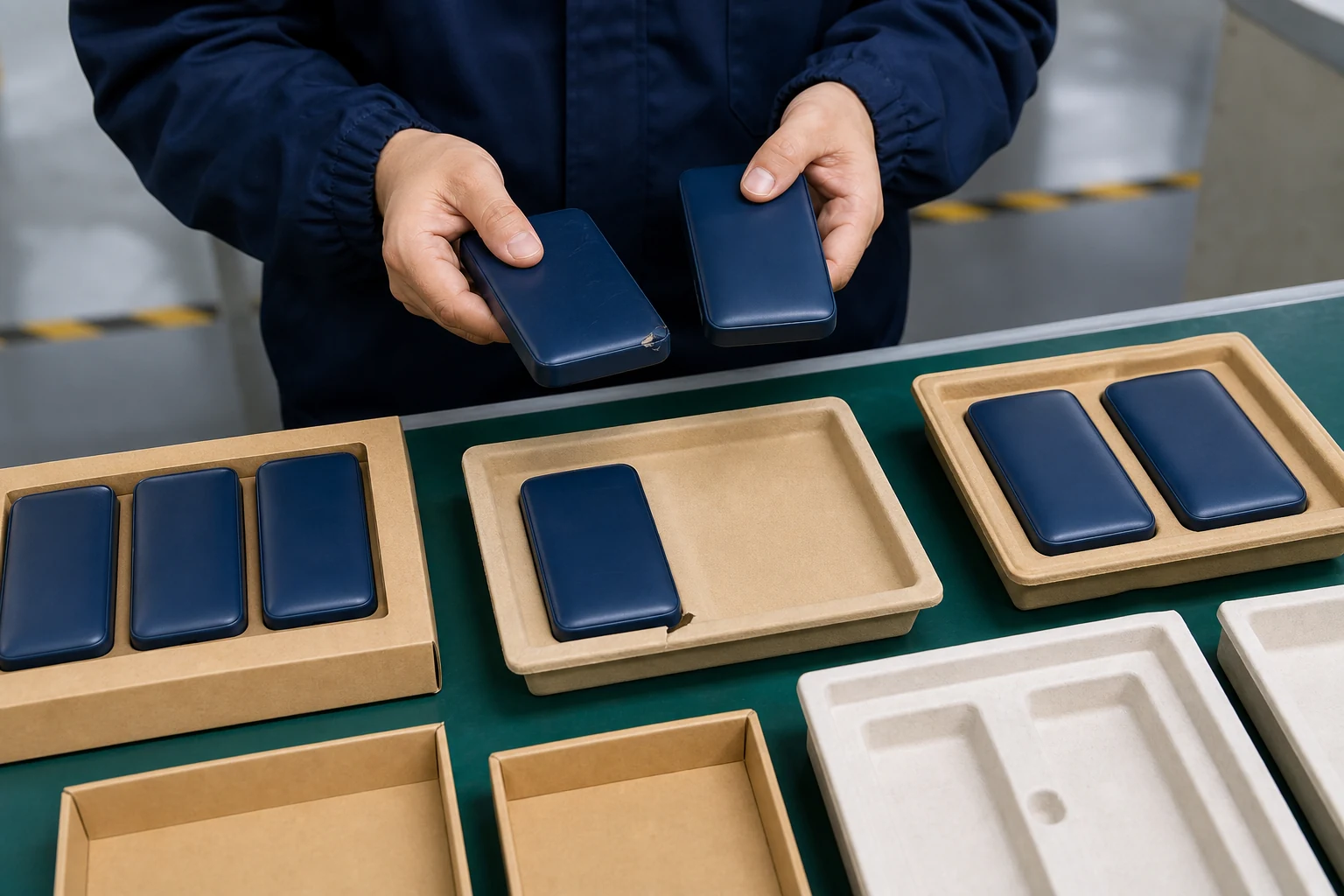
Define a real lot and take a genuinely representative random sample
A lot is not whatever happens to be visible when the inspector arrives. It should be a traceable, reasonably homogeneous quantity presented for inspection under stated conditions: the same purchase order, product revision, production process and defined production period unless the plan says otherwise. Mixing different models, materials, factories or production dates can conceal a concentrated problem. If the order contains multiple SKUs, the sampling allocation must prevent a small or high-risk SKU from disappearing inside the total quantity.
Before sampling, reconcile the factory’s finished quantity, packed quantity, carton count and packing list. Record unavailable, unfinished, reworked or off-site goods. If too little of the lot is complete to represent the shipment, the correct result may be “inspection not performable” rather than a convenient partial approval. The release condition should require a defined production state and enough access to choose units across the lot.
Random selection means the factory does not choose showcase cartons. The inspector should draw units from different pallet, stack, carton and inner-pack positions using a documented method. Carton numbers or locations can be generated before opening, then reconciled against the actual layout. Substitution after a defect is found destroys the evidence. Sampled units should remain identifiable until the report is closed, especially when a dispute may require photographs, reinspection or a retained sample.
Stratification can improve representation when the lot contains meaningful subgroups such as production lines, cavities, colours, sizes or shifts, but it must be planned rather than improvised to achieve a preferred outcome. The report should show the lot definition, sample source and any access limitations. A clean-looking sample has little value if it came only from the top layer prepared for visitors.
Select the plan without treating a table as a substitute for judgment
The plan design begins with the supply situation: a continuing series of comparable lots or an isolated order. Then identify the lot size, the inspection level or other required index, the sampling scheme, the state of switching rules, and a separate AQL or decision criterion for each defect class where appropriate. Use the current standard to obtain the code letter, sample size and acceptance/rejection values. Preserve that calculation in the work order so another qualified reviewer can reproduce it.
NIST’s official engineering handbook explains why acceptance sampling sits between no inspection and 100% inspection, particularly when complete inspection is expensive, slow or destructive. Its overview of single, double, multiple and sequential sampling plans also shows that every design balances producer and consumer risk. More inspection is not automatically better if the measurement system is unreliable, the samples are biased, or operators miss defects through fatigue.
High-risk characteristics may require controls outside the ordinary AQL count: verified certificates, accredited laboratory tests, process validation, 100% automatic checks, traceability or a zero-tolerance contractual rule. Conversely, increasing the sample merely to look strict can waste time without addressing the dominant failure mode. The sampling decision should follow risk, order history, process stability, product complexity, cost of escape and detectability.
Schedule the inspection at a decision point, not as a ceremonial visit
Pre-shipment inspection should occur when the defined lot is sufficiently complete and accessible for representative sampling, yet before an irreversible release such as loading, final payment or export dispatch. The exact timing depends on the product and packing sequence; there is no responsible universal completion percentage. If labels or export cartons are applied late, the inspector must still be able to examine enough finished packing to verify those requirements without allowing the uninspected remainder to change unnoticed.
Connect the appointment to documentary gates. The factory confirms the product revision, finished quantity, packing state, location and readiness in writing. The buyer sends the controlled checklist and approved sample reference. The inspector confirms access, equipment and any destructive-test permission. Payment and logistics teams know that a report is evidence for a decision, not an automatic release. A freight booking can be prepared, but the goods should not become unreachable before the buyer resolves a hold.
For a first factory, a difficult product or repeated failures, add earlier controls. A pre-production meeting verifies specifications and samples; an initial-production check catches misunderstanding before the whole lot is built; during-production inspection tests whether corrective action works. Final random inspection then verifies the presented shipment. Layered controls are often more economical than discovering a design or material error after full production.
What the inspector should check
The checklist must be product-specific, but a disciplined sequence keeps evidence coherent. Start with identity and quantity: purchase order, model, revision, colours, sizes, carton count and production state. Review packing and shipping marks against the approved artwork and destination instructions. Draw the sample, photograph the selection process and log which cartons or units were used. Only then begin detailed checks.
Workmanship review covers visible and tactile nonconformities under defined conditions. Dimensional checks use suitable calibrated or verified equipment and the drawing tolerances. Functional checks imitate intended use within a safe, repeatable method. Assembly, accessories, software version where applicable, language, barcode readability, carton construction, cushioning and sealing are checked against the specification. Any on-site test should record method, sample quantity, equipment identifier where relevant, result and evidence.
Packaging deserves its own control because a conforming product can arrive unsaleable after weak packing. Verify unit protection, moisture or corrosion protection when specified, pack quantity, carton dimensions and gross/net weight tolerances, closure, palletization, labels and count. A drop, vibration or compression claim should name a valid method and acceptance criterion; an improvised demonstration must not be described as a certified test.

Inspection body, laboratory and factory checks are different
ISO/IEC 17020:2026 addresses competence, impartiality and consistent operation of bodies performing inspection. A buyer can ask whether the provider’s relevant scope, personnel competence, methods, equipment control, confidentiality and conflict safeguards fit the assignment. Accreditation is useful only when the activity is actually within the recognized scope; a logo by itself proves little.
When chemical, electrical, mechanical, food-contact or other technical testing is required, a qualified laboratory may be necessary. ISO/IEC 17025:2017 is the current international competence standard for testing and calibration laboratories. An on-site inspector checking appearance and simple function is not automatically a laboratory, and a laboratory report does not prove the mass-produced shipment matches the tested sample. Sample identity, chain of custody, test method and production linkage must connect the two forms of evidence.
Read the report as a decision package
A useful report identifies the buyer, supplier, factory, location, purchase order, product, revision, lot size, presented quantity, packing state, sample plan, standard edition, inspection level, AQL inputs, defect definitions, sample source and inspection date. It lists each test and result, separates defects by class, shows totals against the acceptance rule, and records limitations. Photographs should prove both conformity and nonconformity: lot overview, marks, selected cartons, measurements, functional steps, defects and final packing.
The headline result should not erase exceptions. “Passed” is misleading if a mandatory test was not performed, the golden sample was unavailable or half the order was off-site. Use a conditional or blocked outcome when missing evidence prevents the planned decision. Likewise, a defect photograph needs scale, location, unit identity and a clear link to the violated requirement. A close-up with no context may be visually dramatic but operationally weak.
Review the report through four questions: Was the right lot presented? Was the sample selected as planned? Were the current specification and methods used? Do the observed counts and critical findings support the stated decision? A second reviewer should be able to follow the evidence without relying on a phone call. Keep the report, controlled checklist, sample-plan record, photographs, supplier response and final disposition together.

Accept, hold, rework or reject: turn the result into controlled action
Acceptance under the agreed plan permits the buyer to proceed subject to any other contract, payment, laboratory, document or regulatory gates. It does not waive hidden defects, warranties or destination requirements unless the contract explicitly says so. The buyer should close minor observations, confirm the final quantity and protect the approved lot from substitution or unrecorded rework before loading.
A failed sample should trigger a hold, not a rushed argument about who is at fault. Issue a nonconformity record tied to the specification. Require the supplier to identify affected scope, immediate containment, root cause, corrective action and proof of completion. The remedy may be sorting, rework, replacement, price adjustment, delivery change or rejection, but it belongs to the purchase agreement and commercial decision—not to the inspector’s personal negotiation.
After rework, define a new presented lot and conduct an appropriate reinspection. Do not simply recheck the original failed pieces or let the factory replace them with good units. Confirm how rejected material was segregated and whether rework created new risks. If the failure reveals a systemic material, tooling or process change, expand the evidence beyond the original defect count and consider laboratory or engineering review.
Pre-shipment inspection does not replace legal compliance
Destination-market obligations remain with the responsible economic operators. For example, the U.S. Consumer Product Safety Commission states on its testing and certification guidance that manufacturers and importers must test and certify many regulated consumer products, with product-specific rules governing whether an accepted third-party laboratory is required. A visual AQL inspection cannot create that certificate, approve an unknown material, or determine every law that applies.
Before production, identify the destination, intended user, claims, materials, power system, wireless features, food or skin contact, age grading and regulated category. Build a compliance matrix with the applicable legal requirements, standards, tests, technical documents, labels and responsible party. The inspection checklist then verifies observable shipment attributes and document identity while the compliance file handles the legal and laboratory evidence. Advice must be jurisdiction- and product-specific.
A practical China order workflow
- Before quotation: define the product, destination, intended use, critical requirements and evidence. Compare suppliers using the same brief.
- Before deposit: place the controlled specification, approved sample process, inspection rights, defect rules, remedies and document hierarchy into the purchase order or contract.
- Before production: approve a representative sample and confirm the factory, materials, key subcontractors, revision and quality plan.
- During production: monitor milestone evidence and material changes. Add an earlier inspection when the risk justifies it.
- Before final inspection: confirm lot identity, quantity, packing state, location and readiness; issue the sample plan and checklist.
- After the report: independently review evidence, place a written hold where needed, close corrective action, and authorize payment or shipment only through the agreed gate.
- After arrival: record incoming and customer issues against the same defect language so the next lot’s plan and supplier controls improve.
Three decision examples
Example 1: cosmetic home accessory
A buyer orders several colours of a decorative item. The main risks are shade, surface finish, assembly and retail packing. Sampling is allocated across colours and cartons; the golden sample and colour reference travel with the checklist. A small hidden blemish may be minor, but a prominent scratch on the presentation surface is major. The report separates colour lots so a defect concentrated in one colour is not diluted by the others.
Example 2: powered consumer product
The product has appearance and function checks plus destination safety obligations. The inspector verifies model identity, plug and rating label, assembly, accessories, simple function and linkage to test reports. Laboratory evidence and certification are reviewed separately. A substituted component or missing mandatory marking is escalated even if the ordinary cosmetic sample count passes, because AQL cannot neutralize a compliance failure.
Example 3: first order from a new factory
The buyer has no continuing lot history, so the quality professional evaluates whether an isolated-lot plan is more appropriate than a switching scheme. The first production run receives earlier milestone checks, strict change control and a final inspection. A failure results in documented containment and reinspection of a newly presented lot. Future inspection intensity is changed only under the chosen scheme and evidence, not as a reward for one attractive report.
Common mistakes that weaken AQL inspections
- Choosing an AQL number before defining defects and consequences.
- Using an obsolete table, an unexplained online calculator or a continuing-series plan for a truly isolated lot.
- Allowing the factory to select samples or to replace failed units during inspection.
- Combining unrelated SKUs so the high-risk or low-volume model receives little coverage.
- Inspecting too early, when the final goods and packaging do not represent the shipment.
- Treating a passed sample as proof of zero defects or regulatory compliance.
- Accepting photographs without lot identity, scale, method or traceability.
- Reinspecting only repaired defect units instead of a properly presented lot.
- Giving the inspector commercial authority that belongs to the buyer and contract.
How to commission the inspection
Send the provider the purchase order, controlled specification, approved sample reference, packing artwork, defect catalogue, intended destination, required tests, lot breakdown, factory address and inspection window. Ask for the proposed standard, scheme, sampling inputs, inspector competence and deliverables. Confirm which activities are visual inspection, on-site measurement, destructive test, document check or outsourced laboratory work. The quotation should state exclusions and rescheduling conditions rather than promising an all-purpose “quality check.”
China Moshaver’s inspection and quality-control service can be scoped around the actual order. When supplier identity or site legitimacy is still uncertain, complete supplier and factory verification before relying on production evidence. If the product source itself is unresolved, use product sourcing support to compare candidates against one specification rather than changing the requirement for each quote.
Related planning routes
Place inspection inside the whole import plan. The China purchasing and import guides provide the hub for sourcing, orders and logistics. First-time buyers can review how to start importing from China and the process to verify a Chinese supplier. Platform-specific research is covered in the guides to buying from Alibaba and buying from 1688. After the lot is released, compare timing, product sensitivity and shipment size before you choose air or sea freight.
Frequently asked questions
Does AQL 2.5 mean 2.5% of my shipment may be defective?
No. AQL indexes a sampling scheme for a continuing series of lots; it is not a literal permission, a measured defect percentage for the current shipment or a zero-risk guarantee. Read the complete plan and its acceptance rule.
Who should choose the AQL and inspection level?
The buyer and a statistically competent quality professional should choose them from product risk, defect class, supply history, detectability and contractual needs. The factory or inspection company may advise, but the buyer must understand and approve the decision.
Should critical defects use ordinary AQL acceptance numbers?
Not automatically. Safety, legal and severe-use risks often need zero-tolerance contractual treatment, compliance testing, process controls or other evidence. Define the consequence and applicable requirement before choosing the control.
Can I use ISO 2859-1 for a first and only order?
Do not assume so. ISO 2859-1 is designed around continuing lot-by-lot schemes and switching rules. ISO 2859-2 addresses isolated lots and short sequences. A qualified person should select the appropriate system.
Is a third-party inspection the same as laboratory testing?
No. Inspection examines conformity with stated requirements; laboratory testing applies validated test methods and competence controls. Some orders need both, linked by sample identity and chain of custody.
What happens when the sample fails?
Place the lot on hold, document the nonconformity, require containment and corrective action, decide the commercial remedy under the contract, and reinspect a properly presented lot when appropriate. Do not replace only the failed samples and call the order passed.
Official sources used
- ISO 2859-1:2026 — AQL-indexed sampling schemes for lot-by-lot inspection
- ISO 28590:2017 — introduction to the ISO 2859 series
- ISO 2859-2:2020 — limiting-quality plans for isolated lots
- ISO/IEC 17020:2026 — requirements for inspection bodies
- ISO/IEC 17025:2017 — competence of testing and calibration laboratories
- NIST Engineering Statistics Handbook — acceptance sampling
- NIST Engineering Statistics Handbook — types and risks of sampling plans
- U.S. CPSC — testing and certification responsibilities
Next step: Send China Moshaver the product specification, destination, supplier, order quantities, packing plan and expected ship date. The inspection can then be scoped around a reproducible sampling plan, product-specific defect catalogue and a written hold/release gate.



[…] Related guide: AQL and pre-shipment inspection guide […]