

Build a clear post-delivery discrepancy case for China goods. Record examined scope, preserve evidence, compare remedies and verify goods and settlement separately.
The shipment arrived. The product does not match. What happens next?
When goods from a Chinese supplier appear different from the agreed order, build a bounded discrepancy case before arguing about the whole shipment. Identify the product and reference requirement, record what was actually examined, preserve the original evidence and notify the contractual seller through the appropriate route. Then turn the proposed remedy into something you can verify. Keep two closing records: the condition and quantity of the goods, and the execution of the commercial settlement. A promise to replace a part is neither delivery of that part nor proof that the problem has been resolved.
This guide starts after receipt, when a purchasing team has a concrete finding to investigate. It is designed for the awkward interval between a warehouse discovery and a defensible decision with the seller. Use the Chinese supplier purchase-contract checklist for terms established before buying, and the wider China purchasing and import guides for the surrounding workflow. Here, the working output is a case file that another person can understand without having watched the cartons being opened.
That file cannot guarantee cooperation, a refund or a legal outcome. What it can do is keep the team from confusing four different things: an observed symptom, a departure from the agreed specification, an explanation of the cause and the remedy the buyer wants. Those distinctions matter when the supplier disputes the finding, when several parties handled the goods and when only part of the stock has been examined. They also make it easier to decide what evidence is missing instead of sending increasingly forceful versions of the same complaint.
Give the discovery a place in the warehouse record
Choose one person to own the case and one location for the current record. This does not mean that one person must perform every technical, logistical and financial task. It means that new photographs, quantities and replies should reach a record whose status somebody maintains. Without that coordination, procurement may negotiate a replacement quantity while the warehouse continues discovering affected units, and finance may close an invoice that the quality team still considers unresolved.
Before routine movements erase the initial state, record where the goods are, which cartons were opened and whether any units have already been distributed or used. Do not reconstruct an ideal receiving sequence if the actual sequence was messy. A note saying that the first opened carton was discarded is useful information; silently treating a later carton as the original packaging is not. If the team created an internal case identifier, make that origin clear. It must not look like a factory batch number that the manufacturer never provided.
Keep examined satisfactory goods, examined discrepant goods and unexamined stock distinguishable. These labels describe the evidence available to the team, rather than deciding every safety or legal question. The extent of any hold should follow the product risk and the competent person’s decision. A minor appearance dispute and a possible safety failure require different operational responses. Where safety, hazardous materials or regulated use is involved, commercial negotiations must not substitute for the appropriate technical and regulatory action.
Preserve a link between each retained unit and its carton or original location. If a unit goes to the supplier or an independent examiner, record that movement, its purpose and the receiving person. A sample sent for investigation is not automatically a return of the entire disputed order. Maintaining this distinction prevents a surprisingly common accounting problem: units disappear from the warehouse total while nobody can say whether they were consumed, replaced, retained or sent elsewhere.

Write a finding that somebody else can check
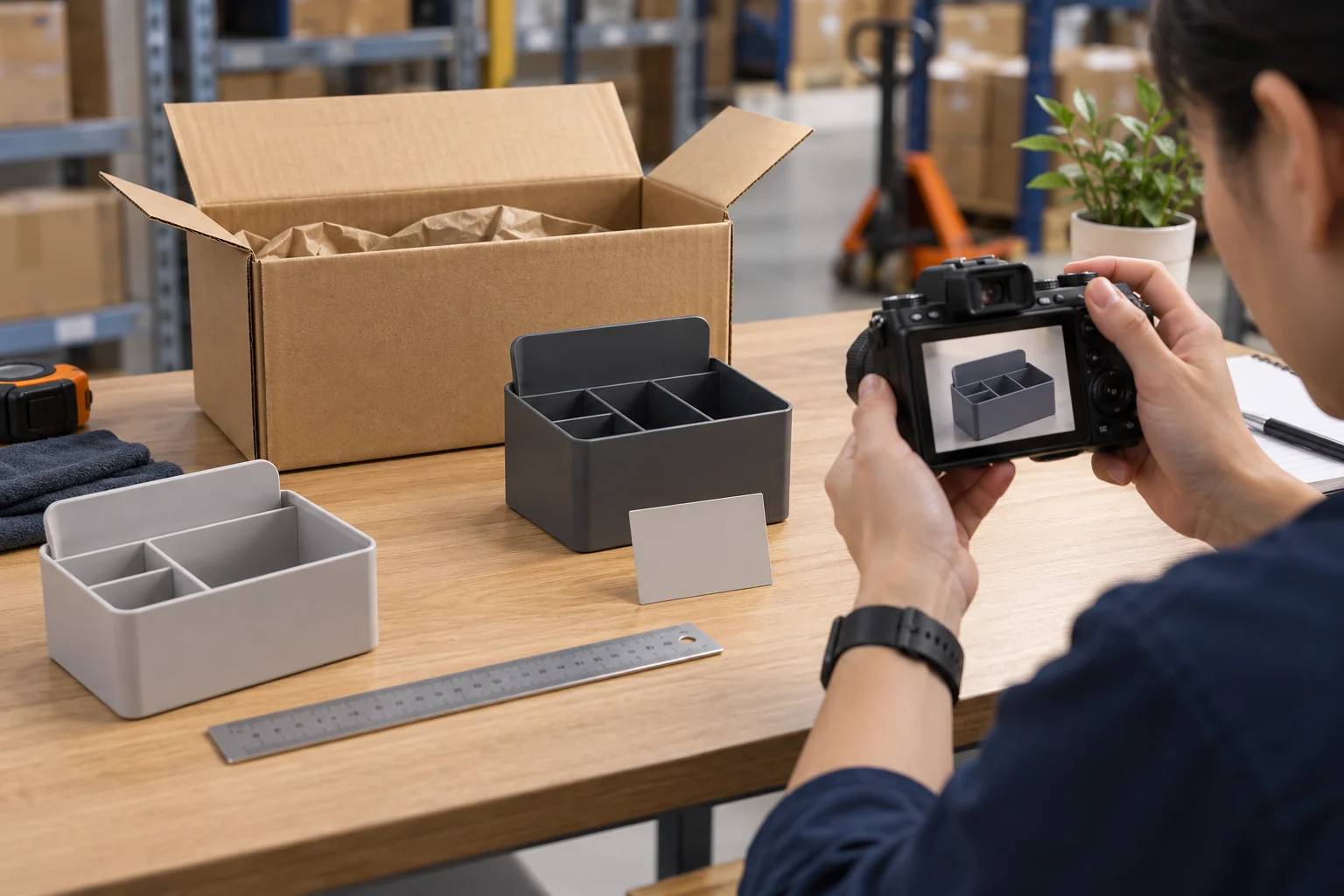
Start with a sentence that names the unit, the observed condition and the reference used. For example, an everyday storage organizer might have an insert that cannot be assembled in the position shown by the approved reference. That observation is more useful than saying that the factory’s quality is poor. Add the purchase-order revision or accepted sample identity that makes the comparison meaningful. If the reference itself is unclear, say so. A catalogue photograph, a seller’s general description and a buyer’s private expectation do not necessarily establish the same requirement.
The ISO/IAF Auditing Practices Group’s educational paper connects documented evidence, the relevant requirement and a precise nonconformity statement. Its context is management-system auditing; it does not prescribe a buyer’s claim form. For a procurement case, use your own wording and a structure appropriate to the goods. Avoid presenting the worksheet in this article as an ISO document or suggesting that completion of it creates a certification or an entitlement to compensation.
Separate the suspected cause from the finding. An insert may be a different revision, an assembly instruction may be misunderstood, or handling may have changed the unit. At the first observation, several explanations can remain open. Record them as questions for investigation, with the evidence needed to resolve each one. Do not ask an examiner to confirm a conclusion already written into the brief. A useful brief asks whether a specified feature departs from the reference and what the examination can establish about that departure.
The requested action belongs in another field. You may ask the seller to review evidence, supply missing information, propose a correction or discuss a commercial remedy. Asking for replacement does not itself prove a right to replacement. Similarly, the seller acknowledging receipt of the case does not mean that it accepts liability. Keeping these stages distinct allows the record to show progress accurately even while the parties disagree about responsibility.
Reconstruct receipt, use and discovery as separate events
Build a chronology from records rather than memory alone. Physical delivery, opening, initial use, internal discovery and seller notification may occur at different times. For each event, note the date, the person, the source of the information and any limitation. A carrier receipt establishes one part of the sequence; it does not necessarily show when the product was functionally examined. A staff message may establish when somebody first reported a problem, while leaving earlier opening or use undocumented.
Ask staff to distinguish what they observed from what somebody later told them. If a unit has been assembled several times, moved between sites or used by a customer, record that history instead of describing it as untouched. Preserve original photographs and videos. A marked-up copy can be helpful for discussion, but the unedited original should remain identifiable. Do not reorder files to suggest that a later reenactment captured the first discovery.
A passed pre-shipment inspection is part of this chronology, not a document to remove because it complicates the claim. Compare the feature examined then with the feature at issue now, and check the recorded product revision, sample identity and limitations. The pre-shipment inspection and AQL guide covers that earlier decision. The new case should explain the relationship between the two findings without assuming that discovery after delivery automatically invalidates every earlier inspection result.
If the chronology contains gaps, identify the consequence for the next decision. Perhaps the team needs a customer account of use, the warehouse needs to locate another unopened carton, or the supplier needs to explain a revision difference. A missing record is a reason to limit a claim or seek further evidence. It is not a reason to manufacture a date. Accurate uncertainty is often more helpful to an investigator than a confident timeline that collapses under the first follow-up question.
Make the quantity statement narrower than the suspicion
Keep ordered quantity, counted receipt and examined quantity in separate fields. Then identify the unit of counting: an individual part, a saleable set, a carton or another defined unit. A set missing two accessories is not necessarily two defective sets. One product with several symptoms should not become several defective products when the numbers are added. The seller and the warehouse must be able to follow the same counting rule before they discuss replacement quantities.
The NIST discussion of populations and sampling cautions against treating sample facts as population facts. In this case file, report the actual examined scope and its limitations. A collection of units chosen because they already looked suspicious is not a basis for a shipment-wide defect estimate. Further examination may be useful, but the appropriate method and scope should come from a competent quality decision for the product, not a percentage invented to strengthen a complaint.
Maintain the successive counts rather than overwriting the first result. If the team initially examined one location and later examined the rest of the stock, retain both stages and explain how the scope expanded. This lets the parties reconcile an initial notice with a later replacement request. It also prevents a seller from reasonably asking why the buyer’s numbers changed without any explanation of what was newly examined.
| Record | What it should identify | What it does not establish alone |
|---|---|---|
| Receipt | Actual counted goods and differences from documents | That every unit was functionally examined |
| Examination | Units, locations, selection and method | A reliable whole-order defect percentage |
| Confirmed finding | Named unit and reference requirement | A proven cause or legal entitlement |
| Unknown scope | Unopened or inaccessible goods | A zero-defect result |
Build an evidence map, rather than an attachment dump
Keep the opening summary short enough for a decision-maker to read. Identify the order, the product, the controlling reference, the known scope and the current request. Put details into numbered attachments, and show which attachment supports which statement. Ten photographs of the same close-up do not necessarily contribute more than a well-explained overview and a clear detail. The aim is to let the recipient locate and verify the evidence, rather than search a large folder for something that seems relevant.
Combine views that establish identity with views that show the finding. A close-up can show a break but hide which unit it belongs to; a carton image can identify packaging but say little about performance. Explain the observation without describing everything in the picture as proof of cause. For a functional video, include enough preparation and operation for a competent reviewer to understand what was done. Do not present an improvised demonstration as a certified test or a later repaired unit as the original failed one.
Keep a version history for the case summary. New counts, additional examination and revised requests should have a date and an explanation. Protect unrelated personal, banking and customer information when sharing the bundle. If a laboratory or supplier test report becomes part of the case, use the guide to verifying supplier test reports to assess its identity and relevance. A polished PDF does not answer whether the reported sample and method relate to the goods now being disputed.
Notify the right seller while the investigation continues
Do not postpone notice simply because the cause investigation is unfinished. Check the contractual route and obtain the appropriate legal review for the transaction. The sales representative on a messaging app, the contractual selling company and the factory’s technical team may be different recipients. A useful operational message identifies the order, explains the specific observed discrepancy, states the examined scope, attaches the evidence available and says what response is requested. Mark incomplete information clearly and connect later updates to the same case.
The official CISG text treats examination, notice and remedies conditionally. It does not provide a universal short notice period or automatic refund for every China import. Applicability also requires review of the parties, contract and current treaty participation and declarations. This guide therefore supplies no general legal deadline. Where rights or a dispute are at stake, transaction-specific legal work should proceed alongside the operational investigation.
Ask the seller to identify the person reviewing the case, acknowledge the received version and state any further information needed. Record acknowledgement as acknowledgement, rather than acceptance of fault. For internal management, choose a follow-up date suited to the urgency, but do not label that date a statutory deadline. Turn each reply into an answered question or an open action. “We will take care of it” remains a promise until the parties know what will be delivered, by whom and how the result will be checked.
Resolve disagreement about the examination before multiplying tests
If the seller disputes the method, ask which step it would change and which reference supports that change. The issue may concern assembly direction, the applicable instruction, the measurement location or the condition in which a feature is assessed. Compare one identified unit under a documented method before exchanging unrelated results. Record every agreed change. Repeated demonstrations with different units and unknown conditions can generate more disagreement while producing little additional understanding.
For a joint or independent review, define the question, the unit, the method owner and the form of the result. If specialist or destructive examination is needed, decide how original evidence will be retained and which additional units can be used. Do not invent a tolerance, force or environmental setting to settle the argument. The relevant technical authority should determine the suitable method and explain its limits. Procurement’s job is to maintain the connection between the question, the examined material and the decision that follows.
Discovery after receipt establishes a discovery point, rather than automatically establishing when or where a defect arose. Keep possible handling, storage and transit factors separate from the specification finding. Where a transit event is relevant, the cargo insurance and damage-evidence guide covers the associated path. A supplier case and a transport case can share evidence while remaining different claims with different counterparties and conditions.
Compare remedial proposals by their deliverables and dependencies
Ask what will exist when the proposal is complete. A part replacement needs an identified revision, quantity, delivery location, installation responsibility and check of the resulting product. A credit against the next purchase needs an agreed basis and a clear record of how it can be used. The latter may make recovery depend on another order. Include that dependency in the comparison instead of treating a future discount as cash already received.
Collect actual costs and open estimates separately: parts, labour, packing, transport, relevant examination and other necessary actions. Unknown costs should remain unknown until a defensible estimate is available. Also distinguish an amount the buyer requests from an amount the seller has accepted. A commercial cost worksheet does not by itself prove the legal recoverability of every line. If legal responsibility or settlement terms are disputed, keep that review separate from the arithmetic.
Check the practical feasibility before accepting the proposal. Is the replacement compatible with this revision? Is authorised local work available? What happens to units already delivered to customers? Who will receive the replacement, and how will the goods be identified on arrival? For returns and cross-border movements, verify the actual route, documents and requirements with the appropriate specialists. Do not turn “send it back to China” into a firm instruction while destination acceptance, costs and formalities remain unresolved.

Control execution without losing the original finding
For local correction, retain an adequate record of the original condition and define the authorised work. Give the activity an owner, a list of affected units and a completion criterion. Use a stage such as “work completed, verification pending” so that performing the task is not confused with confirming the outcome. New parts can solve one symptom while changing another feature; the relevant person must decide what needs to be checked afterwards.
Reconcile received parts, consumed parts, remaining parts and units completed. Record exceptions instead of covering them with “all repaired”. Work requiring technical qualifications, permissions or product-specific instructions must use those arrangements. A commercial article is not an authorisation to modify a regulated product, bypass safeguards or disregard the manufacturer’s appropriate requirements. Preserve the evidence and decisions that explain why the chosen work was suitable for the particular order.
The APG educational paper on reviewing and closing nonconformities distinguishes correcting a finding from addressing its cause and checking the response. Apply the distinction carefully: repaired goods and prevention of recurrence are separate statements. Keep the seller’s explanation and the observed product result together, without presenting an unverified root-cause assertion as a demonstrated conclusion. If the cause remains open, the closing record can say so.
A fictional case: eight findings in forty examined units
Imagine a buyer receives 400 desktop-organizer sets in ten cartons. At the first stage, staff examine 40 units from two opened cartons and observe an assembly mismatch in eight of them. These quantities are invented solely for this example; they are not shipment data, industry rates or a client case. The initial record should show 40 examined units, eight observed discrepancies and 360 units still unexamined. It should not claim that 20 percent of the whole shipment is defective.
The buyer identifies the eight units internally, records their carton relationship and retains an original example. The case references the agreed organizer version and documents the assembly observation. Cause remains under investigation. When the seller suggests that an insert was reversed, both teams review a named unit with an agreed procedure. The result belongs in the record whichever direction it points; the example does not assume that every disagreement must prove the supplier wrong.
The seller then proposes spare inserts. Before accepting, the buyer requests the revision, quantity, delivery arrangement and method of checking the resulting sets. Meanwhile a competent quality decision determines the further examination of the remaining stock. The final scope may be different from the eight initial findings. Any revised part requirement is therefore connected to newly obtained evidence, rather than silently increasing the first claim.
At completion, one record reconciles the units examined, corrected, retained and still open. Another records the agreed financial treatment and whether it was actually executed. The case can have a successful goods outcome while the commercial settlement remains pending. That is a truthful intermediate state, rather than a reason to close everything or pretend that no progress occurred. The purpose of the example is to make the sequence observable, not to promise a particular remedy.

Close the case on evidence and carry forward one useful change
Replacement proposed, replacement dispatched, replacement received and replacement verified should have different statuses. A tracking number describes movement of a package; it does not establish that the correct product or quantity arrived. Likewise, an amended invoice, a credit note and money received are different commercial events. Reconcile remaining quantities and obligations before labelling either record complete. If the settlement releases rights or changes legal obligations, obtain the appropriate review of its actual wording.
Prepare a short completion account: the original finding, the established scope, the agreed deliverable, the action performed, the observed outcome and the open items. Warehouse, purchasing, quality and finance should be able to recognise their records in it. Avoid an unexplained “resolved” label. Identify any retained samples, sent units, consumed goods or inaccessible stock that explain a difference between the original receipt and the final quantities.
The public ISO 10002 description concerns internal complaint handling and improvement, rather than external dispute resolution. For the next order, choose a precise improvement the team can implement: a clearer revision reference, a better receiving record or an appropriate check of the disputed feature. Give it an owner and an observable result. A long list of vague lessons is less useful than correcting the information gap that made this case hard to investigate.
Questions buyers ask after discovering a discrepancy
Are photographs enough to make a seller claim?
Photographs can support a finding, but they may not establish unit identity, the agreed requirement, examined scope or conditions of observation. Map each image to a specific statement and retain its original. Legal sufficiency depends on the actual transaction and evidence, rather than the number of attachments.
Does a passed pre-shipment inspection end the matter?
Do not infer that from the result alone. Compare the feature, sample, revision, method and limitations recorded earlier with the current finding. Keep the earlier report and explain the relationship. Contractual terms and applicable rules also need their own review.
Should notice wait for a complete cause investigation?
Do not delay merely to perfect every detail. Check the transaction’s notice requirements and communicate the specific facts currently known. Identify unknown scope and cause honestly, then attach later information to an identifiable updated case version.
The seller offered free parts. Is the case complete?
No completion should be inferred from the offer. Clarify revision, quantity, delivery, authorised installation, related costs and verification. Record actual receipt and product results separately from the financial settlement. Keep any remaining goods or commercial obligations visible.
Can we repair or discard the goods immediately?
Address safety and prevention of further loss with the appropriate people, while preserving the initial state and necessary samples where possible. Record the authority and scope of action. Repair, distribution, disposal and legal settlement can involve different requirements; warehouse convenience does not settle them.
When can we state a defect rate for the whole order?
Only when the method and scope support that statement. Until then, report examined quantity and observed findings with their limits. Selecting known suspect units or opening convenient cartons does not by itself justify a whole-order estimate.
What should be ready for an operational review?
Bring the order and specification revision, seller identity, receipt/discovery chronology, counts, original evidence, correspondence and open proposals. Make observation, suspected cause, requested action and completed work distinguishable. Missing information should remain explicitly marked as missing.
Choose the next action from the open question
The next step may be a better inventory scope, competent examination or a practical discussion with the seller. Prepare the order file and current findings when asking about inspection and quality-control services. If the selling entity and factory relationship remain unclear, bring the actual transaction details to a discussion of supplier sourcing and verification. The relevant service scope must be confirmed for the case; this guide does not promise compensation or collection of funds.
Sources and limits
The operational worksheets and fictional example are original procurement recommendations. The public sources below support limited legal, statistical and management distinctions. No proprietary form or testing table is reproduced, no numerical technical method is supplied and no universal legal entitlement is inferred.



[…] Related guide: handling a product discrepancy discovered after receiving China goods […]
[…] the warehouse’s recorded decision. If they remain disputed, keep them unavailable and use the post-delivery discrepancy guide for the supplier follow-up. A box that passed an origin inspection can still be short or damaged on […]