

Check a Chinese supplier's test report before buying: confirm the issuer, laboratory scope and exact product model, then decide what evidence is still missing.
What makes a supplier’s test report useful?
A product test report is useful when you can establish who issued it, what was tested and how the result relates to the exact goods you intend to buy. Start with the complete document, confirm its origin independently, check the laboratory’s relevant scope and compare the tested sample with your controlled product specification. Then ask what the report actually demonstrates. An authentic report can still be the wrong evidence for your order.
Imagine receiving an attractive quotation for a desk lamp. The supplier attaches a report bearing a familiar laboratory name and says, “This model passed.” Before treating that sentence as a purchase decision, you need to know which model, which components, which test conditions and which destination requirements are involved. A report on a similar lamp may answer some questions and leave the most important one open.
This guide sets out seven checks for reviewing product-test evidence from a Chinese supplier. It is an evidence-review workflow, not a substitute for a laboratory, a product specialist or the destination’s required conformity process. Use the broader China import guides for the rest of the transaction; keep the report review focused enough that another colleague can understand and repeat your decision.
1. Identify the document and the decision it must support
Begin by writing one sentence about the decision. You might need to establish whether a particular material was tested, whether a design revision needs further examination or whether the supplier has provided the evidence requested by your compliance reviewer. “Check the certificates” is too vague. It invites a folder full of impressive documents without a clear answer.
Separate a product test report from a management-system certificate, a factory audit, an inspection report and an accreditation certificate. They concern different subjects. A factory audit may help you assess production arrangements; it does not automatically establish the performance of the item in your carton. A laboratory’s accreditation document concerns its assessed activities, while the product report records work on identified samples.
ISO’s description of ISO/IEC 17025 identifies laboratory competence, impartiality and consistent operation as its subject. Treat that as a laboratory-assessment reference, not a product approval printed on every report bearing the number.
Ask the person requesting the evidence what they need to conclude. Purchasing may be checking a supplier’s claim, an engineer may be examining a changed component, and a market-compliance reviewer may require a particular assessment route. Record these as separate questions. One document can contribute to several reviews without closing all of them.
| Document received | First question | Keep separate |
|---|---|---|
| Product test report | Which sample and tests does it describe? | Acceptance of the whole shipment |
| Laboratory accreditation information | Which site and activities are covered? | Whether this specific report is genuine |
| Product certificate or test mark | Which product, holder and scheme are listed? | Other variants or unlisted claims |
| Inspection report | Which lot and inspection instructions were used? | Untested safety or material properties |
For lot sampling and shipment acceptance, retain the separate AQL and pre-shipment inspection process. The useful connection is product identity: the inspector should know which specification and evidence file belong to the goods being examined. The two reviews should exchange information without pretending to be the same review.
2. Obtain the complete file before judging it
Request the original complete electronic report, including photographs, result tables, appendices and any amendment referenced in it. A screenshot of the first page cannot show the qualifications at the end. A cropped “pass” table may omit the sample description or reveal nothing about excluded tests.
Save the file as received and make a separate working copy for annotations. Give the review a stable reference connected to your order or product-development record. Note who supplied it, when it arrived and what the supplier said it proved. This modest record helps when a later file has the same visible report number but different pages.
Check the internal story. Do the report number, revision, page numbering and sample identity remain consistent? Are the dates plausible in sequence? Do the photographs show the stated model? Is a referenced attachment present? You are looking for questions to resolve, not diagnosing forgery from the appearance of a stamp or a font.
If the supplier redacts confidential information, ask precisely what was removed and whether the issuer can confirm the missing relationship. Some information may legitimately belong to another applicant. However, a redaction that hides the product identity or the relevant result can prevent your decision even if the document itself is authentic.
Do not “repair” the supplier’s report by adding your own model name, merging pages from different files or replacing a photograph. Create a separate comparison sheet. If the issuer needs to correct its document, obtain the issuer’s explanation and the replacement or amendment through its proper process. Keep the relationship between versions visible.
3. Confirm the issuer through an independent route
Find the issuing organization’s official website independently of the report’s clickable links. From there, locate its document-verification service or appropriate contact route. A familiar logo, a working QR code and an email reply are not independent checks when all three originate from the same unverified material.
For example, SGS provides a service for verifying SGS-branded documents. Use the relevant issuer’s own instructions. A service for one organization’s documents does not authenticate another organization’s report, and a website that checks certificates may not cover ordinary laboratory reports.
Prepare a specific enquiry: complete report number and revision, issue date, named applicant, product model and the exact file you received. Ask whether the issuer produced that version and whether any replacement, withdrawal or qualification needs to be considered. Avoid the broad question “Is this product safe?” when the service is only confirming document authenticity.
Record what was actually answered. “The number exists” is different from “The attached complete file matches our issued version.” If the response concerns only a certificate entry, do not extend it to an attached test report without confirmation. A cautious note about the response’s scope is more useful than an internal green tick with no explanation.
When a laboratory needs the applicant’s permission to release information, ask the supplier to arrange that authorization. Lack of immediate disclosure is not proof of fraud. It does mean the evidence remains unresolved for your purchasing decision. Keep that status visible while the responsible person follows up.
TÜV Rheinland’s Certipedia guidance describes checking a test-mark ID against the listed product and model. It illustrates why the type of verification matters: confirming a listed mark is not a search guarantee for every report issued by every laboratory.

4. Check the laboratory site and relevant scope
After establishing document origin, check who performed the work. Record the laboratory’s legal name, location and any accreditation identifier. Compare them with the issuing entity and the place where the test was carried out. A large organization’s brand can cover multiple legal entities and facilities.
Intertek explicitly describes its accreditations as scope-defined and site-specific. Therefore, do not assume that one facility’s recognized activity covers every test at every facility within a group. Ask for the relevant scope information when the relationship is unclear.
Use the accrediting body’s official information for the relevant claim. In China, the CNAS official website provides laboratory-accreditation information and routes to suspension, cancellation and withdrawal information. Follow the current official route and retain the record you actually consulted. A supplier’s saved certificate image is a starting point, not the whole check.
Look for the product or material field, the test method, the relevant location and any restrictions. Sometimes scope wording requires technical interpretation. Send the exact report and scope extract to a competent reviewer rather than deciding that a roughly similar phrase must cover the test. If work was subcontracted, ask which laboratory performed which part.
Keep historical and current status separate. A current directory entry can help you assess the laboratory now; the status applicable when the work was performed may need its own confirmation. Equally, an old accreditation certificate cannot settle present arrangements. Write down the dates and the question you asked instead of compressing both issues into “accredited: yes.”
The practical output is a short statement: the identified test appears within the relevant documented scope, clarification is needed, or the required relationship has not been established. Do not rewrite a technical scope yourself to make it fit a purchasing deadline.

5. Match the tested sample to your actual order
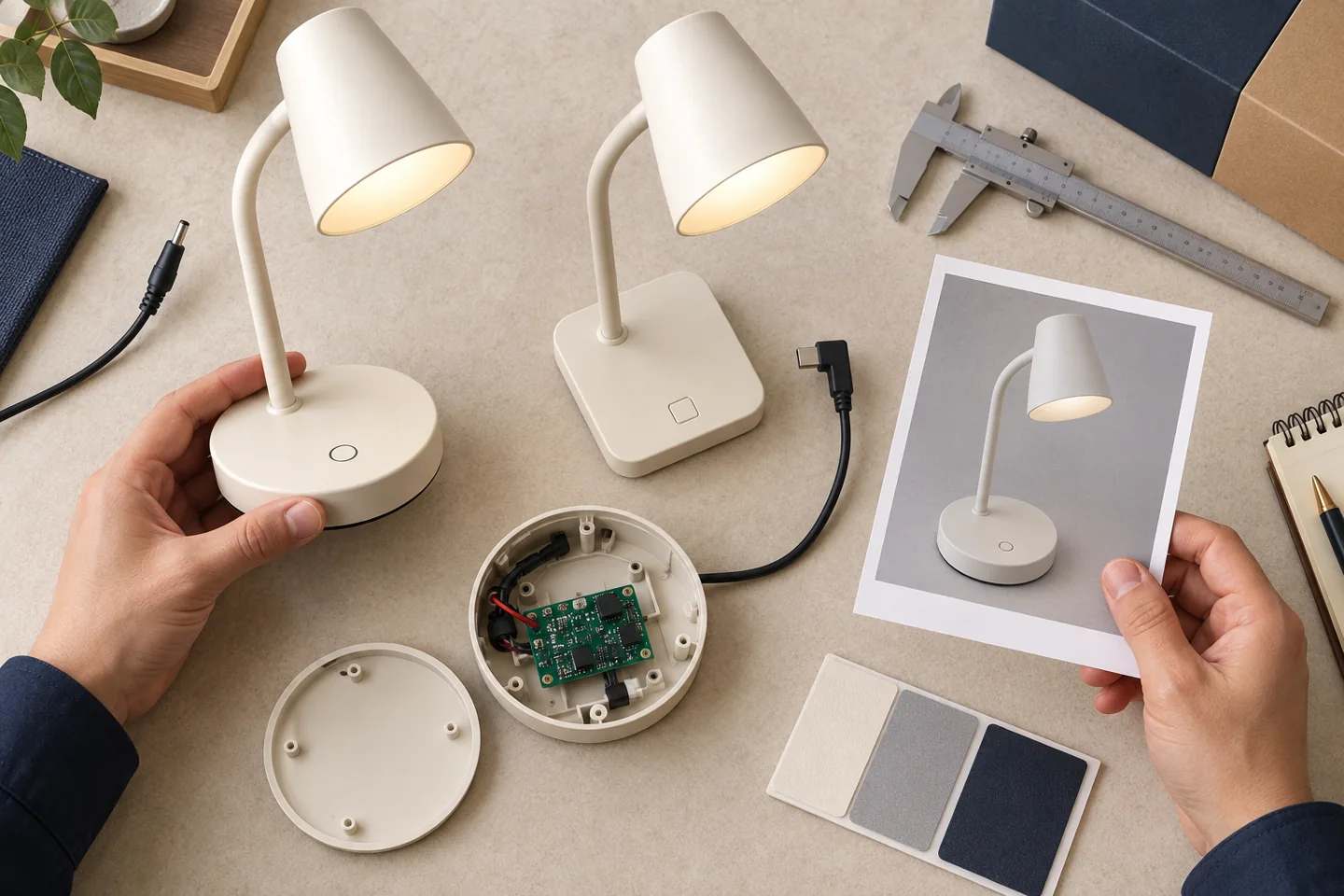
This is often where a genuine report stops being sufficient. Put the report beside the current product specification and compare identity at several levels: supplier item code, your SKU, manufacturer model, brand model, construction revision, materials and critical components. Names may differ legitimately, but the relationship needs evidence.
Ask the supplier for a model cross-reference signed or otherwise formally confirmed by the responsible party, with the basis for the mapping. That statement can explain the naming relationship; it does not automatically establish that an untested variant is covered. Where technical equivalence is claimed, the reviewer or issuer needs enough information to assess that claim.
For a lamp, a different adapter, power rating, connector or enclosure material may matter even when the product photograph looks almost identical. For a coated utensil, the base material and coating formulation may be more important than the catalogue colour name. Select comparison fields that relate to the test question rather than collecting every possible specification.
Use the product-sample approval process to connect physical samples with controlled specifications. A retained sample is helpful only if the team knows what it represents. Record whether it is a development sample, the final approved configuration or a sample selected from production.
Ask who selected the tested sample and how it reached the laboratory. Was it submitted by the applicant, taken from production under a recorded arrangement or obtained another way? The answer helps you understand the sample’s relationship to the order. Do not turn a result on one identified specimen into an unsupported claim about every unit the factory will make.
Build a concise crosswalk: report identity, supplier identity, ordered identity, evidence of the relationship and unresolved differences. Attach photographs where useful, but keep a written reference to component or drawing revisions. Photos cannot reliably disclose every internal material or design change.
If you are buying through a trading company or platform, make the manufacturer relationship explicit. The approach in the Made-in-China.com supplier-checking guide helps establish who is responsible for the proposed order. Here, the narrower question is whether that order is the one described by the testing evidence.
6. Read the results together with their limits
Read the method, conditions, acceptance criteria, result and conclusion as one chain. A “pass” can answer only the question actually tested. Look for omitted clauses, tests marked not applicable, limitations, unusual conditioning, deviations or a restricted sample description. Ask the technical reviewer to explain anything material to your intended use.
Do not invent missing numerical results or interpret a measurement unit from memory. If the report gives a detection limit, uncertainty statement or decision rule that affects the conclusion, ask a qualified reviewer how it applies. Your purchasing record should point to that explanation, not pretend that the buyer has independently performed a laboratory assessment.
Compare the referenced method and edition with the requirement you are trying to satisfy. Newer does not automatically mean relevant, and older does not automatically mean unusable. The relationship depends on the product, the applicable rule or specification and the purpose of the review. Obtain a reasoned answer to that relationship.
There is no useful universal shortcut such as “every report expires after one year.” Check any stated validity condition and the applicable scheme or customer requirement. Then consider product changes, method changes and market requirements. Record why the evidence is still relevant or why further work is needed.
Keep market access as a distinct review. As a limited example, the EU’s CE-marking guidance addresses applicable requirements, assessment routes, supporting evidence and a declaration of conformity. A laboratory report is not the entire process. Do not apply the EU example automatically to Iran, the Gulf, Eurasian markets or every product category.
A useful handoff to the destination specialist identifies the exact product and the questions the available report answers. Ask which gaps remain, who can close them and what document or assessment is required. This is more productive than sending an unexplained folder and asking whether it is “good for customs.”
7. Record the decision and control later changes
Finish with a written decision tied to a specific purpose and product revision. The choices might be: evidence sufficient for this defined review, clarification required before proceeding, or additional testing or assessment required. None should be described as a universal product approval unless the relevant authority and process actually support that conclusion.
Name the decision owner, list unresolved items and give each item an action owner. If a supplier promises an amended report, record what change you expect and how it will be confirmed. A promised document is not a received document. Keep purchasing and quality colleagues aligned on what may proceed while the issue is open.
Connect the accepted specification and evidence references to your supplier contract and order controls. Agree how component substitutions, material changes, design revisions and production-site changes will be disclosed and reviewed. The point is to make the evidence follow the actual goods, not to create paperwork that disappears after the deposit.
For repeat orders, ask what has changed since the reviewed version. A new colour may be insignificant for one test and important for another material-related question. Avoid both extremes: automatically repeating every test for every small change, or assuming that nothing matters because the catalogue model name stayed the same.
Keep the final file understandable to a colleague who was absent from the discussions. Include the received report, issuer response, relevant scope evidence, model comparison, specialist comments and decision note. Preserve superseded versions with clear labels so they cannot accidentally become the approved attachment for the next order.
Three fictional examples of different decisions
The report is genuine, but the adapter changed
A buyer orders a lamp that looks identical to the tested model. The issuer confirms the report, but the order specification lists a different adapter. The buyer records authenticity as confirmed and product coverage as unresolved. An engineer and the relevant testing party assess the changed configuration. The team does not call the whole report fake, and it does not approve the new configuration merely because the enclosure matches.
The useful supplier request is narrow: identify the old and new adapter, explain the change, provide the relevant technical evidence and confirm which configuration will be delivered. If additional testing is needed, connect the resulting report to the controlled specification. Purchasing then receives a decision it can act on.
A material result does not answer the requested performance question
A supplier of a household accessory sends a report about a particular material property. The buyer had asked whether the assembled item met an agreed performance requirement. Both parties were using the word “test,” but they meant different things. The report may be authentic and relevant to the material question while leaving the performance question unanswered.
The buyer separates the requirements into distinct rows, gives each an evidence reference and requests the missing assessment. There is no reason to discard useful material evidence; there is equally no reason to stretch it into a conclusion it does not contain. This avoids an argument about whether the supplier has “any certificates” and focuses the discussion on the actual gap.
The applicant name differs from the seller
A trading company supplies a report issued to a manufacturer. The names do not match, so the buyer asks for the commercial and product relationship, the manufacturer’s model mapping and any authorization needed for issuer confirmation. A different applicant name is a reason to investigate, not an automatic finding of fraud.
If the relationship is documented and the technical identity is supported, the reviewer can consider the evidence. If the seller cannot connect its offered goods to the tested product, the file remains unresolved. The decision rests on the missing link, not on an unsupported accusation about the company.
A practical enquiry and decision record
Send a focused request in plain language: “Please provide the complete report and all referenced appendices for the offered model. Identify the applicant, manufacturer, tested model and current production revision. Explain any difference from our attached specification, and provide the official route for verifying the issued document. Please distinguish existing evidence from work that has not yet been completed.” Adapt the request to the product instead of attaching an indiscriminate questionnaire.
For your internal record, use one line per issue: question, relevant page, observation, evidence needed, owner and disposition. Keep facts separate from interpretation. “Report photograph shows connector A; order drawing specifies connector B” is an observation. “The difference is covered” is a conclusion requiring a stated basis.
When time is short, prioritize questions that could invalidate the decision: incomplete files, unconfirmed issuers, unexplained models, missing relevant tests and changed configurations. A neat filename and translated cover page can help organization, but they should not consume the attention needed for those substantive gaps.
Frequently asked questions
Does a familiar laboratory logo prove a report is genuine?
No. Obtain the complete document and use an independently located official verification route. Record the scope of the issuer’s reply. A recognizable logo or a QR code is a useful lead, but it cannot replace confirmation of the actual file and version you received.
Can one report cover several model names?
Possibly, if the report and supporting technical explanation establish that coverage. Request the model relationship and the basis for including each variant. Do not assume that similar names or photographs make different materials, components or configurations equivalent for the relevant test.
Is an old report automatically invalid?
No universal age rule resolves that question. Review any stated conditions, applicable requirements, the tested configuration and subsequent changes. Ask the responsible technical or market reviewer to explain whether the evidence remains relevant for the current order and why.
Does laboratory accreditation mean every test is covered?
Check the relevant entity, site and documented scope. An organization’s general reputation does not establish the coverage of a particular method at a particular facility. Seek clarification where the scope wording, subcontracting arrangement or timing leaves the relationship uncertain.
Can a test report replace pre-shipment inspection?
It answers a different question. A product report records work on identified samples; inspection examines a defined lot under agreed instructions. Connect both through the same controlled specification, and keep their limitations visible rather than using one to claim the other has been completed.
What if the issuer will only speak to the applicant?
Ask the supplier to arrange the required authorization or an appropriate confirmation route. Respect legitimate confidentiality. Until the necessary relationship is established, record the issue as unresolved; neither silence nor a supplier’s reassurance alone should be converted into a verified conclusion.
What should I prepare for a focused review?
Prepare the full report, current product specification, sample or clear identity photographs, intended destination, supplier and manufacturer details, and a short list of differences. These materials allow the reviewer to address a concrete order instead of discussing an unspecified product.
Before the next purchasing decision
The strongest review ends with a precise statement about what is known and what still needs evidence. It does not depend on the number of stamps in a folder. Keep the issuer, laboratory activity, product revision and intended decision connected, and revisit that connection whenever the order changes.
For help organizing the product and supplier information, start with the quality-inspection service information and explain the document question clearly. Prepare the complete file and unresolved differences first; the appropriate next step may be an issuer enquiry, technical review, a specific test or a separate destination-compliance assessment.


[…] Related guide: seven checks for a Chinese supplier product test report […]
[…] when sharing the bundle. If a laboratory or supplier test report becomes part of the case, use the guide to verifying supplier test reports to assess its identity and relevance. A polished PDF does not answer whether the reported sample […]